REVIEW · TRENTINO ALTO ADIGE
Via Ferrata Rio Ruzza
Book on Viator →Operated by Mmove - Into Nature · Bookable on Viator
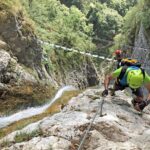
A waterfall makes this via ferrata feel instantly special. The walk-in is calm and green, then the mood flips fast when you start climbing beside the Rio Ruzza with ropes, exposed moments, and three Tibetan bridges right in the action. The setting is part of the payoff: you move from the fairy-tale rural world around Passo Ballino into a real mountaineering-style challenge.
What I like most is that it is short but not casual. You still get that proper technical commitment along the two sides of the waterfall, plus views that keep pulling your attention up and out. One thing to consider: you need strong physical fitness and a total lack of fear of heights, because the route is built for secure exposure and you will be up high.
In This Review
- Key things you’ll notice on the Rio Ruzza climb
- Rio Ruzza: a short via ferrata with a real technical pulse
- Where you meet, and why the timing matters
- The walk in from Ballino: meadows, beech woods, then the waterfall
- Starting the technical climb: ropes, two sides, and “close to the water” exposure
- The Tibetan bridges: the biggest emotion-per-minute section
- Horizontal passages and strength work right next to the falls
- Safety gear, insurance, and the guide approach that builds confidence
- What to wear and bring for a comfortable via ferrata day
- Price and value: $102.79 for gear + a guided technical route
- Who should book Via Ferrata Rio Ruzza, and who should skip it
- Should you book this via ferrata?
- FAQ
- Where is the meeting point for Via Ferrata Rio Ruzza?
- What time does the via ferrata start?
- How long should I plan for this experience?
- Is the tour offered in English?
- What safety equipment is included?
- What do I need to bring myself?
- Is the climb suitable if I’m afraid of heights?
- How big is the group?
- Does the activity run in poor weather?
Key things you’ll notice on the Rio Ruzza climb
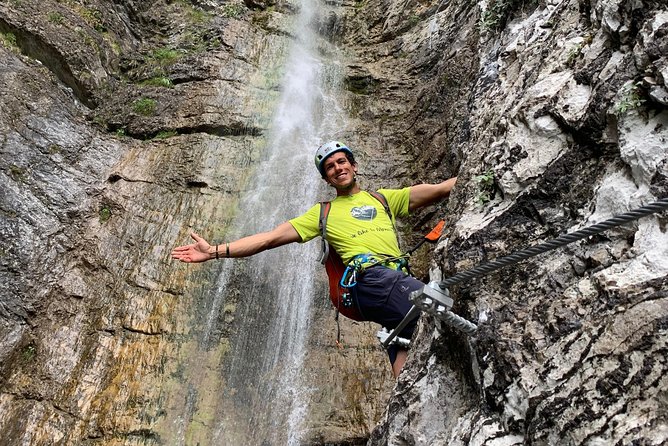
- Three Tibetan bridges over and beside the waterfall, so the challenge comes in waves, not one straight hike
- Two-sided waterfall climbing, which changes the feel as you cross from one section to another
- Exposed rope sections close to the water, where you can get the sense the waterfall is right next to your hands
- Small group size (max 6), which helps the guide adjust pace and attention
- Modern safety gear provided (harness, helmet, via ferrata set), so you can focus on the climb
- English offered, making it easier to follow guidance in the moment
Rio Ruzza: a short via ferrata with a real technical pulse
Via Ferrata Rio Ruzza in Trentino-Alto Adige is one of those routes where the time on the wall doesn’t look huge, yet it still feels like an adventure. The approach starts gently from the bucolic village of Ballino, then it funnels you toward the base of the waterfall. From there, the climb takes over, with ropes and bridges that keep you engaged the whole way.
What makes this stand out is how the waterfall is not just scenery. The route is arranged so you’re climbing in the waterfall’s presence, so the sound, misty air, and sheer force of the water become part of the experience. You also get those striking exposed passages where you feel close enough to the rushing water that it almost seems touchable.
This is not the type of via ferrata you do to relax. It’s for people who want controlled adrenaline and some problem-solving with your hands and feet, even if you’re not on the mountain for half a day.
You can also read our reviews of more tours and experiences in Trentino Alto Adige.
Where you meet, and why the timing matters
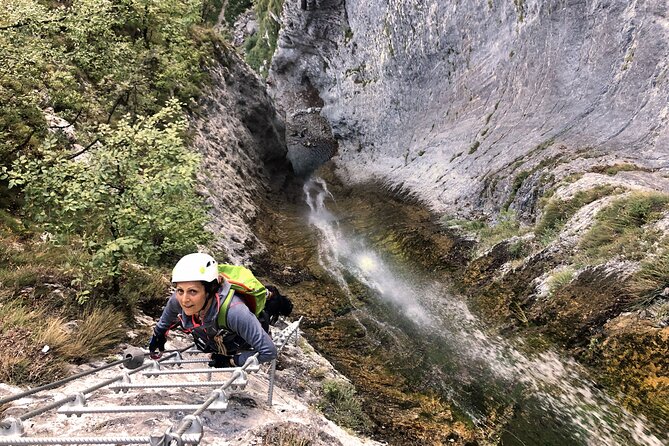
You start at Chiosco La Ruzza bike grill, in the Frazione Ballino address listed for the activity (Frazione Ballino, 4, 38075 Ballino TN, Italy). The start time is 8:00 am, and the activity ends back at the same meeting point.
That early start matters more than it sounds. A via ferrata day is about momentum: once you’re geared up, you want your body warm and ready, and you don’t want a long wait around with equipment on. The route also depends on weather quality, so being scheduled early gives you a better shot at good conditions.
One more practical note: the group cap is 6 travelers maximum, which usually means less crowding at the more exposed parts and more time with the guide if you have questions.
The walk in from Ballino: meadows, beech woods, then the waterfall
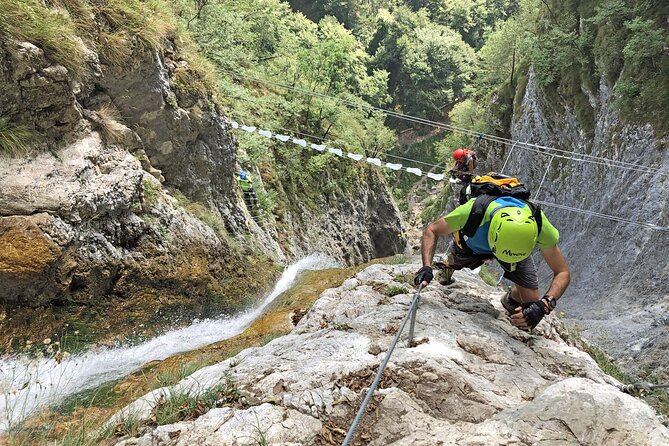
The approach is short, but it sets the tone. You leave the village of Ballino and move through meadows and lush green beech woods, which is a nice mental shift before you start the technical part. Even if you’re excited, take a breath here. This is where your pacing begins.
As you get closer, the landscape starts to make sense of the climb ahead: the base of the waterfall becomes the anchor point, and you can see that the via ferrata is designed specifically around the Rio Ruzza. That helps a lot when you start—because you understand where you’re headed rather than launching into a climb you can’t visualize.
Drawback? This is still a morning outdoors activity. If you tend to feel stiff early, you’ll appreciate using the approach time to move your body and settle your nerves.
Starting the technical climb: ropes, two sides, and “close to the water” exposure
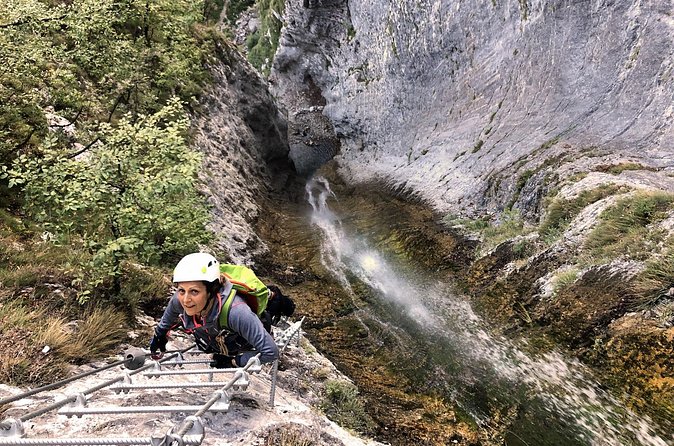
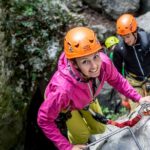
Once you reach the waterfall base, the climbing starts. The route is set up with ropes and sections that let you alternate between technical play and moments that feel more like balance and strength testing.
A key detail is that you are not climbing one uniform line. The via ferrata runs along two sides of the waterfall, which changes what you feel underfoot and how your eyes line up with the water. This is part of why the route can feel more varied than its overall length suggests.
You’ll also encounter exposed passages where your attention naturally shifts upward and outward. One of the best feelings here is the sense that the water you’re climbing beside is right there with you—almost within reach—because the route is placed so you’re moving alongside its energy rather than simply looking at it from far away.
The Tibetan bridges: the biggest emotion-per-minute section
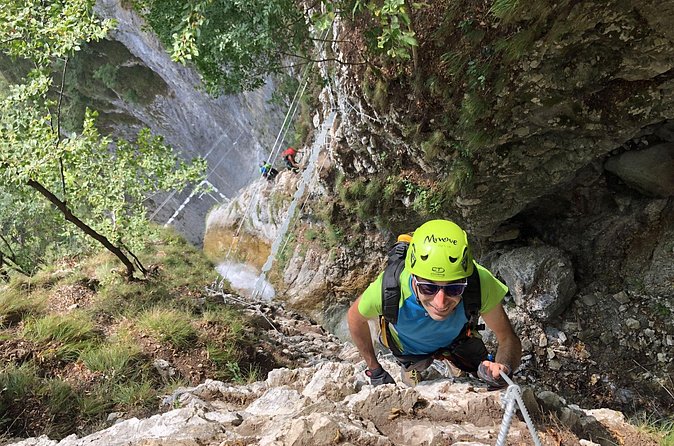
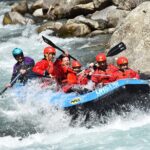
The headline features are three Tibetan bridges. They’re not just decoration. Bridges are where you experience the route’s rhythm in a different way: you shift from pure climbing technique into balance, trust, and steady movement.
Because the bridges are integrated into the waterfall route, they also come with a constant reminder that you’re suspended above force and movement, not a calm valley. That’s why the route can feel intense even though it isn’t a long via ferrata.
If you want a practical way to enjoy them: slow your breathing before you step on, plant your feet confidently, and let your hands do their job without rushing. That’s also where a patient guide makes a difference.


Horizontal passages and strength work right next to the falls
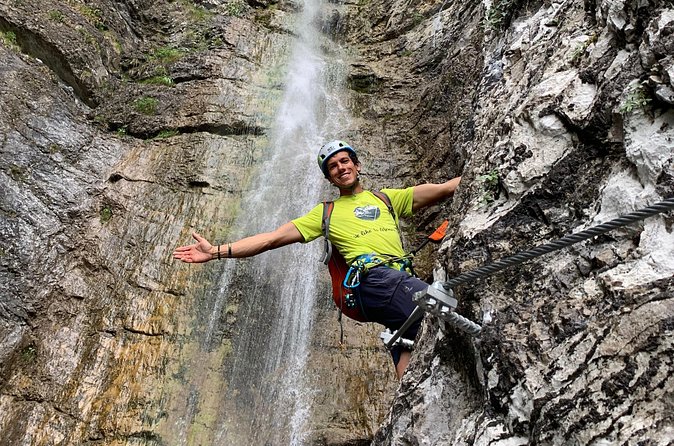
One of the more memorable technical aspects is that the climb includes not just vertical movement, but also horizontal climbing passages right alongside the waterfall. This is where grip, body position, and foot placement matter more than raw stamina.
You’ll likely find that these sections ask for coordination, not just endurance. And because you’re near the waterfall, the whole environment pushes you to stay focused on your own technique instead of daydreaming.
This is also where having the right gear and fitting it properly matters. The harness and via ferrata set are included, so you’re not dealing with the hassle of sourcing equipment you’re not used to wearing.
Safety gear, insurance, and the guide approach that builds confidence
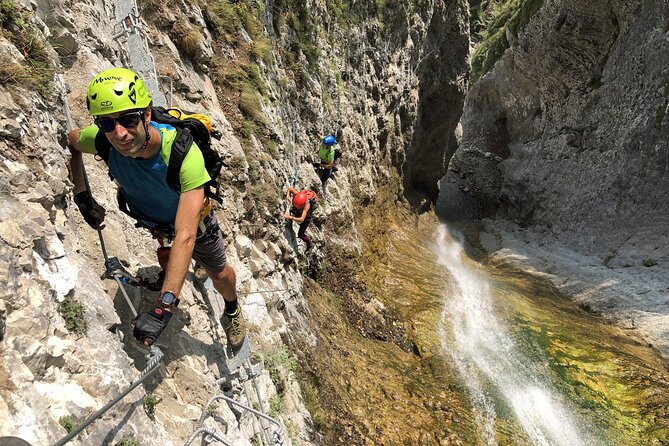
Included in the price are the harness, helmet, and via ferrata set, plus RC insurance and injury insurance. That’s a solid baseline. It means you can arrive and get properly kitted out for the route rather than improvising with rental compromises.
What helps the most is the guide style. In the experience reports, the guides are described as listening to your level and adjusting the pace. One guide named Matteo is mentioned for taking time and letting you climb at your own tempo, which directly supports confidence when you hit exposed or technical sections.
For me, that’s the difference between feeling stressed and feeling safe. You don’t need a loud pep talk. You need clear guidance and room to move without pressure.
What to wear and bring for a comfortable via ferrata day
The activity does not include all your personal prep. You’ll need to bring:
- A backpack with enough water and snacks
- Suitable clothing
The practical takeaway: treat this like a physical hike plus a technical climb. Wear clothing that feels secure and comfortable for movement. You’ll also want to be ready for an outdoor morning where you may get damp from the waterfall’s presence.
Bring water and snacks even if you think you won’t need them. A via ferrata day can change your energy faster than you expect, especially with bridges and exposed work.
If you need equipment: the provided gear covers you for this specific activity. But if you’re doing more than one outdoor day, it can be worth renting other pieces too rather than buying if you only plan a few activities this holiday. That approach is described as good value by people who used Mmove for rentals.
Price and value: $102.79 for gear + a guided technical route
At about $102.79 per person, this isn’t a cheap casual outing. The value comes from what’s included and how the experience is structured.
You’re paying for:
- Full via ferrata safety setup (harness, helmet, via ferrata set)
- Insurance coverage
- A guided experience on a technical waterfall route with three Tibetan bridges
- A small group atmosphere, capped at 6
If you were to rent equipment on your own, you’d still have to solve fitting, safety checks, and the stress of figuring out how to match the route to your level. The fact that the guides recommend routes based on your ability (and adjust pace) is part of what you’re actually buying.
Also, the route is listed at an average booking window of about 50 days in advance, which suggests demand. If you want a spot at a preferred time, don’t wait until the last week.
Who should book Via Ferrata Rio Ruzza, and who should skip it
This is for you if:
- You want a short via ferrata that still feels technical
- You’re okay with exposure and want adrenaline with control
- You have the physical fitness to handle rope sections and sustained effort for a few hours
- You want a small-group experience (max 6) with real guidance
It’s not the right match if you:
- Have fear of heights
- Don’t feel confident in your physical condition
- Prefer routes that are mostly scenic walking rather than technical movement
A small humor point, but it’s true: this is not the via ferrata to test your fear management. The environment and the bridges are part of the thrill, so your comfort level needs to be real.
Should you book this via ferrata?
Book Via Ferrata Rio Ruzza if you want a guided, waterfall-centered climb that delivers big emotion in a manageable time window. The best reason is the mix of short approach serenity and then real technical engagement beside the waterfall, including three Tibetan bridges.
I’d skip it if you’re even slightly unsure about heights or your fitness. The route asks for focus, strength, and calm movement in exposed spots, and that’s not where you want to push through discomfort.
If you do decide to go, do two things: come rested for an 8:00 am start, and treat the bridges as the main event. Get your pacing right early, and you’ll enjoy the whole waterfall journey much more.
FAQ
Where is the meeting point for Via Ferrata Rio Ruzza?
The meeting point is at Chiosco La Ruzza bike grill, in Frazione Ballino, 4, 38075 Ballino TN, Italy. The activity ends back at this same meeting point.
What time does the via ferrata start?
The start time is 8:00 am.
How long should I plan for this experience?
The duration is approximately 4 hours.
Is the tour offered in English?
Yes, the experience is offered in English.
What safety equipment is included?
You get a harness, helmet, and via ferrata set as part of the included items.
What do I need to bring myself?
You must bring a backpack with enough water and snacks, plus suitable clothing for the activity.
Is the climb suitable if I’m afraid of heights?
No. The experience information specifically notes no fear of height is required.
How big is the group?
There is a maximum of 6 travelers.
Does the activity run in poor weather?
It requires good weather. If it is canceled due to poor weather, you’ll be offered a different date or a full refund.