REVIEW · VERONA
Verona: Blindfolded Wine Tasting
Book on GetYourGuide →Operated by La Botteghetta La Bottega di Verona · Bookable on GetYourGuide
Wine gets weird when you cannot see it. In Verona’s Veneto region, a blindfolded tasting turns wine into a quick sensory puzzle, with sounds, scents, and expert cues to help you identify what’s in your glass. It is not about being a sommelier. It is about using your nose and palate like they actually matter.
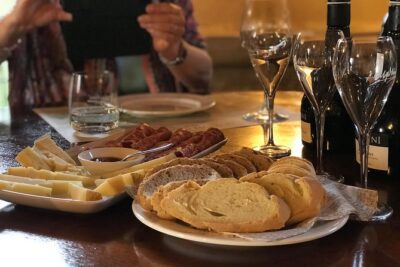
I love the format: four tastings with a final taste check, so you can compare aromas side-by-side instead of guessing based on the label. I also like the simple pairing setup—bread, breadsticks, and a mini charcuterie board with freshly sliced meat and cheese to reset your palate between pours.
One consideration: it is only 1 hour, so this is best if you enjoy focused, guided tasting rather than a long, slow hang with unlimited refills.
In This Review
- Key highlights you will feel (not just read)
- Why blindfolding changes how you taste wine
- The one-hour flow: four tastings plus a final check
- The guided “same wine type” comparison (what you’re actually studying)
- Tasting round 1: building your aroma map
- Tasting rounds 2 and 3: noticing differences between wineries
- Tasting round 4: the flavor and texture check
- The final taste test: can you apply what you learned
- Food pairing basics: bread, charcuterie, and water
- Your sensorial cards: how you walk away better
- Price in context: is $53 for an hour good value?
- Who this Verona blindfolded tasting is best for
- Small practical tips before you go
- Should you book this blindfolded wine tasting in Verona?
- FAQ
- How long is the Verona blindfolded wine tasting?
- How many wines do you taste?
- What is included with the tasting?
- What kind of tasting is it?
- What languages are available?
- What do I need to bring?
- What is the price?
- Is there free cancellation?
- Can I reserve now and pay later?
Key highlights you will feel (not just read)
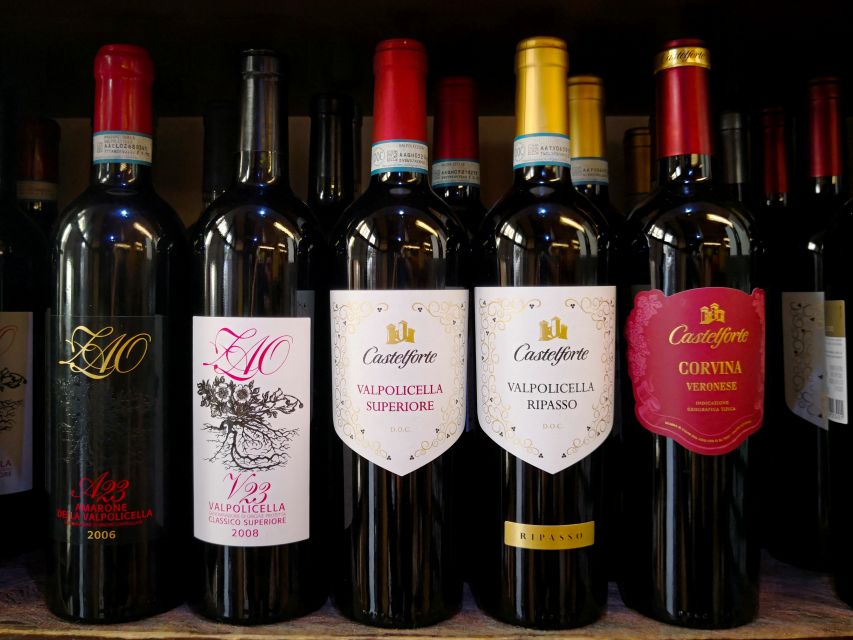
- Blindfolded tasting kit: you taste without the usual visual crutches
- Four rounds of tasting: each pour is part of a structured comparison
- Aroma and provenance coaching: the expert helps you connect smell to origin
- Sensorial cards: you leave with a written map of what you learned
- Local bite-size pairings: bread and a mini meat-and-cheese board with water
Why blindfolding changes how you taste wine
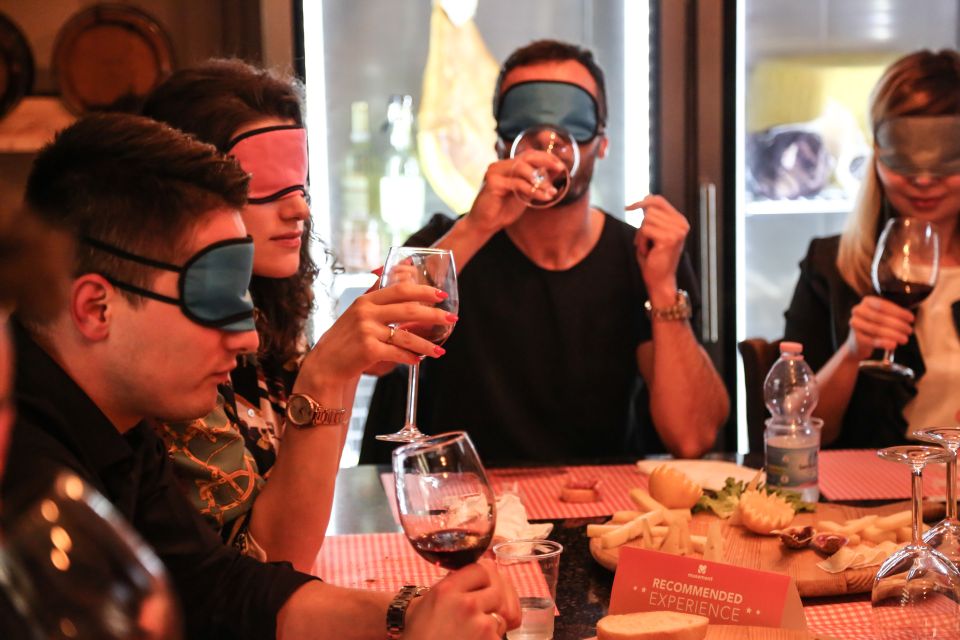
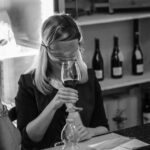
Most wine tasting starts with sight. You see the color, the glass, the bottle vibe. Then your brain fills in the blanks with guesses and expectations. This experience flips that script by putting a blindfold on you and making you rely on smell and taste instead.
That is the real value here. When you remove visuals, you notice what you usually miss: the difference between aroma intensity, how tannins feel, and how acidity shows up as a quick lift on your tongue. You also learn a more transferable skill. Even when you are not blindfolded, you start tasting with a plan instead of vibes.
This kind of tasting is also genuinely entertaining, in a slightly mischievous way. Your senses do the work, and the guide turns your hunches into real information. One of the best reviews called it the best experience of the trip, thanks largely to an amazing host. Another said it was interesting and fun. That matches the overall tone: interactive and practical, not stuffy.
You can also read our reviews of more tours and experiences in Verona.
The one-hour flow: four tastings plus a final check
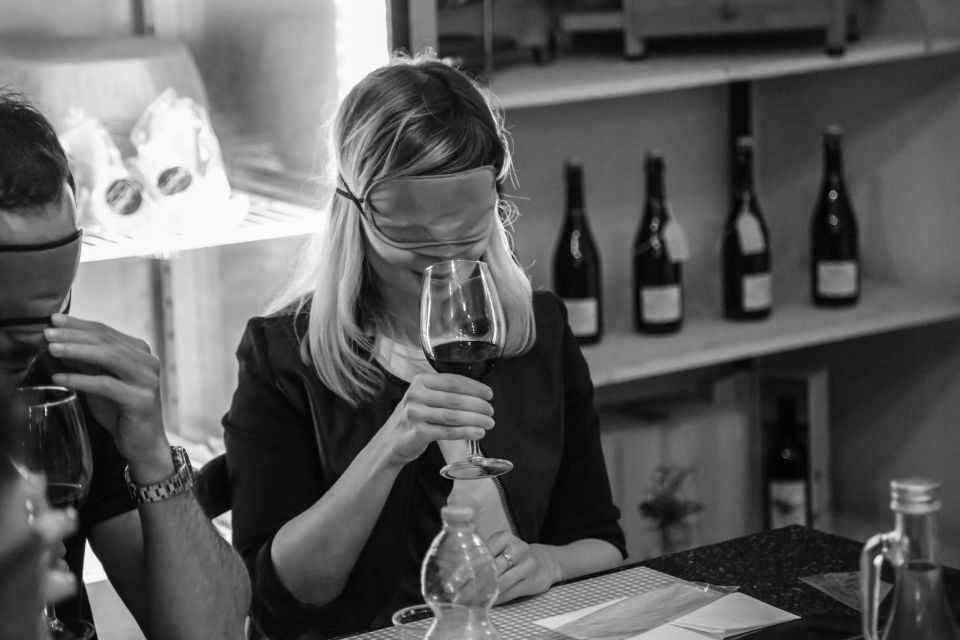
The whole session is about 1 hour. You will do four wine tastings, and each round follows the same core idea: focus on aroma, then describe flavor and texture, then confirm what you picked up.
The structure matters. It keeps you from treating each pour like a random sip. Instead, you build a comparison rhythm: smell, taste, short note on your card, then move on. That is how the experience helps you learn quickly.
The final taste test is the payoff round. You are not just tasting once and moving on. You are asked to synthesize what you noticed across the session and apply it at the end.
The guided “same wine type” comparison (what you’re actually studying)
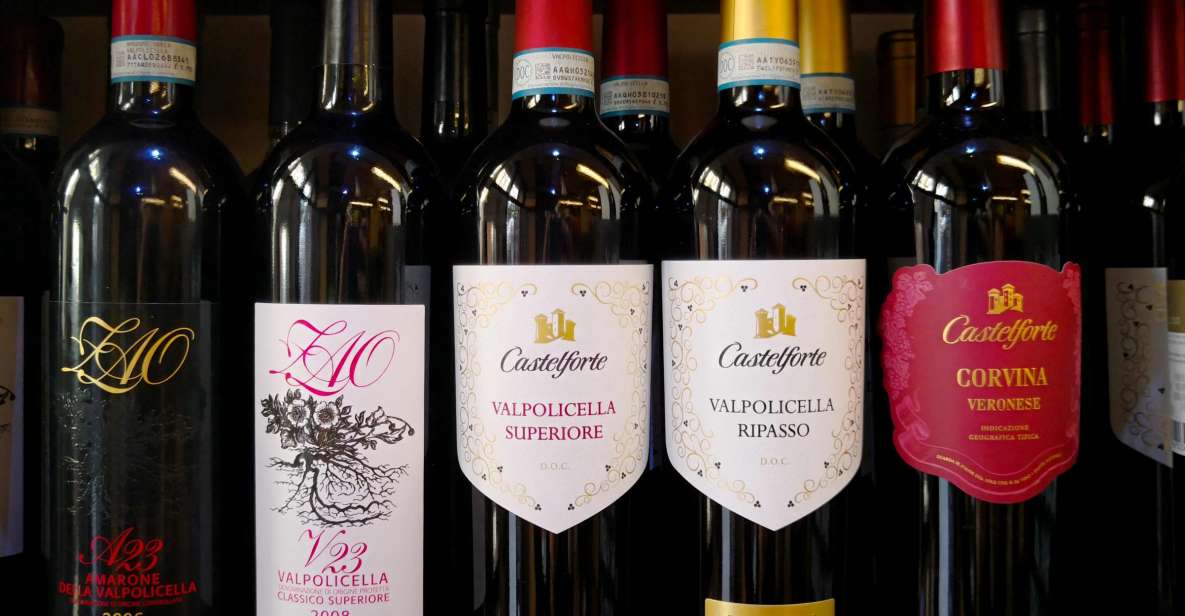
You taste four wines of the same type, made by different wineries. The goal is not to memorize brand names. It is to train your palate to detect subtle differences in aroma and flavor that come from how each winery handles the wine.
For you, that means the tasting stays focused and fair. You are comparing like with like. If one pour smells fruitier or feels drier, you can usually trace it to production choices and regional style. And because the guide helps you with provenance, you do not leave with only guesses—you leave with context.
Tasting round 1: building your aroma map
In the first pour, you are basically setting the baseline. With the blindfold on, you start with aromas first—those quick, early signals that tell you what kind of wine you are dealing with before you even fully sip.
What makes this round useful is that the expert does not just tell you what it is. They help you connect aroma words to real sensations. Think of it like learning a new vocabulary for smell: fruit vs. spice, floral vs. earthy, and how these show up on the palate.
A practical tip for round 1: do not overthink. Pick two or three aroma clues and write them down fast on your sensorial card. If you try to solve the whole wine at once, you will stall.
Tasting rounds 2 and 3: noticing differences between wineries
Rounds 2 and 3 are where the learning accelerates. You take the same wine type again, but from different wineries. That is the perfect setup for spotting the differences that are easy to miss when you taste only one bottle.
This is also where the experience becomes more than a quiz. You start noticing patterns. Maybe one winery’s version feels more rounded and softer, while another shows sharper acidity. Maybe one has a stronger aromatic lift, while another feels more restrained.
The expert’s role here is key. They give you aroma hints and help you narrow the answer without making you feel stupid for guessing. Based on the reviews, the hosting quality is a big part of why people rate this so highly—so if you are the type who likes to ask questions, you will likely enjoy the pace.
Tasting round 4: the flavor and texture check
By round 4, you have enough information to taste with more confidence. Now you are not only identifying aromas. You are checking flavor structure: where the taste peaks, how it fades, and how it sits on your tongue.
This is where blindfold tastings can be humbling in a good way. You may think you know what you are tasting, then realize you were only following one clue. Round 4 forces you to pay attention to the full experience—aroma plus flavor plus texture.
A strategy that works well: before you sip, take one smell note, then one taste note. Keep it simple. The sensory card helps you stay organized, and the guide’s feedback helps you turn your notes into real recognition.
The final taste test: can you apply what you learned
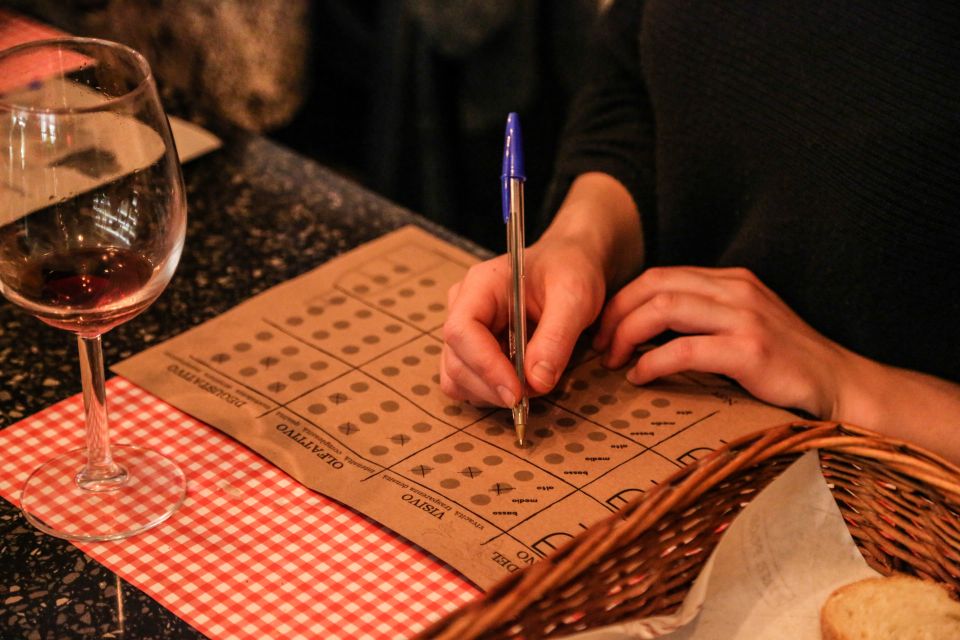
The final test is short, but it is the most important part for learning. This is when the session stops being entertainment and becomes skill-building.
You are asked to synthesize. Based on what you wrote on your sensorial cards, you can make a stronger identification or at least a more accurate description. Even if you do not nail the exact details, you learn what clues matter most for that wine type.
If you like practical training—like tasting the same thing repeatedly until you get it—that last round is satisfying. It is the moment where you can feel your senses getting sharper.
Food pairing basics: bread, charcuterie, and water
A good wine tasting does two things: teaches taste and keeps you comfortable. This one includes bread, breadsticks, and a mini charcuterie board with freshly sliced meat and cheese, plus mineral or sparkling water.
That food choice is practical. Bread helps clear and reset your palate between pours. Cheese and cured meats add savory, salty notes that help you notice acidity and texture changes as you move from one wine to the next.
It is not a full meal, so do not expect this to replace dinner. But it does make the hour feel complete rather than like you are just running on empty while you sniff and sip.
Your sensorial cards: how you walk away better
You compile a sensory card for each tasting. That is a big deal because it turns a one-time experience into something you can remember.
Most wine tastings go like this: you taste, you guess, you forget most of it later. Sensorial cards fix that. You have a record of aroma notes and flavor impressions, and then the guide’s explanations connect those notes to the wine’s origin and character.
If you plan to buy wine afterward in Verona or nearby, this is one of those experiences that actually helps you choose. You do not just shop for a label—you shop with better language for what you like.
Price in context: is $53 for an hour good value?
At $53 per person for 1 hour, this is not the cheapest thing in Verona. But it is also not trying to be a long, multi-course dinner event. You are paying for three things that are hard to recreate on your own:
- Guided blindfold tasting with structured comparisons (four tastings plus final test)
- A kit and sensorial card process, so you learn instead of just drink
- Food pairings (bread/breadsticks and mini meat-and-cheese) plus water
If you are the kind of person who enjoys learning by doing—smell, test, correct, repeat—this price makes sense. If you only want a casual glass with no focus, you might feel the time is short. But the short duration is also part of the value: you get a concentrated experience without committing half a day.
Who this Verona blindfolded tasting is best for
This fits you best if you are:
- curious about how wine tasting actually works
- nervous about wine knowledge and want a guided structure
- traveling with someone who likes variety and interactive activities
- short on time but still want something memorable beyond sightseeing
It is also good for groups where people have different levels of wine interest. The blindfold levels the playing field. Everyone starts with the same sensory challenge.
Small practical tips before you go
A few things will make the session smoother:
- Bring a passport or ID card (it is required).
- Expect an English, Italian, or Russian live guide, based on the language option available when you book.
- You only have 1 hour, so plan to arrive ready to focus—this is not a drop-in wander kind of activity.
Also, if you are the type who hates being told what to do, this might feel too structured. But the tone is meant to help you guess and improve, not to grade you like an exam.
Should you book this blindfolded wine tasting in Verona?
I think you should book it if you want an experience in Verona that is hands-on, short, and genuinely different from the usual wine stop. The combination of four blindfold tastings, guided aroma work, and a mini charcuterie pairing makes it feel like more than a gimmick.
Skip it if you want a long dinner-style event, or if you dislike tasting multiple pours back-to-back. At $53 for an hour, this is a focused activity, not a leisurely evening.
If you are on the fence, go for the booking. It has a track record for being memorable, and the host quality is clearly a big part of why people recommend it.
FAQ
How long is the Verona blindfolded wine tasting?
The experience lasts 1 hour.
How many wines do you taste?
You taste four wines during the session, plus a final taste test.
What is included with the tasting?
It includes 4 wine tastings, a blindfolded wine tasting kit, a final taste test, bread and breadsticks, and a mini charcuterie board with freshly sliced meat and cheese. You also get mineral or sparkling water.
What kind of tasting is it?
You taste the wines blindfolded, with the help of a wine expert who guides you through aromas and flavors and helps you complete a sensorial card for each tasting.
What languages are available?
The live tour guide is available in English, Italian, and Russian.
What do I need to bring?
You should bring a passport or ID card.
What is the price?
The price is $53 per person.
Is there free cancellation?
Yes. You can cancel up to 24 hours in advance for a full refund.
Can I reserve now and pay later?
Yes. It offers a reserve now & pay later option, so you can book and pay nothing today.