REVIEW · VERONA
Verona: Hop-on Hop-off Tour 24 or 48-Hour Ticket
Book on GetYourGuide →Operated by Sightseeing Experience · Bookable on GetYourGuide
Verona’s best bus shortcuts start at Piazza Bra. This hop-on hop-off tour uses an open-top bus plus multilingual recorded audio to help you make sense of the city’s Roman roots and Romeo-and-Juliet lore, fast. I especially like the panoramic views for orientation and the way the narration keeps you from zoning out at stops. One drawback to plan for: buses run about every hour, so quick get-on/get-off photo hops can feel a bit slow.
You’ll have two routes (red and blue) running from the same starting point, Piazza Bra by the Arena. I think the 48-hour ticket is the smarter value if you want to do both loops and not feel rushed, especially if Verona is your one-stop stop during a short visit.
In This Review
- Key highlights at a glance
- Getting on at Piazza Bra: your Verona starting line
- The red route: Arena square to San Zeno and the Roman sights
- Piazza Bra and Arena area: start with the headline
- Porta Nuova and the city edges: a breather between old blocks
- Piazza Pozza and the medieval center feeling
- Basilica San Zeno and Castelvecchio: Verona’s big medieval moments
- Via Diaz and Porta Borsari: a shopping stop that doesn’t feel random
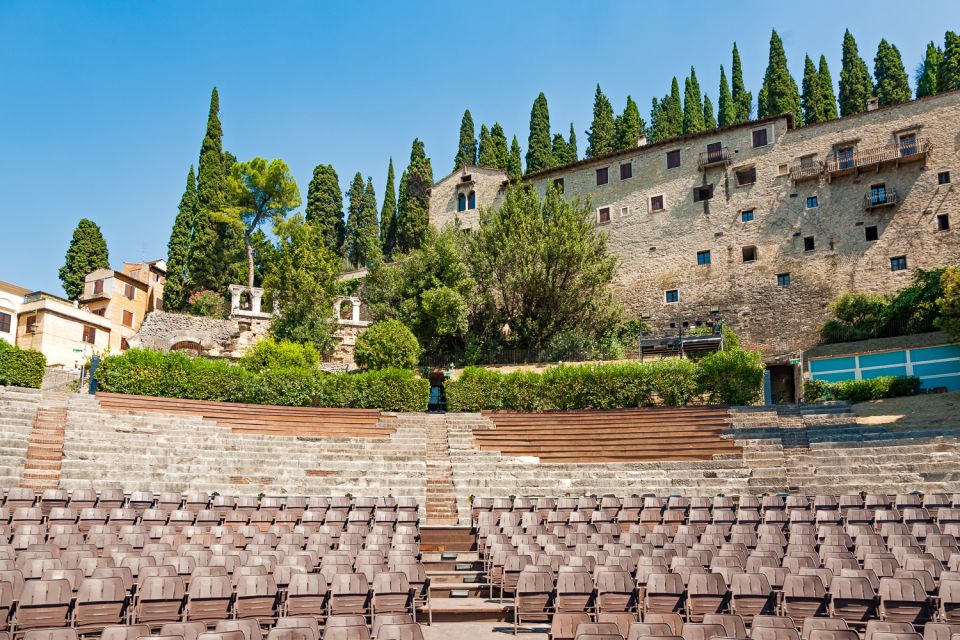
- Teatro Romano and the old gates: Roman echoes in plain sight
- Piazza Leoni: Juliet’s House stop
- The blue route: a smaller-bus loop with hill views and big viewpoints
- Best use: mix it with the red route
- Via Pallone and the Romeo-and-Juliet angle
- Via G. Giusti and S. Stefano: more old lanes, less tourist glare
- Castel S Pietro and the hill outlook: where you trade shade for views
- Duomo and Piazza Erbe: the center of gravity
- Porta Leoni and Piazza Leoni: back into the old core
- 24 vs 48 hours: how to get value without rushing
- When the 24-hour ticket makes sense
- When the 48-hour ticket is the smart move
- Audio commentary and headphones: how to make the narration useful
- Stops and pacing: making hop-on hop-off work in real life
- Ride first for orientation
- Use hop-offs for “walk time,” not just 5-minute photos
- For tight schedules, do one loop per day
- Crowds, timing, and comfort: what can affect your ride
- Which travelers will like this the most
- Should you book the Verona hop-on hop-off bus?
- FAQ
- How long is the Verona hop-on hop-off tour ticket valid?
- Where do both bus routes start?
- Are the buses open-top?
- How often do the buses run?
- What’s the difference between the red and blue routes?
- Which major sights are on the routes?
- What is included in the ticket price?
- Are attraction tickets included?
- What languages is the audio commentary available in?
- Is there any service suspension I should know about?
Key highlights at a glance
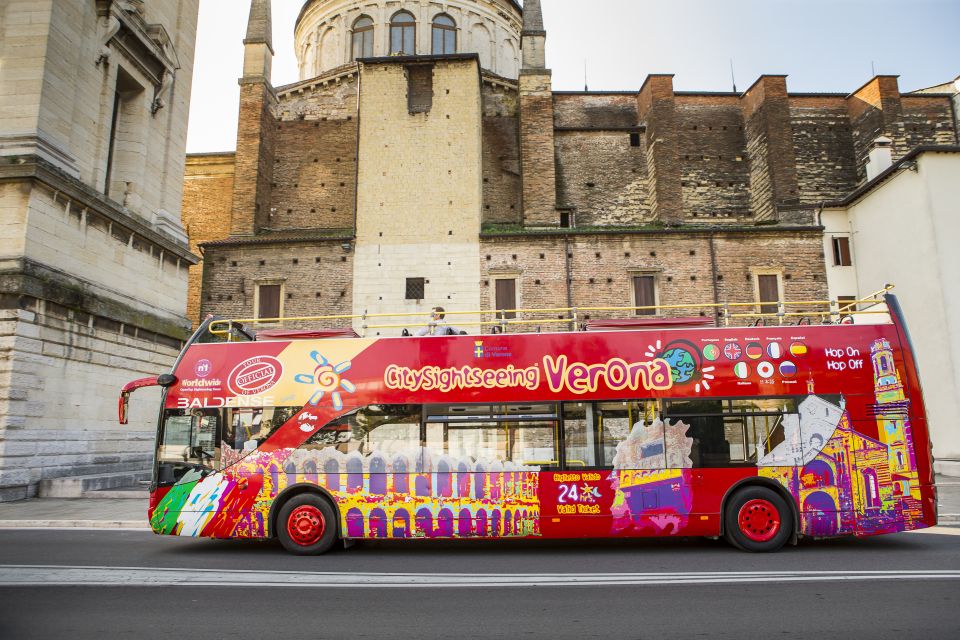
- Piazza Bra is your hub for both routes, right by the Arena.
- Two routes cover the main sights without you needing to map everything.
- Open-top views on the red bus make orientation easy.
- The blue route uses a smaller bus/minibus that can fit into tighter streets.
- Audio in many languages helps you connect names on the map to what they mean.
- You can ride in pieces and re-board as often as you like within your 24 or 48 hours.
Getting on at Piazza Bra: your Verona starting line
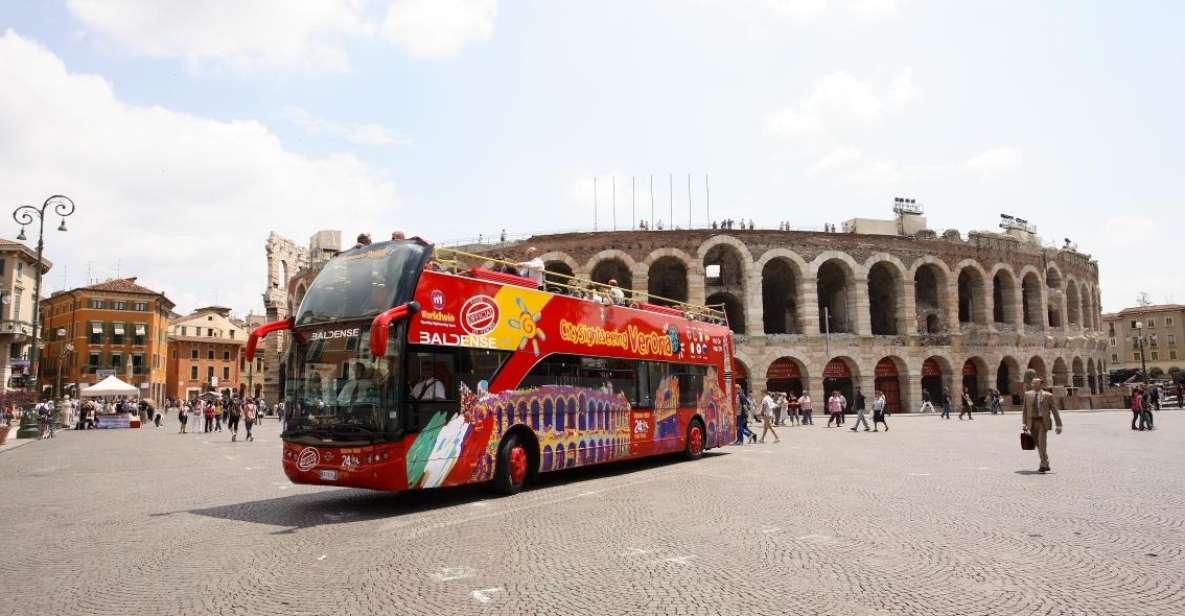
Both the red and blue routes start from Piazza Bra, the big square beside the Arena di Verona. That’s a win for first-timers because it keeps your day simple: you’re never hunting for a random bus stop in the middle of nowhere.
If you’re arriving by train, you’ll also appreciate that one of the routes includes Stazione FS Porta Nuova. That means you’re not stuck walking across town on days when your feet are giving you a protest letter.
Plan to arrive a little early for your first boarding. The buses run every hour on each route, and one common complaint is that the smaller blue option can get crowded, especially if you show up right at departure time.
You can also read our reviews of more tours and experiences in Verona.
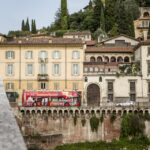


The red route: Arena square to San Zeno and the Roman sights
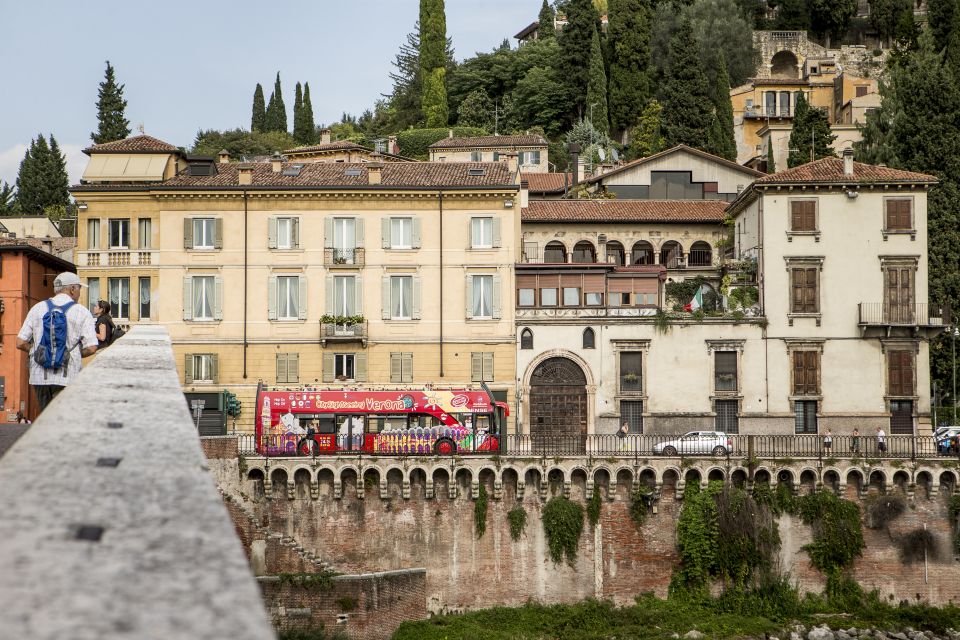
Think of the red loop as your classic “big sights” circuit, with plenty of old-town landmarks that connect well if you want to explore in chunks.
Piazza Bra and Arena area: start with the headline
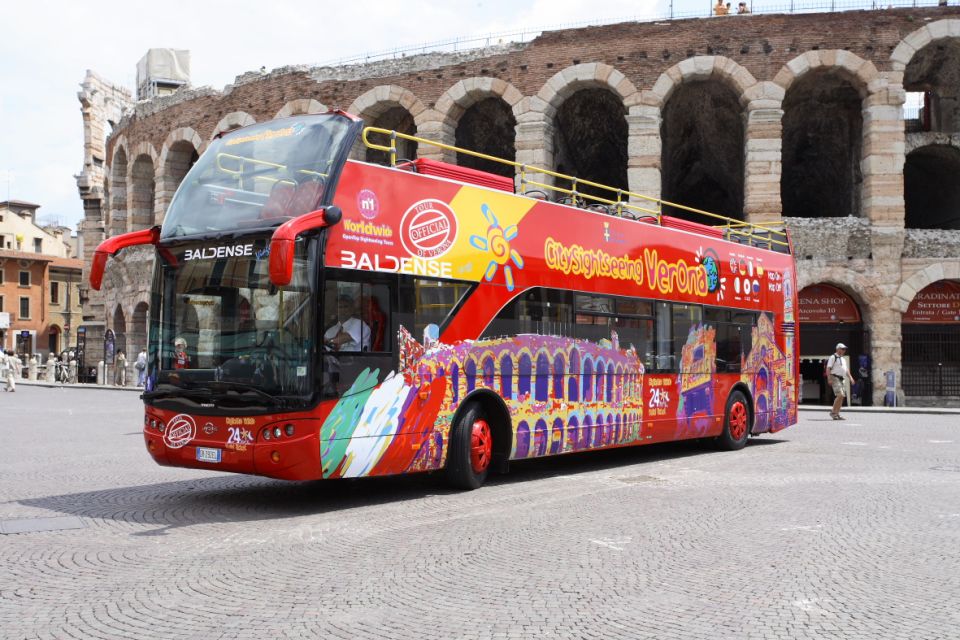
You begin at Piazza Bra, where the Arena di Verona dominates the square area. Even if you’re not going inside the arena, this is the moment where you’ll understand Verona’s scale—this city is built around a Roman statement.
Porta Nuova and the city edges: a breather between old blocks
Stops like Corso Porta Nuova (Giardini Pradaval) and Stazione FS Porta Nuova give you a break from the tight medieval lanes. It’s useful when you’re traveling with kids, dealing with heat, or just wanting a quick sit-down while the bus moves you through the city.
Piazza Pozza and the medieval center feeling
Piazza Pozza is where the vibe shifts back toward the old-town center. From the stop names alone, you can tell this loop is designed to connect you to the dense “walkable Verona” areas rather than only outer districts.


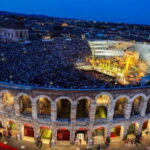
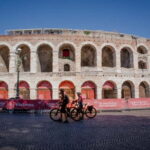

Basilica San Zeno and Castelvecchio: Verona’s big medieval moments
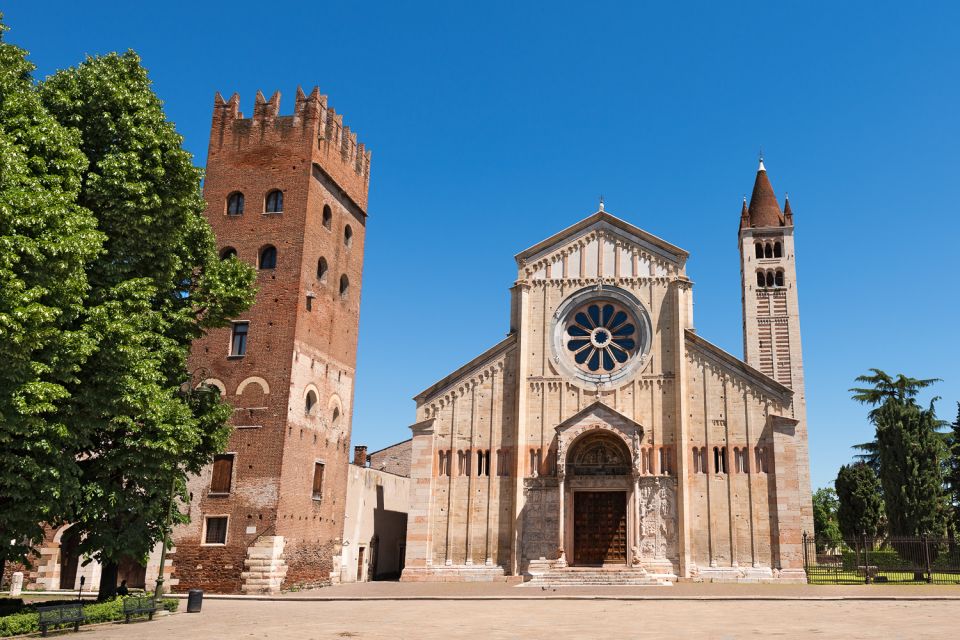
The red route hits Basilica S. Zeno and Castelvecchio. The San Zeno area is one of Verona’s most famous medieval quarters, so it’s a great stop if you want that classic stone-and-history feeling without having to plan a separate shuttle or taxi.
Via Diaz and Porta Borsari: a shopping stop that doesn’t feel random
One of the standout practical perks is a stop at Via Diaz (near Porta Borsari). You get a chance to shop and browse rather than only hopping on and off for photos. This matters because Verona’s “main attractions” can be close, but it’s still nice to have a real street to wander for an hour.
Teatro Romano and the old gates: Roman echoes in plain sight
The red loop includes Teatro Romano and Porta Leoni. That combination is great for understanding how Verona grew from its Roman-era strength into the layered city you see today.
Piazza Leoni: Juliet’s House stop
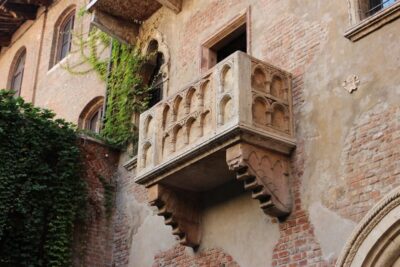
Finally, both routes bring you to Piazza Leoni, the stop connected with Juliet’s House. Even if the Shakespeare angle isn’t your thing, this is still a useful drop-off because it’s one of the most central “you can’t miss this” points in town.
The blue route: a smaller-bus loop with hill views and big viewpoints
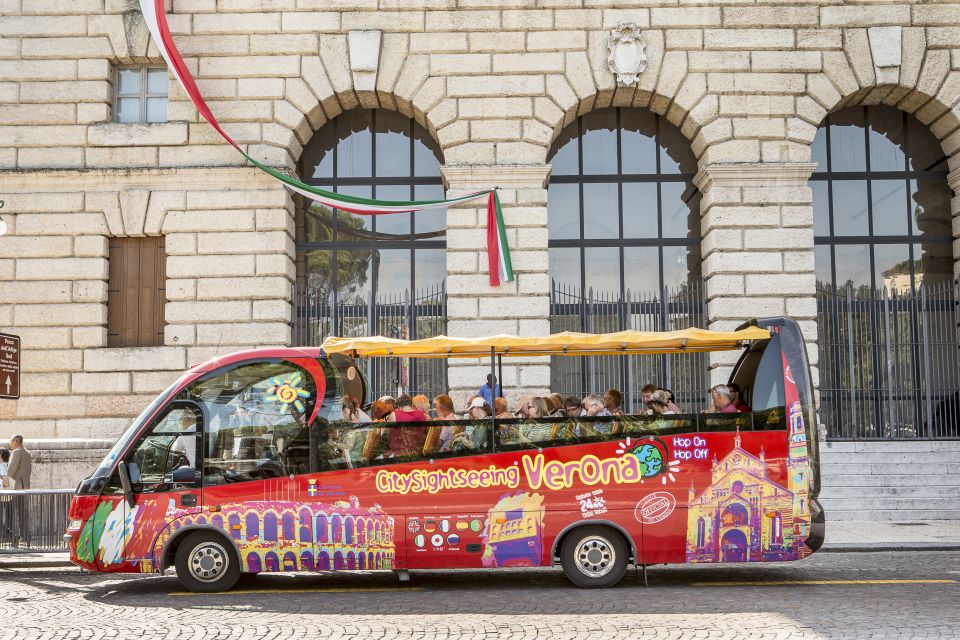
The blue route is built for a different kind of experience. You’ll often feel it as a more “local-feeling” ride because it uses a smaller bus/minibus (not the big open-top style).
Best use: mix it with the red route
I like the strategy of using the red route for the major anchor stops, then using blue for the extra variety and viewpoint chances. If you only have time for one pass, I’d still think about doing blue at least once, since it’s the one that tends to feel less predictable and more street-level.
Via Pallone and the Romeo-and-Juliet angle
The blue route includes stops such as Via Pallone and Tomba Giulietta. If you want Verona’s Romeo-and-Juliet story attached to actual places, this is your loop.
Via G. Giusti and S. Stefano: more old lanes, less tourist glare
Stops like Via G. Giusti and S. Stefano help you get beyond the biggest squares. The names are proof that the route is designed for exploring, not just sightseeing from the curb.
Castel S Pietro and the hill outlook: where you trade shade for views
One highlight from real-world use is the chance to get a view from the hill area on the blue route. Castel S Pietro is the stop tied to that. It’s worth using this stop when the light is good and you want skyline photos without needing to plan a long walk.
Duomo and Piazza Erbe: the center of gravity
The blue loop also covers Duomo and Piazza Erbe. These are the kinds of stops you’ll enjoy even if you’re not a “cathedral person,” because they’re the places where Verona feels most alive as a city, not just a postcard.
Porta Leoni and Piazza Leoni: back into the old core
Blue finishes at Porta Leoni and Piazza Leoni as well, so you can finish your day where the most iconic sights are clustered.
24 vs 48 hours: how to get value without rushing
At about $29 per person, this is one of the easier ways to justify “pay once, move all day” sightseeing. The real question is whether your time in Verona is closer to 1 day or 2.
When the 24-hour ticket makes sense
If you’re only in Verona for a short window—say, you arrive midday and want to come back to the important sites—use the 24-hour pass like a cover map. Ride until you understand the city layout, then hop off at the places you want to linger.
When the 48-hour ticket is the smart move
If you can spare two days, the 48-hour pass usually feels like better value because you can do both routes without cramming. One helpful note: each route is roughly about an hour’s ride, and that makes it realistic to do partial loops on day one and finish on day two.
Also, if you’re staying nearer to Porta Nuova / the station, the route that includes Stazione FS Porta Nuova can act like a practical “local transport” option back to the Arena area. That saves walking when you’d rather be eating gelato.
Audio commentary and headphones: how to make the narration useful
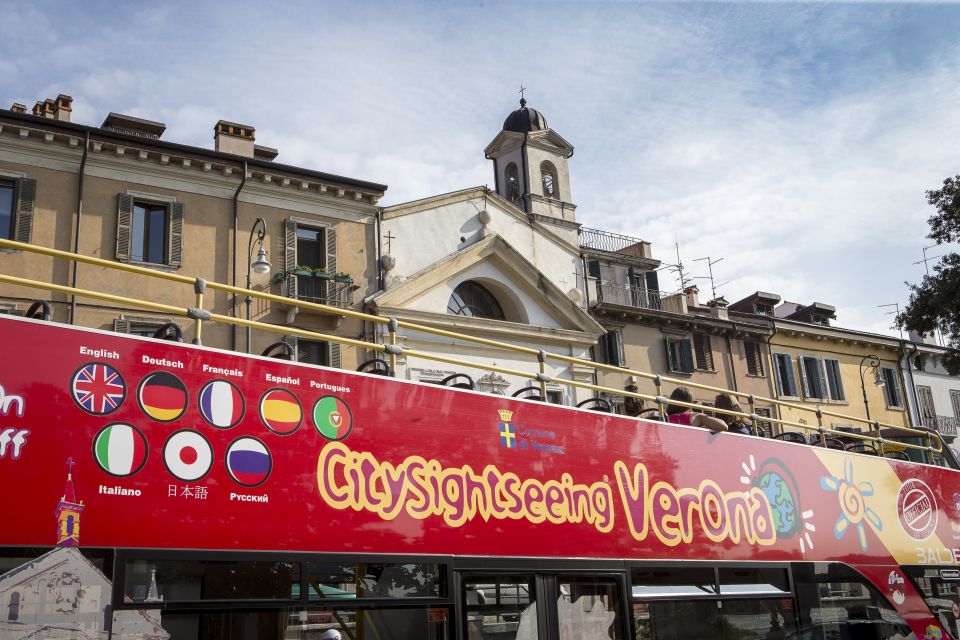
This tour includes recorded audio commentary in a long list of languages, including English, Italian, Spanish, French, German, Portuguese, Japanese, Russian, Arabic, Chinese, Danish, and Dutch. That’s a strong point if you want context on what you’re seeing while you travel.
A heads-up from real use: the complimentary headphones can be poor, so if you’re picky about sound, bring your own. Also, audio quality may vary by route, with some people finding one line clearer than the other.
My practical suggestion: listen actively during the ride between stops, then turn the audio down when you hop off. You’ll avoid missing key descriptions while you’re looking for the right street or gate.
Stops and pacing: making hop-on hop-off work in real life
The whole idea is freedom, but that freedom depends on pacing. Here’s how to use it smoothly.
Ride first for orientation
Start by staying on the bus for at least the first loop segment. You’ll learn where the big landmarks sit relative to each other, then your hop-offs stop feeling random.
Use hop-offs for “walk time,” not just 5-minute photos
Because buses come about once per hour, you’ll enjoy the system more if your hop-off includes a real walk or an actual visit window. If your plan is only to snap one quick photo and immediately return, you might feel the waiting time.
For tight schedules, do one loop per day
If you’re short on time, do all your hop-offs on one route before switching the next day. It keeps your brain from turning into a bus-stop spreadsheet.
Crowds, timing, and comfort: what can affect your ride
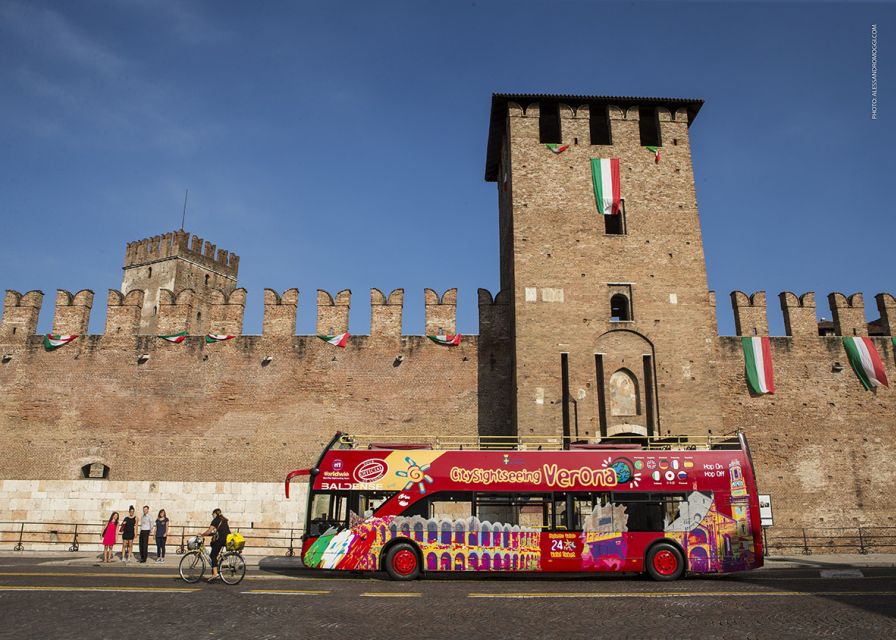
The buses are generally described as comfortable and clean. The open-top experience on the red bus can be great for views, and it can also be a lifesaver when the city’s heat pushes you to move more slowly.
But do expect crowding at peak times. One real-world tip: if you’re aiming for the blue route, try not to arrive exactly when the bus is about to depart, because the smaller vehicle can fill up.
Also keep an eye on service changes. You may see a suspension on Wednesday, 15 October due to a cycling race. If you’re traveling around that date, check the latest status before you head to Piazza Bra.
Which travelers will like this the most
This is a strong fit if you want:
- A fast layout lesson for Verona in 1–2 days
- Low-effort sightseeing with recorded explanations
- A way to rest while still seeing major sights
It’s especially useful if you’re traveling with kids, dealing with heat, or want a plan that doesn’t require you to constantly look at your phone map.
If you’re the kind of traveler who loves long, slow wandering with no bus rides, you might prefer using this just for one loop. But if you want your time to feel organized without feeling locked in, this bus tour works.
Should you book the Verona hop-on hop-off bus?
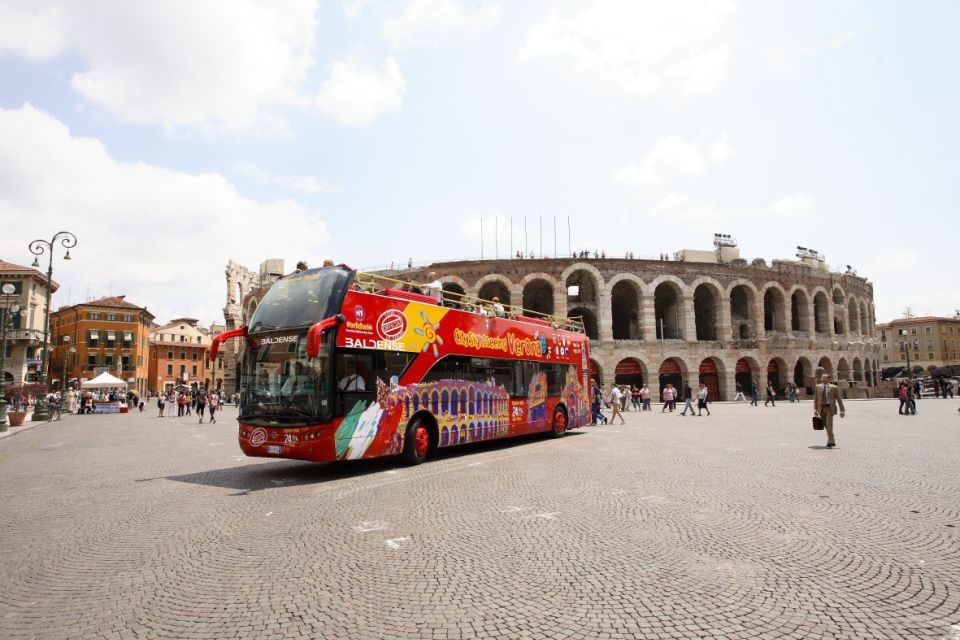
If you’re visiting Verona for a short trip and want to hit Arena di Verona, Teatro Romano, the Duomo area, and the Juliet connection without building a complicated transport plan, I’d say yes. The combination of central starting point (Piazza Bra), two route options, and multilingual audio makes it one of the easiest ways to get your bearings quickly.
I’d skip it or limit it to one route only if your schedule is too tight for hourly timing, or if you expect the hop-off to work like a subway where you can bounce out for tiny photo stops every few minutes. In Verona, patience pays off, and this tour is best when your stop time includes actual exploring.
FAQ
How long is the Verona hop-on hop-off tour ticket valid?
Your ticket is valid for 1 to 2 days, depending on whether you choose the 24-hour or 48-hour option.
Where do both bus routes start?
Both routes start from Piazza Bra, the Arena Square.
Are the buses open-top?
The tour uses sightseeing buses and the experience is described as an open-top bus for panoramic views.
How often do the buses run?
The buses run on each route every hour.
What’s the difference between the red and blue routes?
They follow different stop lists. The blue route includes stops such as Castel S Pietro, Duomo, and Piazza Erbe, while the red route includes stops such as Basilica S. Zeno and Teatro Romano.
Which major sights are on the routes?
Stops include the Arena area (Piazza Bra), Basilica S. Zeno, Teatro Romano, Duomo, Piazza Erbe, and the Piazza Leoni stop connected with Juliet’s House.
What is included in the ticket price?
You get the 24 or 48-hour bus ticket (based on your choice) and multilingual audio commentary.
Are attraction tickets included?
No. Attraction tickets are not included.
What languages is the audio commentary available in?
Audio is listed in English, Italian, Spanish, French, German, Portuguese, Japanese, Russian, Arabic, Chinese, Danish, and Dutch.
Is there any service suspension I should know about?
Service is suspended on Wednesday, 15 October due to a cycling race.