REVIEW · TRENTINO ALTO ADIGE
Via Ferrata Rio Sallagoni
Book on Viator →Operated by Mmove - Into Nature · Bookable on Viator
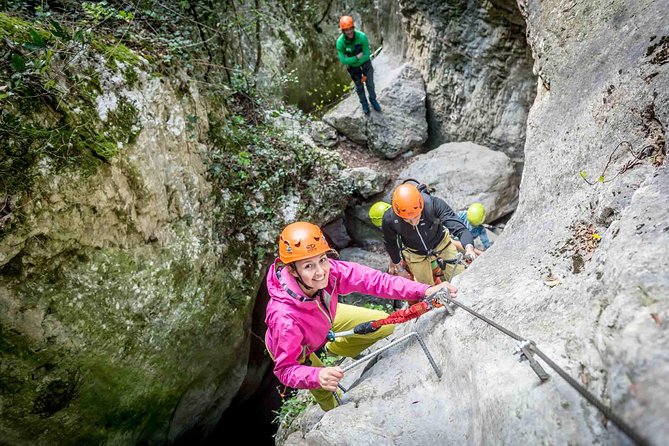
A gorge like this makes your morning feel like a movie scene. Via Ferrata Rio Sallagoni is built for canyon-like adventure with a big dose of scenery: waterfalls, shifting light in the ravine, and steep walls that keep you moving with confidence and care. I especially liked how the route feels wild and romantic while still avoiding getting wet, thanks to side passages that thread between steep rock faces. I also liked the variety packed into just 3.5 hours, from metal steps on long iron runs to the moment you cross the rope Tibetan bridge. The one real consideration: this is not a route for people with a strong fear of heights.
This outing is small-group by design, and that matters on ferrata routes where good spacing and steady pacing keep things calmer. You’ll get the core kit you need on the day—harness, helmet, and ferrata set—and you’ll be guided by an Alpine guide service, in English. A final heads-up: you’ll need moderate physical fitness, and kids under 140 cm shouldn’t plan on this one.
In the reviews, the standout detail for me wasn’t just the views. It was the way the guide supports you when the route gets technical. One guide named Marco specifically gets praise for being patient and turning the challenges into something fun without rushing anyone.
In This Review
- Key Things That Make Rio Sallagoni Different
- Entering a Canyon-Like Ravine in Trentino-Alto Adige
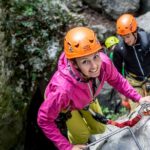
- Harness, Helmet, Ferrata Set: Your Safety Toolkit for This Route
- The 3.5 Hours Through Iron Brackets and Rope Exposure
- First moves: getting into the rhythm
- The side passages: canyoning energy without the water
- Iron brackets and protruding sections: where strength comes in
- The Tibetan rope bridge: the moment you’ll remember
- The finish: going up toward the Castle of Drena
- Price and Value: Why $84.02 Can Make Sense
- The missing piece: snacks
- Who Should Book Rio Sallagoni (and Who Should Skip It)
- Timing, Group Size, and Meeting Point Basics
- Should You Book Via Ferrata Rio Sallagoni?
- FAQ
- What’s the duration of Via Ferrata Rio Sallagoni?
- How much does Via Ferrata Rio Sallagoni cost?
- What time does the activity start, and where is the meeting point?
- What’s included in the price?
- Is English available on this tour?
- Who is this via ferrata not recommended for?
- What physical level do I need?
- What happens if weather is bad?
Key Things That Make Rio Sallagoni Different
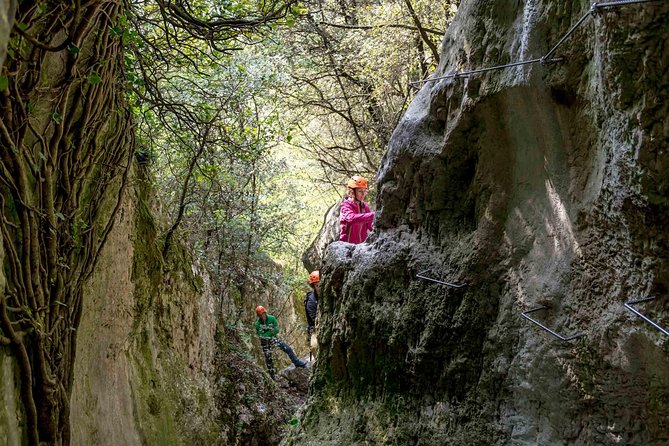
- Waterfalls and shifting light make the gorge feel otherworldly while you climb
- Canyon-style route where you stay on the sides instead of getting soaked
- Long iron-bracket stretches that test strength and steady footwork
- Protruding passages that add variety and require focus
- A Tibetan rope bridge that challenges balance and nerve
- A climb that ends near the Castle of Drena for a satisfying finish
Entering a Canyon-Like Ravine in Trentino-Alto Adige
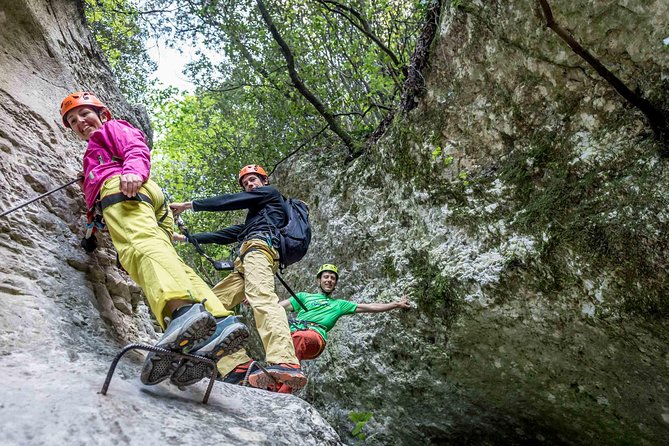
Rio Sallagoni via ferrata sits in Trentino-Alto Adige, and the setting is exactly the kind that makes you slow down and look around. The key vibe is “canyon meets fairytale”: steep walls, waterfall sounds, and that play of light inside the gorge that makes every section feel different as you move.
The route is described as having the character of canyoning, but with a crucial twist. Instead of spending the whole time in water, you pass along the sides of the gorge in the middle of steep walls without getting wet. That changes the feeling of the day. You still get that adventurous exposure—rock faces close on both sides—but you can plan your footing and breathing without the constant challenge of slippery conditions.
What I think makes this more memorable than a standard via ferrata is the blend of movement and atmosphere. You’re not just ticking off a series of metal rungs. You’re walking through a narrow world where water and light do half the work of creating the mood.
You can also read our reviews of more tours and experiences in Trentino Alto Adige.
Harness, Helmet, Ferrata Set: Your Safety Toolkit for This Route
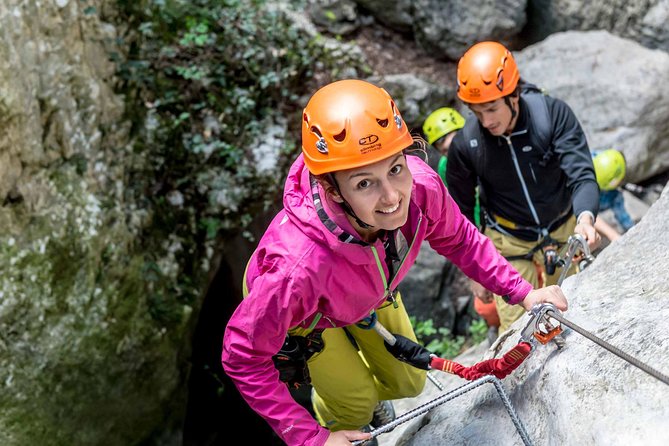
This trip includes the gear that typically matters most on a via ferrata: harness, helmet, and ferrata set. It also includes RC insurance and Alpine Guide Service, and it’s offered in English.
That combination is the value sweet spot. For a lot of people, the “unknown” on a ferrata isn’t the difficulty level—it’s whether they’ll have the right setup and clear guidance when it gets exposed. By providing the key equipment and having an Alpine guide service, the tour gives you a structured way to handle the technical parts like protruding passages and the Tibetan rope bridge.
One more practical point: bring your own thinking about comfort and readiness. The route has segments that test strength and experience, especially where the iron brackets can feel spaced out. If your moderate physical fitness is more “I do hikes, not climbs,” that’s still potentially fine—but you’ll want to feel confident on steep terrain and on equipment you’re not used to.
The 3.5 Hours Through Iron Brackets and Rope Exposure
The total time is about 3 hours 30 minutes, and the schedule starts at 9:00 am. In that window, you’ll cover a short but varied stretch of gorge climbing. The short duration is important: you get a real via ferrata experience without turning it into an all-day suffering project.
Here’s how the experience feels in stages, and what to watch for.
First moves: getting into the rhythm
After you meet at Ferrata Rio Sallagoni, Località Lavini, di, 38074 Dro TN, Italy, the day starts from the meeting point and ends there again. Expect your guide to set the tone for safety and pace. From there, the route quickly turns into a “stay focused, keep moving” style of climbing because you’re working along steep walls rather than on easy trails.
If you’re new to via ferrata, the main adjustment is mental: you’re responsible for your balance and timing, even though your equipment provides security. You’ll likely feel the value of having a guide—especially if you’re the type who freezes when there’s a lot happening at once.
The side passages: canyoning energy without the water
One of the defining features here is that you pass along the sides in the middle of steep walls without getting wet. That means the challenge is not about wading or splashing. It’s about walking close to rock with exposure around you.
This is also where the canyon feel becomes real. The gorge constrains your viewpoint and brings the waterfalls and light play into your attention. You get that wild, romantic vibe while still staying in control of traction and footing.


Iron brackets and protruding sections: where strength comes in
This is not a “gentle” route. There are sometimes long distances of the iron brackets, so you can’t rely on constant step-by-step support. You’ll need to plant your feet with intention, keep your grip habits smooth, and avoid rushing.
There are also protruding passages, which add variety and a slightly different kind of focus. Instead of thinking only about the next rung, you’re also managing body position. If you tend to overthink, try to keep your attention on one simple task at a time: stance, balance, then the next move.
The Tibetan rope bridge: the moment you’ll remember
The highlight—at least for your nerves—is the Tibetan bridge made of ropes. A rope Tibetan bridge typically makes balance the whole game, and the description here points directly to that: it will test your balance and courage.
This is where that small-group feel can help. You can learn from how others pace themselves, and you can take a steady approach rather than feeling rushed. It’s also why the “afraid of heights” warning matters. Even if you’re not terrified of heights in general, an exposed rope crossing can still feel intense.
The finish: going up toward the Castle of Drena
The route isn’t long, but it’s framed as leading you up the canyon to the magnificent Castle of Drena. That gives the day a clear payoff. You’re not just climbing for climbing’s sake—you’re working up a story that ends with a landmark finish.
You’ll be back at the meeting point after the activity. That keeps logistics simple, and it also means you’re not signing up for a multi-day trek.
Price and Value: Why $84.02 Can Make Sense
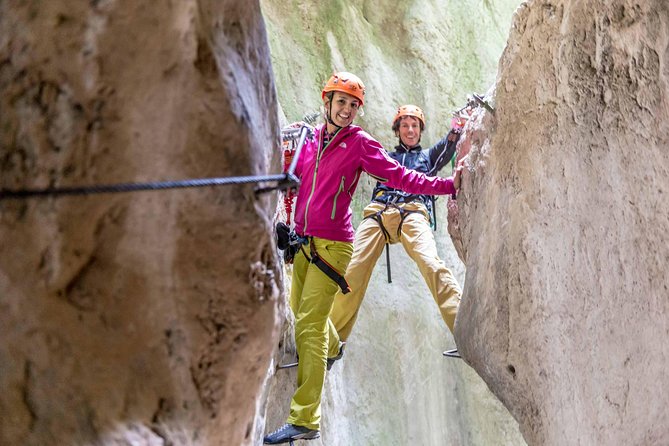
The price is $84.02 per person, and the group size max is 8 travelers. You’re also getting harness, helmet, ferrata set, RC insurance, and Alpine guide service included.
So is it worth it? For me, the value comes from what’s covered rather than from the raw dollar amount. You’re paying for:
- equipment you need for safety
- professional guidance on an exposed route
- insurance coverage
- a controlled group size on a technical day
Also, this is the kind of activity that’s easy to mess up without proper support. If you don’t do ferrata often, the cost feels more justified because the guide reduces risk and increases confidence—especially on the sections that test strength and balance.
One more timing detail: on average, it’s booked about 10 days in advance. That’s not a guarantee, but it’s a good sign to plan ahead if you’re traveling in summer and want the morning slot.
The missing piece: snacks
Snacks are not included. Since you’re out for roughly three and a half hours in active terrain, I recommend planning your own light snack and water. Don’t treat this as a sit-and-look kind of trip. You’ll be working your legs and your attention.
Who Should Book Rio Sallagoni (and Who Should Skip It)
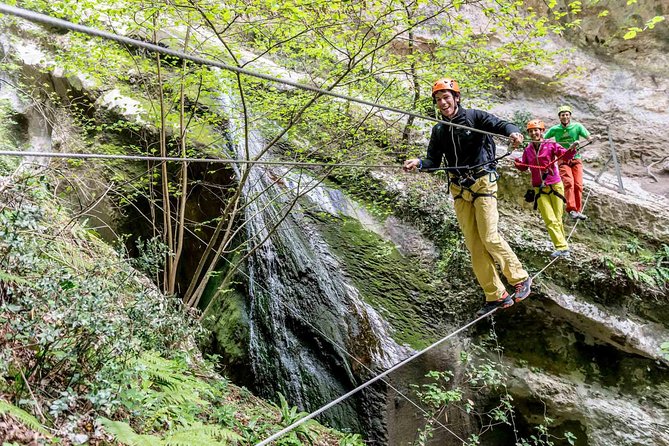
This tour lists a few clear suitability points, and I agree with them.
You’ll likely enjoy this if:
- you have moderate physical fitness
- you’re comfortable with steep terrain and exposure
- you want a short route with lots of variety: iron brackets, protruding passages, and a rope bridge
- you want something summer-friendly and refreshing, thanks to the gorge setting and water sounds
You should probably skip it if:
- you’re afraid of heights (this route includes exposed moments and a rope bridge)
- your child is under 140 cm
- you’re expecting a family-friendly easy hike
It also helps if you like a guide who keeps things moving but doesn’t leave anyone behind. In the reviews, Marco is singled out for being patient and supportive during the harder moments. That kind of coaching can turn a stressful section into a solvable challenge, which is exactly what you want when the route tests courage.
Timing, Group Size, and Meeting Point Basics
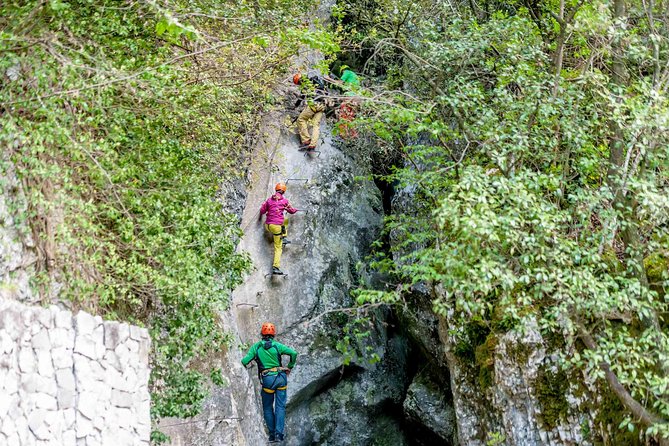
The activity starts at 9:00 am, and the meeting point is Ferrata Rio Sallagoni, Località Lavini, di, 38074 Dro TN, Italy. The activity ends back at the meeting point, so you’re not dealing with a complicated second transportation step.
The maximum group size is 8 travelers. For via ferrata, that’s a meaningful detail. Smaller groups mean less waiting time and less crowding at technical areas like iron-bracket stretches and the rope bridge.
Language support is listed as English, so you can follow safety cues without guessing. If you like to understand what you’re doing, that’s a real quality-of-life upgrade on a route where timing and foot placement matter.
Finally, the tour requires good weather. If weather is poor, the experience can be canceled and you’ll be offered a different date or a full refund. With gorge routes, that requirement isn’t just admin—it’s about safety and route conditions.
Should You Book Via Ferrata Rio Sallagoni?
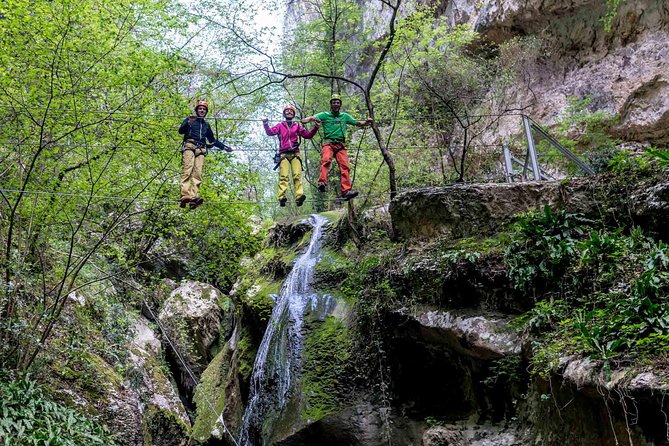
I think it’s a great booking choice if you want a short, technical adventure with a strong sense of place. You get waterfall-lit gorge scenery, canyon-like movement without getting wet, and the memorable Tibetan rope bridge moment. You’re also not flying blind: the kit is included, insurance is included, and Alpine guidance is part of the deal.
I’d hesitate if you’re uneasy with heights or you’re looking for an easy day out. The route is described as testing your strength and experience, and the rope bridge is specifically flagged as a balance-and-courage challenge.
If you’re deciding between a standard hike and this via ferrata, treat this as the pick for your “I want real adventure, but I don’t want an all-day ordeal” day. And if you can, show up ready to work and listen—your reward will be a gorge climb that feels wild, romantic, and seriously fun when you’re moving through it step by step.
FAQ
What’s the duration of Via Ferrata Rio Sallagoni?
The experience lasts about 3 hours 30 minutes.
How much does Via Ferrata Rio Sallagoni cost?
It costs $84.02 per person.
What time does the activity start, and where is the meeting point?
It starts at 9:00 am. The meeting point is Ferrata Rio Sallagoni, Località Lavini, di, 38074 Dro TN, Italy.
What’s included in the price?
Included: harness, helmet and ferrata set, RC insurance, and Alpine Guide Service.
Is English available on this tour?
Yes, the tour is offered in English.
Who is this via ferrata not recommended for?
It’s not recommended for people afraid of heights. It’s also not recommended for children under 140 cm.
What physical level do I need?
The tour is for travelers with a moderate physical fitness level.
What happens if weather is bad?
This experience requires good weather. If canceled due to poor weather, you’ll be offered a different date or a full refund.