Verona’s best shortcut starts at the Arena. This 2-hour private walk is a smart way to cover Roman Verona and Shakespeare Verona without getting lost, starting at the Roman amphitheater and ending near the same spot. I especially like how the guide connects big landmarks like the Arena to the smaller stories around Juliet’s area. The only real drawback: with just 2 hours, you’ll have to choose how long to linger at the most famous stops like Juliet’s balcony.
This is private group touring (up to 20), so the pace can feel calmer than a busier group walk. In at least one documented case, the guide was named Lorella, and she’s praised for pointing out small details on buildings plus sharing practical restaurant ideas. If you want a slow, deep-dive museum-style visit, this tour may feel a bit fast—but for first-time orientation in central Verona, it’s a strong fit.
In This Review
- Key Highlights at a Glance
- Starting at Piazza Bra: The Roman Arena Sets the Tone for Your Walk
- Inside the Roman Amphitheater Experience at Verona’s Arena
- What to watch for
- Capulet House, Juliet’s Area, and the Surprising Side of the Story
- The practical truth about Juliet’s balcony
- Piazza Erbe: The Old-Market Square That Still Feels Like Verona
- Piazza dei Signori: Verona’s Living Room and Its Statues
- Roman-Era Gate Routing: How the Walk Shows Verona’s Growth
- How the 2-Hour Timing Works (and Where You Might Feel Rushed)
- A tip for your own pacing
- Private Group Pace: When It’s Just You (and Maybe Two More People)
- Licensed English Guide: Why the Walking Part Feels Easier
- Price and Value: Is $335.32 Worth It?
- Practical Tips Before You Go (So the Walk Feels Easy)
- Who This Walking Tour Suits Best
- Should You Book This 2-Hour Private Verona Walk?
- FAQ
- How long is the 2-hour private guided walking tour?
- What is the price for the tour?
- Where does the tour start?
- What stops are included?
- Is the tour wheelchair accessible and does it run in bad weather?
- What language is the guide?
Key Highlights at a Glance
- Roman Arena start at Piazza Bra, with an up-close look at Verona’s Roman amphitheater
- Juliet’s balcony and Capulet house context, including what Juliet’s Club is all about
- Piazza Erbe and Piazza dei Signori in one loop, mixing everyday city life with classic landmarks
- Roman-era excavations and the ancient gate route that helps you understand how Verona grew
- A licensed English-speaking guide who keeps the walk moving at a comfortable pace
Starting at Piazza Bra: The Roman Arena Sets the Tone for Your Walk
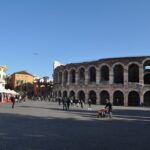
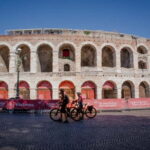
The tour begins at Piazza Bra, at I-37121 Verona, by the statue of King Vittorio Emanuele on Horse. That matters more than it sounds. Piazza Bra is where Verona’s “big picture” lives—so you start oriented, not guessing. Within minutes, you’re facing a structure that makes Roman-era architecture feel real, not textbook.
From there, the walk is designed as a connector route. You’re not just seeing one photo spot after another. You’re moving through layers—Roman foundations, medieval hangouts, and the places that still shape how people experience Verona today. That’s why this kind of short private walk works so well: it gives you a mental map you can use later.
Also, it’s a rain-or-shine tour. That can be a good thing in Verona, because weather can change quickly, and you don’t have to gamble your day.
You can also read our reviews of more tours and experiences in Verona.


Inside the Roman Amphitheater Experience at Verona’s Arena
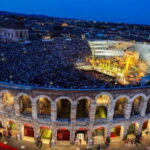
The Roman amphitheater is the true anchor of Verona. The Arena here is described as imposing and surprisingly well preserved, which is exactly what you want from a first stop. Even if you’re not a Roman-history diehard, the scale hits you fast—stone tiers, the sense of design, and the way the city built around it over time.
Here’s what I like about starting at the Arena: it frames everything you’ll see next. When you know where the Romans staged crowds and spectacles, it’s easier to understand why Verona’s center still revolves around public spaces and major landmarks.
This tour also ties into the wider Roman setting by covering the Roman Theater area as part of the experience. That combination—Arena plus Roman Theater—helps you get a fuller picture of Verona’s Roman entertainment world in a time-efficient way.
What to watch for
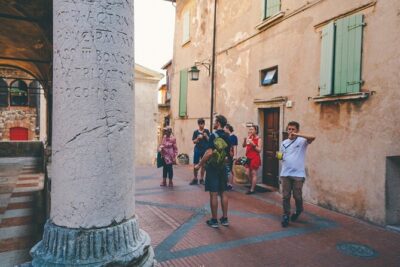
Your guide’s job is to help you notice what most people walk past. For example, in one praised experience, Lorella was credited with pointing out old flood markings and engravings on a building. The payoff is huge: suddenly you’re not just viewing, you’re reading the city.
Capulet House, Juliet’s Area, and the Surprising Side of the Story
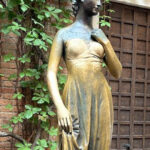
Next comes the stop near the Capulet house area, where you’ll think about why Juliet is so much more famous than Romeo. That sounds playful, but it’s actually smart guiding. It turns the usual Shakespeare framing into something you can hold onto while you walk—why certain stories stick, and how Verona became part of the legend.
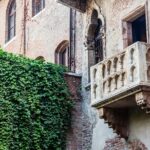
You’ll also learn about Juliet’s Club. The important thing isn’t memorizing a name—it’s understanding that Juliet’s balcony isn’t just a photo wall. It’s part of a living cultural tradition in the city, tied to how visitors and locals keep the narrative going.
And yes, you’ll visit Juliet’s balcony. This is one of those spots where timing and crowd flow matter. In a 2-hour tour, you won’t get hours to linger. But the trade-off is that you won’t waste time trying to figure out how to pair Juliet with the Roman sites and the piazzas nearby.
The practical truth about Juliet’s balcony
Expect it to be a popular stop. If you care most about photos, you’ll want to be ready to move quickly when your guide signals it’s time. If you care most about the story, slow down during the explanation—your guide will give you context that makes the visit feel less like a snapshot stop.


Piazza Erbe: The Old-Market Square That Still Feels Like Verona
After the Roman-to-Shakespeare swing, the tour lands in Piazza Erbe, described as laid-back and likely the oldest, continuously functioning marketplace in the world. That phrase is doing a lot of work. It means you’re not just looking at historic buildings—you’re stepping into a space that has kept doing the same basic job for ages: bringing people together to buy, sell, and chat.
This is where the tour becomes more than sightseeing. It starts to feel like a city you could live in—because markets are still markets, even when the centuries change around them.
If you’re the type who likes getting your bearings fast, this stop helps. Piazza Erbe gives you a reference point for future self-guided wandering. It’s also a good place to pause for a few minutes and watch how people move through the square.
Piazza dei Signori: Verona’s Living Room and Its Statues
Right adjacent to Piazza Erbe is Piazza dei Signori, often described as the living room of the city. I like that phrasing because it captures the mood. It’s not only a monument stop. It’s a social space—where the city feels present, not frozen.
Here you’ll see elegant statues of poets and knights. This kind of detail is exactly why a guided walk is worth it. If you come with no context, you might spot the figures and move on. With a guide, you start to understand what the statues represent and why they belong in that square.
This is also a strong “second anchor” after the Arena. The Roman stop gives you structure and origin. Piazza dei Signori gives you the cultural attitude of the city—how Verona celebrates ideas, stories, and identity in stone.
Roman-Era Gate Routing: How the Walk Shows Verona’s Growth
One of the tour’s selling points is that it takes you through an ancient Roman gate. That kind of routing can sound minor until you realize what it does for your understanding.
Verona isn’t one big, separate attraction. It’s a city where different eras overlap. When your route includes an ancient gate on the way between major sites, you’re seeing how movement and access worked in the past. That makes the Roman areas feel connected rather than scattered.
In a short 2-hour format, this is valuable. You can’t afford to accidentally “miss the story” and just see landmarks. The route choices here are meant to keep the narrative moving—Roman to medieval to iconic modern culture.
How the 2-Hour Timing Works (and Where You Might Feel Rushed)
The tour runs for 2 hours, with availability for starting times. The schedule is tight by design. In those two hours, you’re expected to cover a cluster of major sights: the Arena/amphitheater, the Roman Theater area, Piazza Erbe, Piazza dei Signori, and Juliet’s balcony and Capulet house area.
That time crunch can be a drawback if your style is slow. For example, you might want longer at Juliet’s balcony, longer at Piazza Erbe, or extra time to take photos at the Roman sites. This is where private touring helps—because if you have a small group and your guide is flexible, you can usually adjust your pace without throwing off the whole experience.
Based on praised experiences, the walk is commonly described as well paced, with time for questions and photos. One highlighted benefit was that the tour felt gentle, with room to stop for a coffee if you wanted. That’s a good sign: it means the guide isn’t just sprinting you from stop to stop.
A tip for your own pacing
Pick your priority ahead of time:
- If it’s Roman architecture, plan to spend your extra minutes near the Arena and Theater.
- If it’s Shakespeare, reserve extra time for Juliet’s balcony and the Capulet-area story.
- If it’s city life, lean into Piazza Erbe and Piazza dei Signori.
Private Group Pace: When It’s Just You (and Maybe Two More People)
This is private group touring, and the platform notes group sizes up to 20. But the feeling matters more than the maximum size. A private walk usually means fewer obstacles: less crowd pressure, fewer wait times, and more direct Q&A.
In one instance, a very small group (two people) was mentioned as a fortunate setup, with a paced route and plenty of room for questions, photos, and even time to slow down when something caught attention. That kind of flexibility is the hidden advantage of private tours.
If you’re coming with family or anyone with mobility needs, the tour is also listed as wheelchair accessible. I’d still recommend checking the route surfaces with the provider when you book, since historic centers can include uneven sections—nothing here is promised to be perfectly smooth.
Licensed English Guide: Why the Walking Part Feels Easier
You get a licensed, professional English-speaking guide. This is the part that makes the tour feel like a guided experience rather than a route with signposts.
A good guide does three things:
- They tell you why each stop matters.
- They point out what you’d otherwise miss.
- They keep your time efficient without turning it into a race.
The strongest praises attached to this tour are exactly those. Guides have been noted as friendly and informative, with the added perk that some guides are experienced with other Verona tours too. In one case, the guide was linked to an Arena tour as well, which suggests you could build a second visit without losing continuity.
Even if your guide isn’t the same person from that example, the training focus seems aligned: you leave with names, context, and a better sense of how Verona fits together.
Price and Value: Is $335.32 Worth It?
The price is $335.32 per group up to 20, for a 2-hour private walking tour. That pricing model means your value depends on your group size.
- If you’re traveling with several people and can book with them, the cost per person drops quickly. Then you’re basically buying convenience, context, and time-saving routing.
- If you’re a solo traveler booking a private group by yourself, it can be pricier than joining a standard group tour. In that case, I’d only book if you strongly value one-on-one pacing, question time, and a guide who can adjust to your interests.
What you do get for the price is not just route guidance. You get a licensed guide, a curated circuit of major highlights, and access to the stories behind places like Juliet’s balcony and Juliet’s Club, plus the Roman sites that most people struggle to place.
So my rule is simple: book this when you want your Verona experience stitched into a coherent storyline in only two hours.
Practical Tips Before You Go (So the Walk Feels Easy)
Here’s how to set yourself up for comfort and fewer headaches.
Bring:
- Comfortable shoes. You’re walking between major squares and Roman sites, and the pace matters.
- A face mask or protective covering, since it’s listed as something to bring.
Plan for:
- Rain or shine. Wear something you don’t mind getting a little damp in.
- The tour starts at Piazza Bra by the King Vittorio Emanuele statue on horseback. This is a very specific landmark, which is good—just make sure you’re there a few minutes early.
If you care about photos, tell yourself you’ll use the time wisely. The tour is short, so your best shots often come right when the guide gives you context and points out the right angles.
Who This Walking Tour Suits Best
This tour is a great match if:
- You’re in Verona for the first time and want the key stops in one smooth loop.
- You like Roman landmarks but also want the Shakespeare connection without turning your day into separate half-tours.
- You want a calm pace with time for questions, not a sprint through crowded streets.
- You prefer the ease of a private guide in the center of town.
It may not be the best fit if:
- You want long stays in one spot, like spending a lot of time lingering at Juliet’s balcony or doing a museum-level Roman deep session.
- You’re happy navigating alone and only need directions, not storytelling.
Should You Book This 2-Hour Private Verona Walk?
I’d book this tour if your top goal is to get your bearings in Verona fast and leave with a real sense of the city’s layers—Roman, medieval, and modern legend—all tied together into a route you can repeat later on your own. The price makes more sense when you have a small group, but even then, it’s not just about convenience. It’s about getting the story behind the stone and the square.
If your schedule is tight and you don’t want to piece together multiple stops, this is a smart way to do it. Just go in with realistic expectations for the 2-hour timing: enjoy the highlights, ask your questions, and save any long lingering for a second day.
FAQ
How long is the 2-hour private guided walking tour?
The tour lasts 2 hours.
What is the price for the tour?
The price is $335.32 per group, up to 20 people.
Where does the tour start?
It starts in I-37121 Verona, Piazza Bra, by the statue of King Vittorio Emanuele on Horse.
What stops are included?
The tour covers the Roman amphitheater (Arena), Juliet’s balcony and the Capulet house area, Piazza Erbe, Piazza dei Signori, and it includes Roman-era sites such as the Roman Theater and an ancient Roman gate.
Is the tour wheelchair accessible and does it run in bad weather?
Yes, it is wheelchair accessible, and it runs rain or shine.
What language is the guide?
The tour is guided in English by a licensed, professional guide.