REVIEW · VERONA
3 Hour Walking tour of Verona and Arena
Book on Viator →Operated by VENEZIA TOUR ITALY · Bookable on Viator
Verona in three hours: fortresses, forums, and an arena. This guided Arena museum ticket plus a licensed English guide help you connect medieval power, Roman design, and modern city life without wasting time.
I also like that the walk stays manageable, with a mostly level route and tight stops at places like Castelvecchio, the Scaliger Bridge, and Piazza delle Erbe—most with no extra entry cost. One drawback to weigh: at $171.52 per person, it’s a strong choice when you want the guide and the Arena museum visit, but it may feel pricey if you’re happy wandering on your own.
In This Review
- Key Highlights Worth Noticing
- Where This Verona and Arena Walk Fits in Your Day
- Castelvecchio Fortress: Verona’s Medieval Military Power Up Close
- Quick practical tip
- Ponte Scaligero (Scaliger Bridge) Over the Adige
- The Arch of the Gavi: A Roman Honor Built for a Specific Family
- Porta Borsari: One of Verona’s Roman City Gates
- Piazza delle Erbe: The Oldest Square with Roman Roots
- Torre dei Lamberti: Medieval City Attention in One Vertical View
- Piazza dei Signori: Scaliger Palaces and Piazza Dante Energy
- Arena di Verona: Roman Amphitheater Plus the Museum
- Who should care most here
- The Guide Factor: Crisp Explanations, Not a Lecture
- Price and Value: What $171.52 Buys You
- Practical Tips That Make This Walk Easier
- Should You Book This Verona and Arena Walking Tour?
- FAQ
- What’s the price for the 3-hour walking tour of Verona and the Arena?
- How long is the tour, and what time does it start?
- Where does the tour start?
- Is the tour in English, and do I get a ticket?
- What’s included in the tour price?
- What’s not included?
- Is the tour offered in bad weather?
Key Highlights Worth Noticing
- Arena di Verona museum entry is included, so you’re not hunting for tickets mid-day
- A small shared group (max 16) keeps explanations easier to follow
- Many key stops have admission free, which helps the tour feel efficient
- English tour with a mobile ticket makes setup simple
- A mostly level route with quick photo stops keeps it realistic for a 3-hour window
- All-weather operation means you should plan with water and layers in mind
Where This Verona and Arena Walk Fits in Your Day
Verona is the kind of city where you can spend a whole week just following layers of stone. This tour is designed for the opposite goal: get your bearings fast and still leave with the story.
You start at Via Teatro Ristori 7 at 10:00am, then loop back to the same spot. Expect about 3 hours total, walking at a pace that works for most people. The group is shared, capped at 16, so you won’t feel lost in a crowd.
The value idea here is simple. You pay for a licensed guide and the Arena museum entrance, then you get a string of high-impact stops—fortress walls, Roman-era architecture, and two of Verona’s liveliest squares—without turning the day into a ticket-buying marathon.
You can also read our reviews of more tours and experiences in Verona.

Castelvecchio Fortress: Verona’s Medieval Military Power Up Close
The first stop takes you to Castelvecchio, a medieval fortress tied to the Scaliger era. Even if you don’t go inside, the setting gives you immediate context: this wasn’t just pretty stone—it was defense, strategy, and control.
I like how this stop acts like a “before” picture for the rest of the walk. From here, the tour gradually shows how Verona’s leaders used buildings not only to live and govern, but to project power. You’ll also be in the historic center, close enough to other sights that the day feels connected rather than random.
Because this portion is marked as admission free, it’s a low-pressure moment. You can take photos, listen to the guide’s framing, and decide how much time you want to spend on the fortress details.
Quick practical tip
If you’re taking this in warm months, plan for sun and bring water. Fortress exteriors can get hot fast, and shade is limited.
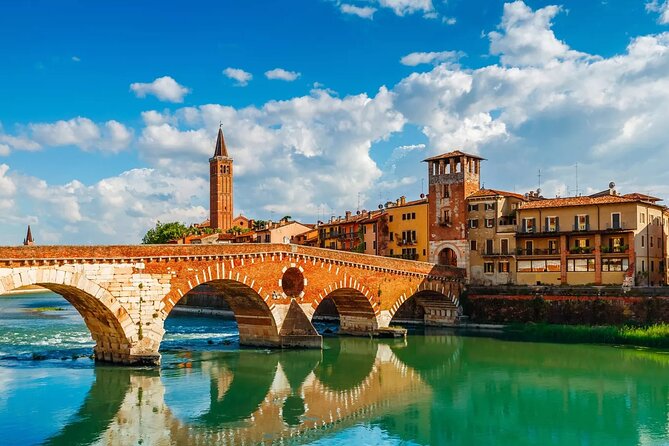
Ponte Scaligero (Scaliger Bridge) Over the Adige
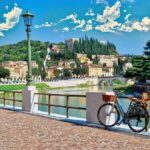
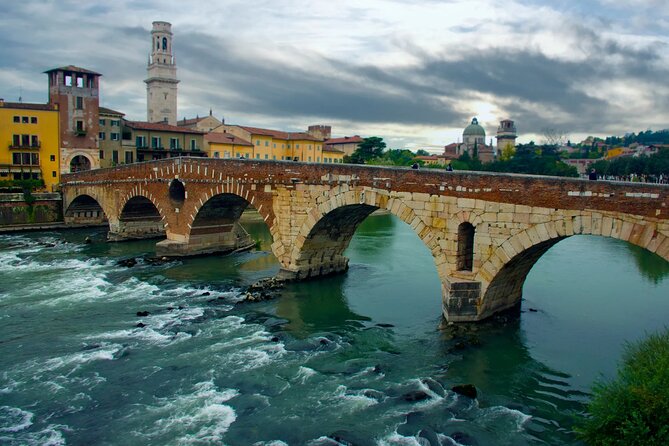
Next comes the Ponte Scaligero, also called the Scaliger Bridge. This is more than a pretty crossing. It’s an infrastructural and military work tied into the Castelvecchio system, which helps you see why this bridge mattered long before cars and buses.
What’s fun here is how the tour nudges your attention. Instead of treating the bridge like a postcard photo, the guide’s focus is on purpose—how Verona used the Adige River and its crossings as part of defense and movement.
This stop is also admission free, so you’re not stuck checking tickets or worrying about timing. You can simply slow down, look at the structure, and connect it back to the fortress you just saw.
The Arch of the Gavi: A Roman Honor Built for a Specific Family
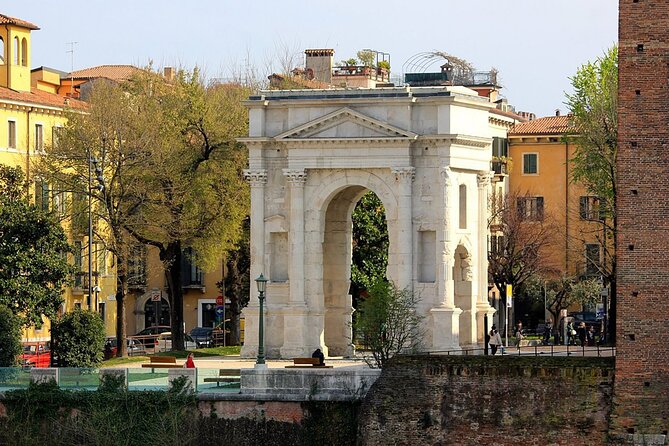
Then the walk shifts toward Roman Verona with the Arch of the Gavi. This kind of stop is where a guide adds real value. Roman architecture in Italy is often dramatic, but this one is interesting because it’s an honorary, monumental arch for a particular private family.
The result: you learn something small but meaningful. It’s not just that the Romans built arches. It’s that they used monuments to signal identity, status, and loyalty—messages stamped into stone and placed along a major ancient route.
Time here is tight—about 25 minutes—but that’s perfect for a quick “read” of the structure and its place along the old Via Postumia area. Expect explanation and photo time, then you move on.


Porta Borsari: One of Verona’s Roman City Gates
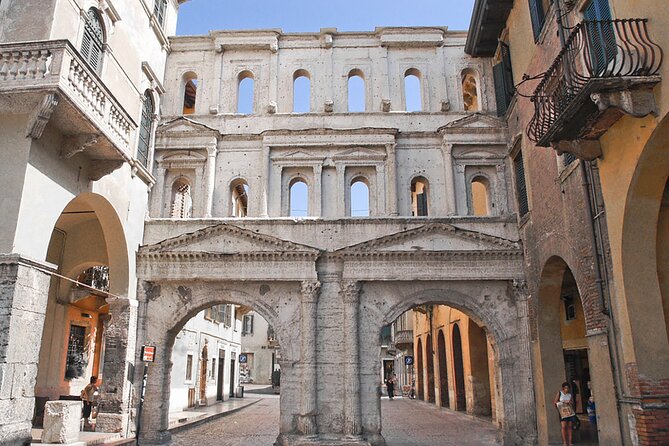
Porta Borsari is a standout stop for anyone who likes the Roman layers of Italian cities. It’s one of the gates along the Roman walls of Verona and is linked to the name Porta Iovia in antiquity due to a nearby temple dedicated to Jupiter Lustralis.
The practical joy of this stop is that it’s both architecture and orientation. After the bridge and arch, you start to see how the city was organized: gates controlled movement, and wall lines shaped where life could expand.
It’s also labeled World Heritage Site, which matters because it tells you this isn’t just a local curiosity. It’s protected as part of a broader recognized heritage. And since the stop is admission free, you can spend your energy on understanding what you’re seeing.
Piazza delle Erbe: The Oldest Square with Roman Roots
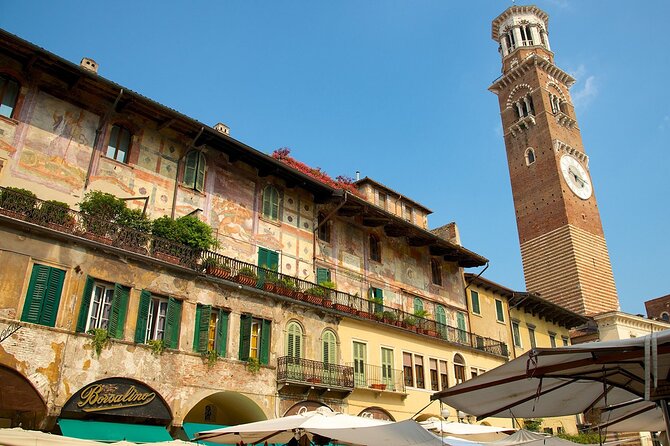
After the Roman streets and gates, you land in Piazza delle Erbe, Verona’s oldest square. This area sits over the Roman Forum zone, which means you’re walking through a location that has repeatedly switched roles—from political and economic hub to medieval city center.
I like that the tour doesn’t treat the square as a pause for shopping. You get the bigger idea: layers of buildings replaced earlier ones, but the function of gathering in this spot lasted. That’s why the square remains so central even today.
This stop is admission free and usually gives you a simple moment to breathe. If you’re photographing Verona’s terraces and facades, this is one of the best places to do it without needing entry tickets.
Torre dei Lamberti: Medieval City Attention in One Vertical View
Near Piazza delle Erbe sits the Torre dei Lamberti. A tower can sound like a minor stop, but in Verona it works as a visual anchor. The tower helps you understand the scale of the city and where power and civic identity were “made visible.”
In the tour’s flow, this is a smart middle act. You’ve seen fortress and Roman structure, and now you’re back in the civic heart, where the city tells its own story. Time is short—about 20 minutes—so the focus is on taking it in from close by and getting the guide’s context.
Also, the stop is listed as admission free, which keeps it from turning into a climbing or ticket check. Use the time for photos and for a quick reset before the next square.
Piazza dei Signori: Scaliger Palaces and Piazza Dante Energy
Then you move to Piazza dei Signori, also known as Piazza Dante. This square grew in the Middle Ages as Scaliger palaces developed, and it has long served political, administrative, and representational functions.
This is one of those stops where you can feel the “stage” of civic life. The piazza is framed by monumental buildings connected by arches and loggias, which gives you more to look at than just open space. You’re in a square that was made for officials, ceremonies, and public display.
Time is also around 20 minutes. That’s enough for you to understand how the architecture supports the function, then move on with a clear sense of what you’re seeing.
Arena di Verona: Roman Amphitheater Plus the Museum
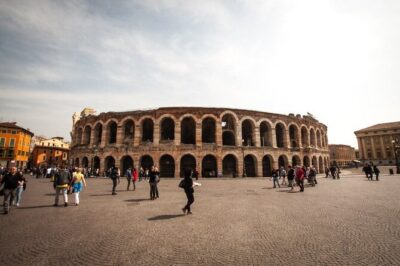
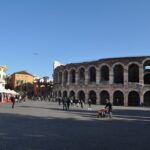
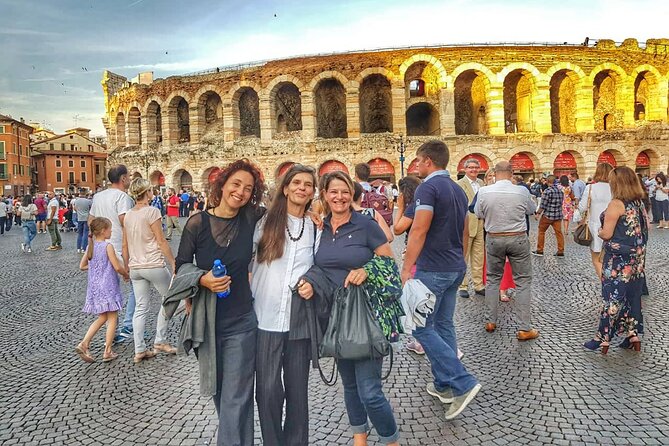
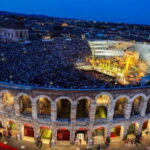
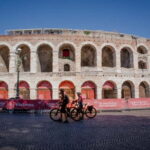
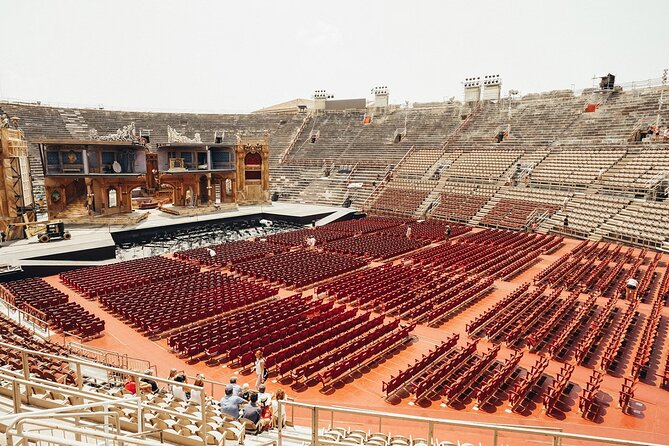
The final and most famous stop is the Arena di Verona, a Roman amphitheater right in the historic center. It’s an icon citywide—so you know it from photos, but a guided visit helps you see how unusual it is and why it became such a cultural magnet.
The big practical point: your ticket includes entrance to the Arena museum. That means you’re not just standing outside with your camera. You get the chance to connect the amphitheater to artifacts, context, and the way the site has been understood over time.
The Arena stop is timed around 20 minutes in the walking flow, but the included museum ticket is what makes this tour worth paying for rather than just self-guiding. You’re paying to compress the “what am I looking at and why does it matter” question into a short visit.
Who should care most here
If you’re even a little curious about Roman architecture and how it shaped later European culture, this museum component is the payoff. If you’re only interested in the exterior views, you may be paying a bit extra for what you won’t fully use.
The Guide Factor: Crisp Explanations, Not a Lecture
A lot of history tours fail when they turn into a nonstop lecture. This one is designed to keep the talk human and digestible, and you’ll usually get a guide who balances explanation with pacing.
You might also run into guides like Frank, Maddy, or Isabella—names that have shown up in people’s experiences. The common thread is that the best guides keep things interactive and don’t overwhelm you with too much information at once.
If you want to make the most of your guide, use this simple trick: ask a question when you’re standing in front of something you can point to. Towers, gates, and bridges are perfect for that. The more specific your question, the better the answer usually lands.
Price and Value: What $171.52 Buys You
Let’s talk money in a practical way.
You’re paying $171.52 per person for:
- a licensed tour guide
- Arena museum entrance
- the organized walking route through major sights
You’re not paying for:
- transport to the meeting point
- food and drink
A key value detail is that many of the stops are marked admission free, so your money isn’t being eaten by nonstop ticket costs. This helps you feel like you’re getting more sight time per hour.
Still, this isn’t the cheapest way to see Verona. You’re buying guidance and Arena museum access, and that’s worth it when:
- it’s your first time in Verona
- you want a structured plan without sorting out Roman vs. medieval vs. modern on your own
- you’d rather spend 3 guided hours than research everything separately
It may feel less worthwhile if you already know Verona well or you plan to spend a lot of time on your own at the Arena and museums.
Practical Tips That Make This Walk Easier
This is a weather-on plan. The tour runs in all weather conditions, so don’t treat it like a fair-weather outing.
Bring:
- mineral water
- sunscreen and a hat
- an umbrella (yes, even when it looks sunny)
- comfortable shoes
In colder months, dress warm. In warmer months, the tour guidance also notes a cape or cover for church interiors if you end up going inside anywhere during the day.
Also note that the tour is shared and capped at 16. That means you should be ready to keep moving when the group moves. For anyone who hates feeling rushed, you can soften that by taking your photos quickly, then letting the guide do the heavy lifting on interpretation.
Should You Book This Verona and Arena Walking Tour?
Book it if you want a fast, guided hit of Verona’s major layers—fortress, Roman architecture, civic squares, and the Arena museum—within a short 3-hour window. The included Arena museum entrance is the deciding factor, because it turns the most famous sight into something you can actually learn from.
Skip it (or consider something else) if you already plan to spend lots of time inside the Arena area on your own, or if you prefer to roam without a schedule. And if you’re deciding between multiple tours on the same day, give yourself breathing room; this one moves at a steady pace.
If your goal is to walk away with a clearer map of Verona’s past and a good use of a half-day, this is a solid booking.
FAQ
What’s the price for the 3-hour walking tour of Verona and the Arena?
The price is $171.52 per person.
How long is the tour, and what time does it start?
It’s approximately 3 hours, starting at 10:00am.
Where does the tour start?
The meeting point is Via Teatro Ristori, 7, 37122 Verona VR, Italy. The tour ends back at the meeting point.
Is the tour in English, and do I get a ticket?
Yes, it’s offered in English and you receive a mobile ticket.
What’s included in the tour price?
A licensed tour guide, entrance ticket to the Arena museum, and the Arena museum entrance ticket.
What’s not included?
Transport to the meeting spot and food and drink.
Is the tour offered in bad weather?
The tour continues in all weather conditions, so it’s recommended to bring mineral water, sunscreen, a hat, and an umbrella. Most people can participate.