That first corner in Verona says a lot.
This two-hour private walking tour is a fast, friendly way to orient yourself in a city packed with Roman, medieval, and Renaissance-era sights, without feeling rushed. You’ll move through the center with an English-speaking guide, hit the big recognizables like Juliet’s balcony, then go past them toward quieter streets, porticoes, and viewpoints.
What I like most is how practical it feels. I love that it’s private for up to 15 people, so you can ask questions and steer the pace. I also love the mix of stops: you get Roman Verona vibes at the start, then you land in the heart of the city at Piazza delle Erbe and Piazza dei Signori before finishing with local texture like osterias and views by the Adige hills.
One consideration: the route is a walking tour, and the timing is tight. If you’re traveling in very hot weather or you hate crowds and standing around for photo moments, you’ll want to wear comfortable shoes and be ready to keep moving.
In This Review
- Key highlights you’ll feel right away
- Getting your bearings in Verona: why two hours is the sweet spot
- Arena di Verona from the outside: the Roman opener that changes how you see the city
- Juliet’s balcony and statue: the stop that turns a name into a place
- Piazza delle Erbe: Verona’s everyday center, not just another photo stop
- Piazza dei Signori and the Dante connection: civic power in stone
- Arche Scaligere: the family tombs that do more than look old
- Under porticoes, past osteria tables, and toward Adige views
- Pace, timing, and what to expect while you’re walking
- Price and value: $337.90 per group up to 15 people
- Who should book this Verona walk (and who might skip it)
- Should you book Hidden and fascinating Verona (2 hour private walking tour)?
- FAQ
- How long is the Verona private walking tour?
- Where does the tour start?
- Is it private or shared?
- What is the price?
- What language is the tour in?
- Are admission tickets included for the stops?
- Is there a mobile ticket?
- When will I get confirmation after booking?
- What if the weather is poor?
- FAQ
- What if I need to cancel?
- What hours is this tour operating?
- Is public transportation nearby?
- Is the tour suitable for most travelers?
Key highlights you’ll feel right away
- Private, small-group format gives you flexibility and time for real questions
- Roman Arena area at the start sets the stage before the medieval center gets busy
- Juliet’s balcony and statue plus the story behind why it matters in Verona
- Market squares like Piazza delle Erbe where the city’s daily life comes through fast
- Della Scala tombs (Arche Scaligere) viewed from the outside with standout architectural details
- Pink marble staircase, old wool market, and portico osterias add the texture you miss alone
Getting your bearings in Verona: why two hours is the sweet spot
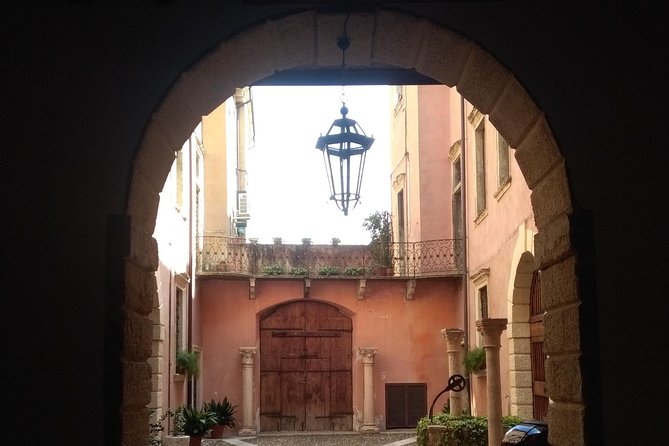
Verona can feel like a postcard that got assembled from several centuries at once. One street looks Roman. The next turns medieval. Then you suddenly have a market square where people are doing exactly what they’ve probably been doing for generations: talking, shopping, and stopping for coffee.
This tour works because it doesn’t try to do everything. It gives you a clear spine through the city’s center in about two hours, so you leave with a map in your head. Instead of bouncing randomly between famous spots, you get a route that makes the city’s layers make sense.
And because it’s private, it’s easier to adjust. One guide named Silvia in the reviews was praised for being flexible when weather turned drizzly, shifting the plan so groups could still see what mattered. That’s not a guarantee, but it tells you what kind of guiding style you’re likely to experience: not rigid, not scripted.
You can also read our reviews of more tours and experiences in Verona.


Arena di Verona from the outside: the Roman opener that changes how you see the city
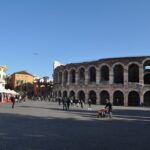
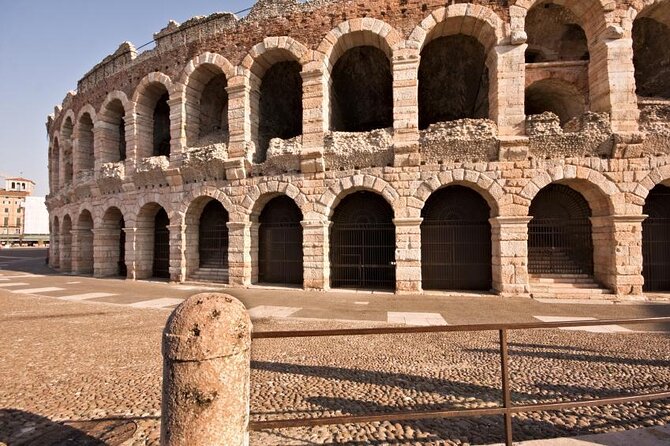
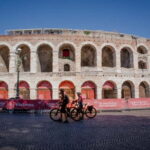
You start at Piazza Bra, then head to the Arena di Verona from outside. Even without entering, this is a smart opener. Roman structures have a kind of scale that sets your eye up for everything else you’ll see later. You notice proportions differently. You also start to understand why Verona became the kind of city that could later build so much around it.
It’s also a low-pressure stop. Admission is not included for this portion, and the tour keeps it brief, so you don’t waste your limited time hunting for tickets or long lines. You get the impact of the amphitheater setting, then you move on while the rest of the center is still fresh and readable.
If you’re the type who likes architecture and details, this is a good moment to train your eye. Guides in the reviews talked about pointing out small things like fossils in marble, which is exactly the kind of “how did they do that?” detail you’d miss if you were just photographing the big view.
Juliet’s balcony and statue: the stop that turns a name into a place
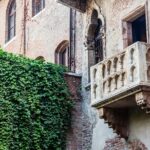
Next you go to Casa di Giulietta. The focus here is the world-famous Juliet balcony and the Juliet statue. The name is famous worldwide, but Verona is where the story becomes geography. Standing here, you understand why people treat this area like a pilgrimage site, even if you don’t care much about Shakespeare before you arrive.
This isn’t a long stop, so expect quick context rather than a deep dramatic retelling. The value is orientation plus meaning: why this spot became iconic, and how it fits into Verona’s identity. You’ll also likely get practical advice on how to position yourself for photos without getting stuck in the thickest pocket of visitors.
A small but important point: even though this is a famous setting, the tour format keeps it from swallowing your schedule. You’re in and out, and then you’re immediately in the wider city where Verona feels more like a living place than a movie set.
Piazza delle Erbe: Verona’s everyday center, not just another photo stop
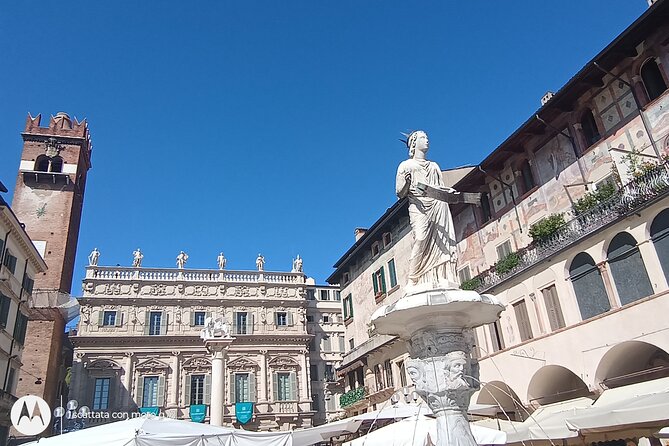
Then you step into Piazza delle Erbe, where the tour’s tone changes from landmarks to city life. This is a market square, and the colors and noise are part of the experience. Here’s the advantage of doing it with a guide: you learn what to look for beyond the obvious.
In a place like this, it’s easy to wander in circles. But with a route, you move through the square with intent. You see where people naturally gather, where the facades catch light, and where the square connects you to the next set of sights.
This stop is also great if you’re traveling with different ages. Reviews mention that the guide kept teenagers engaged and was fun with kids too, which usually means you’ll get short, clear stories that don’t drone on for 20 minutes straight.
If you want to eat or sip something during the walk, this is one of the spots where you’re most likely to find something simple and local without turning the tour into a sit-down restaurant detour.
Piazza dei Signori and the Dante connection: civic power in stone

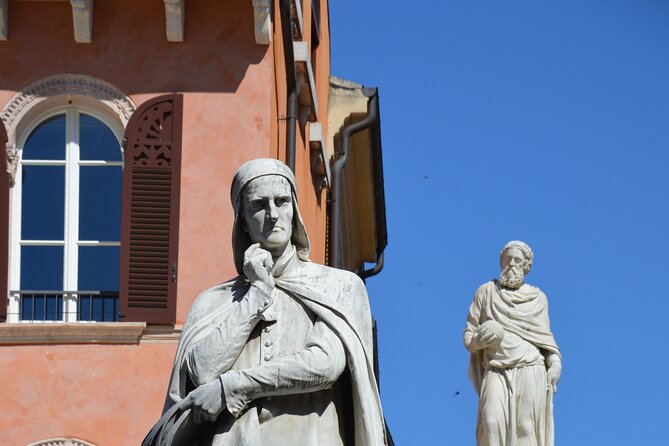
From Piazza delle Erbe you head to Piazza dei Signori. This is where Verona’s civic and political energy shows up in architecture. You’ll see the Dante statue, plus impressive buildings tied to the city’s governance.
This stop is a good reminder that Verona is not only about love stories and views. The square helps you understand the city’s public life—who built what, why the spaces matter, and how power was displayed in stone.
There’s also a nice rhythm here: after the market square bustle, Piazza dei Signori feels more monumental. It helps your eyes reset. You get a break from the constant “front row” tourist focus and instead look at the shapes and details of the façades.
If you like walking tours that explain the “why” behind layouts and monuments, this is the part that tends to click fastest.


Arche Scaligere: the family tombs that do more than look old
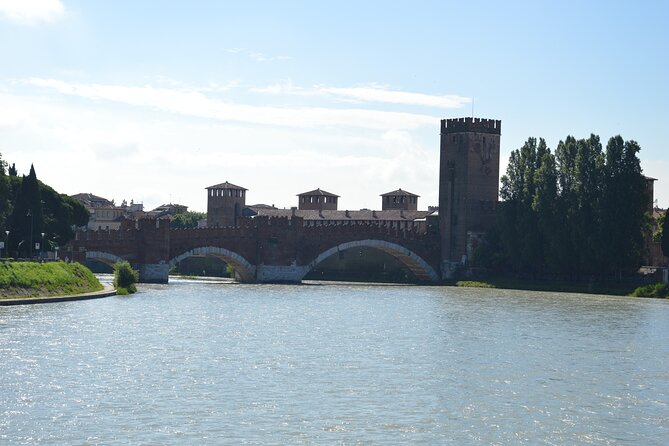
Next up is Arche Scaligere, the decorated tombs of the Della Scala family. The tombs themselves are outside-view oriented on this tour, and that’s fine. Even from the street, the ornamentation and the design language are strong enough to hold your attention.
This is another stop where a good guide matters. People see stone. A guide helps you notice patterns: how the decoration communicates status, what the styles suggest about the time period, and why these monuments became part of Verona’s public memory.
One of the strongest impressions from reviews is that the guides shared small “bonus” details—like carvings and materials—that you would not naturally spot on your own. Arche Scaligere is the kind of place where those details can actually change the whole experience.
It’s also a practical stop: it’s short, and it doesn’t require museum timing. You stay on the route, keep momentum, and still get a deeper feel for what makes Verona visually distinctive.
Under porticoes, past osteria tables, and toward Adige views
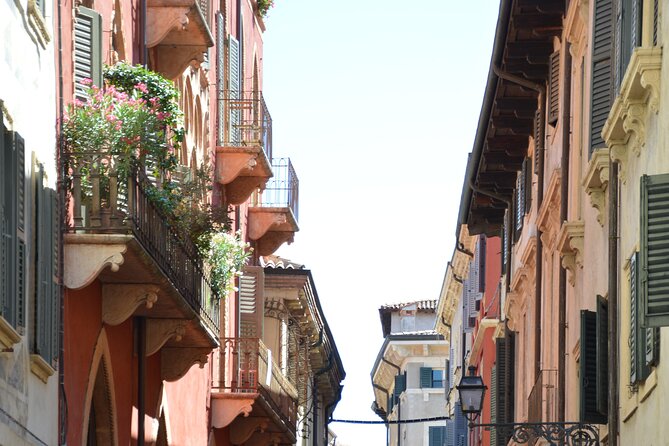
After the main sights, you move into the softer edges of the city. The tour includes walking under a medieval portico through the tables of typical Italian osterias. This is the part I love most for atmosphere. It’s not about checking a box. It’s about feeling daily life and old street rhythms.
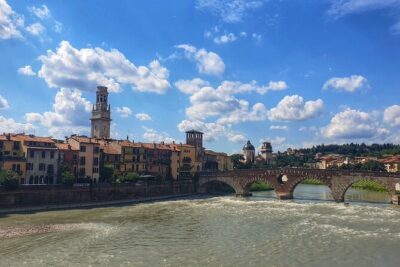
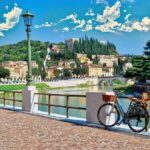
You also get a viewpoint element: the route includes views over the Adige river and the surrounding hills. That helps even people who usually hate “lookouts” because the city becomes a map again. From a higher angle, you can understand how Verona sits in its valley and why the viewpoints matter.
Another memorable add-on on the walk is passing under a Roman main entrance to Verona. Even without naming the structure, the effect is clear. You feel the Roman grid and entry logic before you move to more later-era textures.
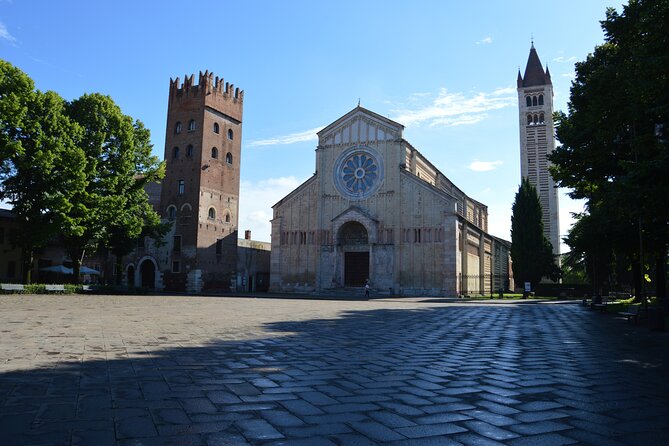
Finally, the tour includes a pink marble staircase and a stop for the old wool market area. These may not be the first things you’d search for in advance, but that’s the value of a guided route: you see the “in-between” elements that make the city feel lived-in rather than only landmark-driven.
Pace, timing, and what to expect while you’re walking
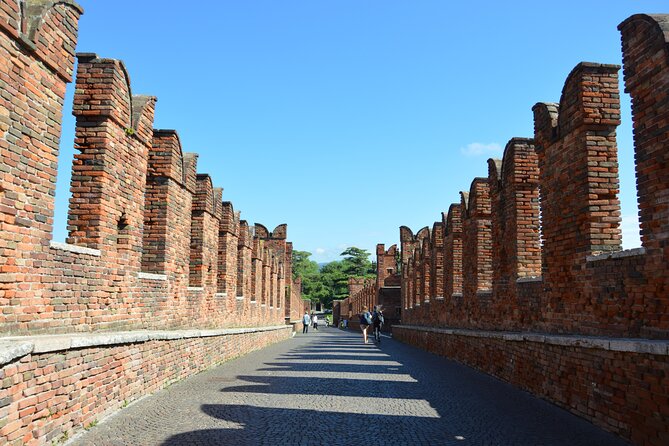
The tour is listed at about two hours with short stops (many are around 10 minutes). In practice, this means:
- You’ll spend less time standing still and more time moving with purpose.
- Photos are quick checkpoints, not a full half-hour obsession.
- Your guide’s stories are timed to keep you from losing the thread of the route.
Reviews praised pacing and said the guide kept things engaging, including for families. That usually means the tour is structured, but not stiff. You’re likely to get small context bursts at each site, plus directions for what to notice next.
The experience also requires good weather. If skies look unstable, plan for the guide to adjust. One review mentioned the guide flexed when it rained lightly so the group could still enjoy key parts of the walk.
Clothing advice from reality, not theory: wear walking shoes you trust. Verona’s center is beautiful, but it’s not the smoothest place to shuffle slowly. You’ll appreciate support when the route includes stair-like sections such as the pink marble staircase.
Price and value: $337.90 per group up to 15 people
This tour is priced at $337.90 per group for up to 15 people, and it’s private. That’s the big number, so let’s make it sensible.
For a couple, the cost per person is higher than a shared group tour. But the trade is privacy and flexibility. If you want a real conversation, ask questions without feeling rushed, or have kids who need the pace managed, private often pays off fast.
For families and small friend groups, this is where the math gets interesting. With room for up to 15, you can spread the cost. In that scenario, you’re not paying for one person’s experience. You’re buying a tailored walk for everyone in your group, and that can turn the value into something that feels fair.
Booking tends to happen ahead of time too. The experience is often booked about 54 days in advance, which suggests it’s a popular window for visitors who only have a limited time in Verona.
Also, the tour uses a mobile ticket, which matters more than it sounds. In old European centers, “ticket logistics” can eat your energy. A mobile ticket cuts friction.
Who should book this Verona walk (and who might skip it)
Book this if you want:
- A fast orientation and a clear route through central Verona
- Roman + medieval + civic stops in one connected walk
- A guide who points out the details you’d skip (fossils in marble came up in reviews)
- A private setup where your group gets attention and flexibility
Skip it if:
- You want museum-level depth inside major sites (this is mainly an outside-and-stroll experience)
- You’re traveling with someone who can’t handle walking for the full two hours, including stairs and crowded sidewalks
- You’re hoping for a long sit-down lunch segment. This is a walking route with brief stops, not a meal-centered tour.
It’s especially a good fit for first-time visitors who feel overwhelmed by Verona’s layout. Two hours is enough to learn the “shape” of the city, then you can explore on your own afterward with confidence.
Should you book Hidden and fascinating Verona (2 hour private walking tour)?
If your goal is to see the best of Verona quickly and still feel like you got the meaning behind the streets, I’d book it. The route hits the big anchors (Arena area, Juliet, market squares) and then adds the texture (porticoes with osteria tables, Adige views, pink marble staircase, old wool market).
The strongest reason to choose it is the private format combined with short, well-paced stops. That combo helps you get a lot of Verona without losing your energy. The best sign is the consistent praise for guides like Silvia for being flexible, engaging, and attentive to details kids and teens can latch onto.
If your schedule is tight, this tour is a smart use of time. If you’re staying longer and want deeper site entry tickets, you can pair this with self-guided exploration later—but as a first step, it’s a strong start.
FAQ
How long is the Verona private walking tour?
The tour is listed as approximately 2 hours.
Where does the tour start?
It starts at Piazza Bra (Piazza Bra, Verona VR, Italy).
Is it private or shared?
It’s private. Only your group participates.
What is the price?
The price is $337.90 per group, up to 15 people.
What language is the tour in?
It’s offered in English.
Are admission tickets included for the stops?
The itinerary notes that the Arena di Verona is viewed from outside and admission is not included. Other listed stops are marked as free.
Is there a mobile ticket?
Yes, the tour includes a mobile ticket.
When will I get confirmation after booking?
Confirmation is sent within 48 hours of booking, subject to availability.
What if the weather is poor?
This experience requires good weather. If it’s canceled due to poor weather, you’ll be offered a different date or a full refund.
FAQ
What if I need to cancel?
You can cancel up to 24 hours in advance for a full refund. If you cancel less than 24 hours before the start time, the amount paid is not refunded.
What hours is this tour operating?
The listed opening hours are Monday through Sunday, 8:30 AM to 7:30 PM, for the date range shown.
Is public transportation nearby?
Yes, it’s near public transportation.
Is the tour suitable for most travelers?
Most travelers can participate.