REVIEW · VERONA
Verona Highlights Walking Tour in Small-group
Book on Viator →Operated by Ways · Bookable on Viator
AD 30 to Shakespeare in two easy hours. This small-group Verona walk hits the big sights at an easy pace, from the Roman Arena to Juliet’s House, with a real local guide helping you connect the dots across centuries in the UNESCO historic center.
I especially like how the tour feels relaxed but focused—you get plenty of stops without it turning into a mad dash. I also like the way the guide story-weaves what you’re seeing, including legend-heavy Shakespeare sites alongside concrete Roman and medieval history. The main thing to consider: it’s a lot of time on your feet, and some sections are not ideal if you move slowly or need extra accessibility support.
In This Review
- Why This Walk Feels Like Verona, Not a Checklist
- Key Stops You’ll Hit (And Why They Matter)
- Meeting at Piazza Bra: The Perfect Start Line
- The Roman Arena: Seeing AD 30 Up Close
- Castelvecchio and the River Link: Medieval Verona by the Adige
- The Arch of Gavi: A Roman Monument With a Long Backstory
- Juliet’s House: Legend, Legend-Adjacency, and a Real Courtyard
- Romeo’s House From the Outside: Why You Don’t Miss It
- Piazza Bra, Then Piazza delle Erbe: Where City Life Actually Happened
- Piazza dei Signori and the Dante Connection
- Arche Scaligere: Cangrande’s World in Stone
- How the Guide Changes Everything: Real Names, Real Style
- Practical Tips to Make the Two Hours Work for You
- Value for the Money: Is It Worth $42.33?
- Who This Tour Suits Best
- Should You Book This Verona Highlights Walking Tour?
- FAQ
- How long is the Verona Highlights Walking Tour?
- Where does the tour start and end?
- Is the tour in English?
- Are admission tickets included for the Arena and Juliet’s House?
- What happens to Juliet’s Balcony access during December 2025?
- Does the tour run in bad weather?
- How large is the group?
- Is the tour suitable for reduced mobility?
- Can I cancel for a full refund?
Why This Walk Feels Like Verona, Not a Checklist
This is the kind of walking tour that helps you get your bearings fast. Verona can feel busy and confusing at first—then suddenly you understand why certain squares matter, why bridges connect neighborhoods, and why the Roman and medieval layers are still visible in everyday streets.
At around 2 hours, you’ll see a strong cross-section of Verona’s history without needing museum tickets to enjoy the big picture. The pace is built for strolling, with photo stops and time to ask questions while you’re passing landmarks.
Group size is capped at 16 travelers, which is part of why the experience stays personal. You’ll also be with an English-speaking guide, and the meeting point is right in the action at Piazza Bra.
Possible drawback: you do have to keep moving. If your idea of a “walk” means short bursts, this tour may feel brisk at times, even if the guide does a good job pacing the group.
Key Stops You’ll Hit (And Why They Matter)
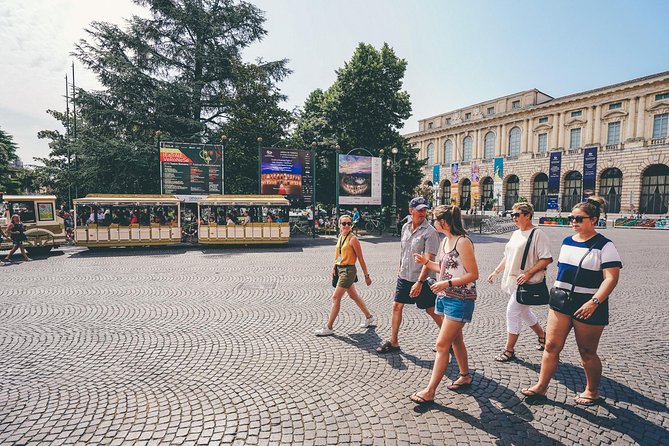
- Piazza Bra first to orient you in the center of Verona
- Arena di Verona (AD 30) and how a 2,000-year-old building still hosts major events
- Castelvecchio area and the rebuilt bridge linking medieval Verona to the river life
- Arch of Gavi (1st century AD) for a Roman monument story you can actually picture
- Juliet’s House courtyard where the Shakespeare legend meets real Verona stone
- Three major piazzas (Bra, Erbe, Signori) showing city power and street life across eras
You can also read our reviews of more tours and experiences in Verona.


Meeting at Piazza Bra: The Perfect Start Line
You start at Piazza Bra, which is one of the most practical places to begin. It’s central, easy to find, and it immediately frames the day around the city’s most famous landmark.
From the start, you get that clear Verona “logic”: squares connect neighborhoods, and major monuments sit where people have always gathered. This makes the rest of the walk feel more like understanding the city than just passing sights.
And once you see the Arena area from this side, you’ll have a mental map. That helps later when the tour moves through smaller streets and older quarters.
The Roman Arena: Seeing AD 30 Up Close
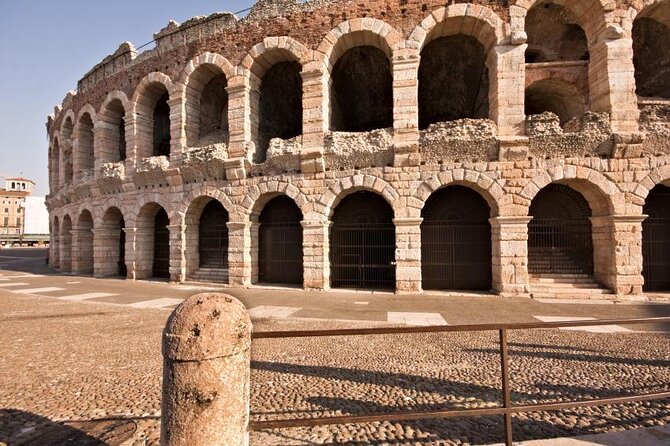
The highlight for most people is the Arena di Verona, built in the 1st century AD (in the Augustan period). The tour explains why it’s such a big deal that it’s still standing so well after about 2,000 years.
What I’d focus on during your visit is the scale of its original design. The guide shares how the Arena once could hold up to 30,000 people, which really helps you visualize what kind of performances and public life Verona once hosted.
You’ll also hear about how this space functions today. It’s not just a ruin. The Arena is famous for concerts by major international stars and for the Verona Arena Festival, a summertime opera event that draws classical music fans from around the world.
One practical note: admission to the Arena isn’t included, so if you want to go inside, you’ll still need your own ticket. On the upside, the tour is structured around the Arena so you’ll know where to look and what to listen for when you get close.
Castelvecchio and the River Link: Medieval Verona by the Adige
After the Arena area, the tour heads past Castelvecchio. This part matters because it shifts you from Roman Verona to the medieval era, when castles, fortifications, and river crossings shaped daily life.
You’ll pass a bridge that connects Verona’s late-medieval castle to the Adige’s left bank. The tour points out that it was almost destroyed in a bombing and later rebuilt to look like the original. That’s the kind of detail you can’t read from a postcard. It’s history you can see in the structure itself.
Then the route goes into the Castelvecchio area—the castle is right there, and it’s easier to grasp its defensive purpose when you’ve already been orienting around Piazza Bra and the Arena zone.
If you’re a history person, ask your guide a question here about how Verona defended itself at different times. This is a good moment to connect the castle logic to the earlier Roman public spaces.
The Arch of Gavi: A Roman Monument With a Long Backstory
Next comes the Arch of Gavi, described as an elegant 1st century AD construction related to Roman architect Vitruvio and the gens Gavia family in Verona. Even if you don’t memorize the Latin, the guide helps you understand what Roman arches were for: prestige, commemoration, and a statement of power.
This stop is also a reminder that Roman Verona wasn’t only about big theaters and arenas. The city had monuments woven through everyday movement—so seeing an arch like this makes the old city feel more real.
Keep your eyes up and around the edges when you look at it. Arches are often placed so they line up with the flow of roads and processions, which makes them part of the city’s “walkable story.”


Juliet’s House: Legend, Legend-Adjacency, and a Real Courtyard
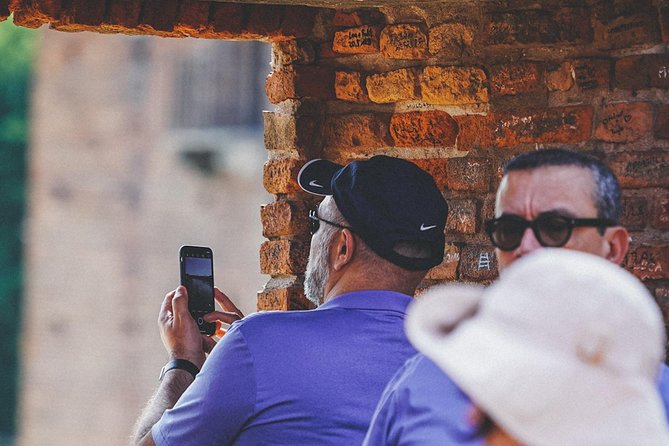
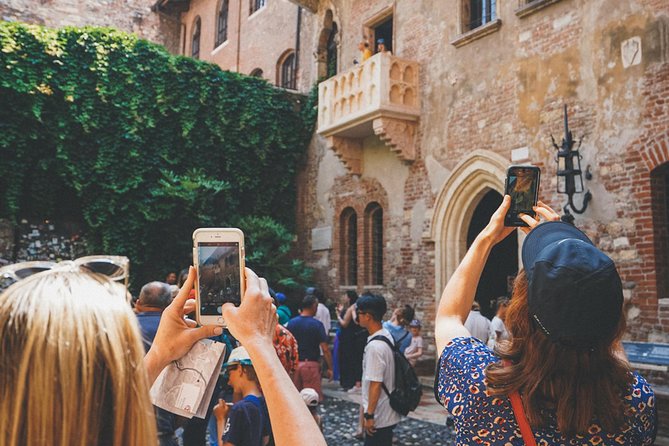
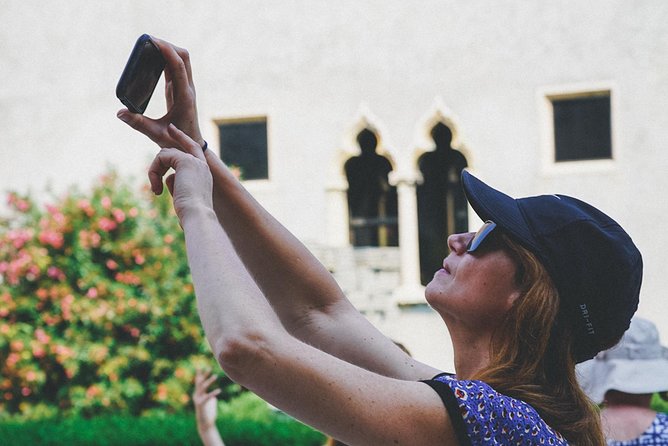
Then you’ll move to Casa di Giulietta, where you’ll see the courtyard linked to the Capuleti house. It’s the part made famous by the Romeo and Juliet story, but what’s cool is how the guide frames it as more than just a tourist script.
During this stop, you’ll also see how the legend has been shaped over time by the way visitors experience the site. The tour keeps it practical and visual: you get the location, the setting, and the context to connect why this story became so famous in Verona.
Important timing note: during December 6, 2025 to January 6, 2026, access to Juliet’s Balcony is not included as usual. If your dates fall within that window, you can ask for information on how to purchase the ticket, but you won’t have the company buying it for you.
If Juliet’s Balcony is your top priority, plan around that. Outside that date range, the tour typically includes access as described—so it’s worth checking your calendar carefully.
Romeo’s House From the Outside: Why You Don’t Miss It
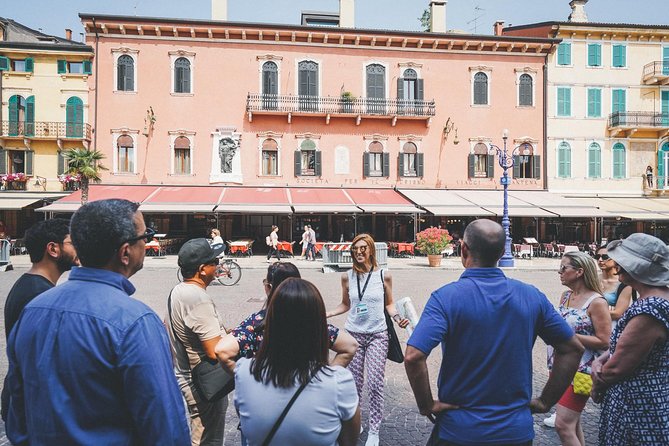
The tour also includes Romeo’s house, described as a medieval palace tied to the Montecchi family by legend and literary tradition. Here’s the practical twist: the building is private and inhabited, so you can only see it from the outside.
That sounds limiting, but it’s actually a good learning moment. It reminds you that some “famous places” in Verona are still lived-in, not staged museum pieces. You’re seeing a real neighborhood boundary, not a theme set.
If you like the story side, ask your guide how Verona’s legend-tourism connects to the city’s older identity. This stop helps you balance the romance with the lived reality.
Piazza Bra, Then Piazza delle Erbe: Where City Life Actually Happened
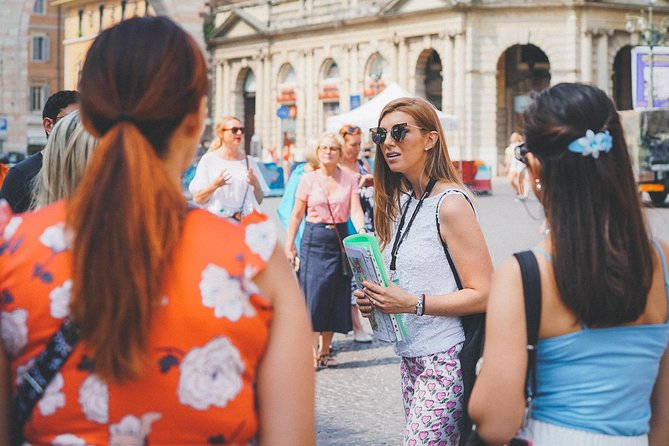
You’ll return to the open space energy of Piazza Bra, then move on to Piazza delle Erbe. The tour explains that Piazza delle Erbe was the Forum, the center of city life during Roman times.
This is one of the reasons the tour works well for first-timers: the guide isn’t just saying, “This is pretty.” You learn what used to happen here. When you stand in a real civic square and get the Roman reference, it clicks.
Piazza delle Erbe’s center contains monuments that symbolize different rulers of Verona, and the tour points out the fountain built during Scaligeri rule as the most famous landmark in the square.
If you’re into photos, this is also a strong place to pause. The square gives you wide sightlines, and your pictures will look like Verona—not just like you captured a building corner.
Piazza dei Signori and the Dante Connection
Next is Piazza dei Signori, described as the former center of power in Verona. This is the square where you can feel the switch from civic life to political energy.
The guide shares that a statue of Dante Alighieri dominates the square and has since 1865, giving the plaza the nickname Piazza Dante. It’s a small detail with outsized payoff: the square’s identity becomes easy to remember once you’ve got that anchor.
This stop is short but meaningful. If you pay attention here, you’ll start seeing Verona as a network of authority—Romans first, then medieval rulers, then cultural figures later.
Arche Scaligere: Cangrande’s World in Stone
The tour also includes Arche Scaligere, the Scaligeri cemetery. This is one of the stops that tends to surprise people because cemeteries don’t sound like a top attraction—until you learn what you’re looking at.
You’ll see sarcophagi and the three ornate arches built for Cangrande I, Mastino II, and Cansignorio. The vibe here is very Verona: power, art, and family legacy carved into a place of mourning.
If you enjoy Gothic or medieval architecture cues, pause and look for details rather than rushing to the next square. This is a spot where the guide’s explanations make the structure easier to read.
Admission is not included for some areas here, but even from the outside, the stop gives you a different mood than the romantic legend sites.
How the Guide Changes Everything: Real Names, Real Style
One big reason people rate this tour so highly is the guide style. In the supplied feedback, I saw names like Isabella, Frank, Priscilla, Maria, Deb, and Francesco connected to tours where guests said the storytelling felt lively and easy to follow.
You’ll get facts, yes, but also the human angle. The guide format works because Verona history isn’t a straight line—it’s layers. When your guide explains why the Roman and medieval bits sit next to each other, the city stops feeling like separate tourist attractions.
A good move: ask one question as you’re walking, not at the very end. The tour is short, so catching the guide while you’re in context (Arena, Castelvecchio, Juliet’s courtyard) gets you a better answer.
Practical Tips to Make the Two Hours Work for You
This is a walking tour, so small choices matter.
- Wear comfortable shoes. Some parts may require a steady stride, and you’ll be moving between several stops.
- Bring a light layer. The tour runs rain or shine, so being ready for weather keeps you focused on the sights.
- Plan for tickets. Admission isn’t included for the Arena and some other sights, including Juliet’s Balcony during the winter date window mentioned above.
- Use the guide. If you’re curious about how to read architecture or why a square matters, this is your time.
One more practical point: the meeting and end point are both Piazza Bra, so you won’t need to figure out a complicated new drop-off area when you’re done.
Value for the Money: Is It Worth $42.33?
At about $42.33 per person for roughly 2 hours, the value comes from two things: concentrated route planning and interpretation.
If you were to do this on your own, you could hit the same landmarks, but you’d likely miss the “why” behind them—especially the Roman-to-medieval connections and details like the bridge’s bombing history and rebuild. This tour does the explaining for you, on foot, while you’re right next to the evidence.
You should also consider the part where admission tickets are not included for certain stops. If you plan to go inside multiple sites, your final trip cost may rise. Still, the tour remains useful because it helps you know what to look for when you do buy tickets.
The small group size (max 16) is the quiet value booster here. It helps keep the guide attentive and the walk less chaotic.
Who This Tour Suits Best
This walking tour is a great match if you’re:
- Visiting Verona for the first time and want a strong orientation fast
- Interested in Roman and medieval layers, plus the Shakespeare legend without losing the factual context
- Traveling with limited time and want a route that covers major squares efficiently
It may not be the best fit if you:
- Prefer long museum-style stops over steady walking
- Need very accessible routes throughout the entire walk (some parts may be challenging for reduced mobility)
Should You Book This Verona Highlights Walking Tour?
Yes, if you want a short, well-paced way to understand Verona’s main landmarks and connect Roman, medieval, and legend-era stories. I like that it’s built around the city’s center—Piazza Bra—so you can layer the rest of your trip with fewer guesswork moments.
If your top priority is going inside specific sites, check which tickets aren’t included and plan your calendar around the Juliet’s Balcony limitation in the winter window (Dec 6, 2025 to Jan 6, 2026). And if you don’t enjoy walking for long stretches, bring that comfort requirement into your decision.
For most people, this is a smart “starter tour” that makes your next hours in Verona feel clearer and more rewarding.
FAQ
How long is the Verona Highlights Walking Tour?
The tour lasts about 2 hours.
Where does the tour start and end?
It starts and ends at Piazza Bra in Verona.
Is the tour in English?
Yes, the tour is offered in English.
Are admission tickets included for the Arena and Juliet’s House?
No. Admission tickets are not included for the Arena, and Juliet’s Balcony may require a ticket in certain dates.
What happens to Juliet’s Balcony access during December 2025?
From December 6, 2025 to January 6, 2026, access to Juliet’s Balcony is not included as usual. You can ask for information on how to purchase your ticket, but the tour will not purchase it for you.
Does the tour run in bad weather?
Yes, it runs rain or shine.
How large is the group?
The tour has a maximum of 16 travelers.
Is the tour suitable for reduced mobility?
Some parts may not be easily accessible for people with reduced mobility. If you have accessibility needs, it’s best to contact the operator to confirm details.
Can I cancel for a full refund?
You can cancel up to 24 hours in advance for a full refund.