REVIEW · TYROL
Ötztal: Via Ferrata Climbing at Stuibenfall
Book on GetYourGuide →Operated by Cankick GmbH · Bookable on GetYourGuide
Steel, water, and a 220-meter wall.
The via ferrata at Stuibenfall turns a famous waterfall into your climbing partner, and the route is set up with fixed points so you can focus on the fun. I love the mix of adrenaline (steel bridges, rope sections, and a waterfall crossing) with a guide who photographs your progress as you go. One thing to consider: you’re still on a real rock route, so expect a few tougher grade C moments even if the overall climbing is described as not too difficult.
You’ll start with a transfer from the base and a clear safety briefing, then move along a well laid out line under the waterfall—brackets, steady lines, and plenty of time to take in the setting. After you finish, the day doesn’t end in a dusty pile: you get a schnapps-style after drink, a hot shower, and even a swim. If you hate heights or you’re dealing with limited mobility, this isn’t the kind of outing to force.
In This Review
- Key points to know before you go
- Why Stuibenfall via ferrata feels special right under the waterfall
- Getting there and starting with a safety briefing that actually sets you up
- The climb itself: steel rope bridges, waterfall crossing, and 220 meters of real exposure
- Guide-led camera moments and the end-of-day schnapps, shower, and swim
- Price and value for a 4-hour guided via ferrata at Stuibenfall
- Gear and fitness: what to wear for steel ladders and grade C moments
- Who should book this via ferrata in Ötztal (and who shouldn’t)
- Should you book Ötztal: Via Ferrata Climbing at Stuibenfall?
- FAQ
- How long is the Stuibenfall via ferrata experience?
- What do I need to bring?
- Is a guide included?
- Are photos included?
- What languages are the tours offered in?
- Who is this activity not suitable for?
Key points to know before you go
- Directly under the Stuibenfall: the waterfall isn’t just a backdrop; it’s part of the route.
- Steel rope bridges plus a waterfall crossing: expect moments that feel dramatically exposed.
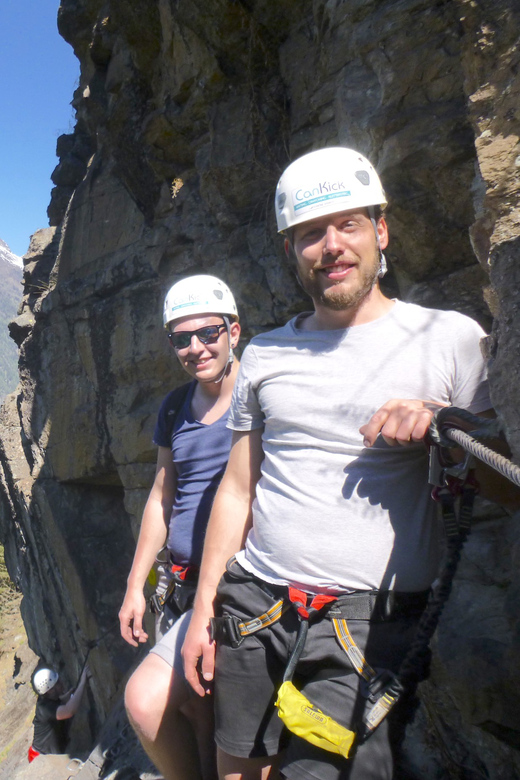
- A guide with a camera: your climb is documented, not just survived.
- Safety briefing first: you’ll get hands-on guidance before you clip in and climb.
- Finish with schnapps, shower, and a swim: the best kind of full-day payoff.
- Some grade C sections: manageable for most people with the right mindset, but not effortless.
Why Stuibenfall via ferrata feels special right under the waterfall
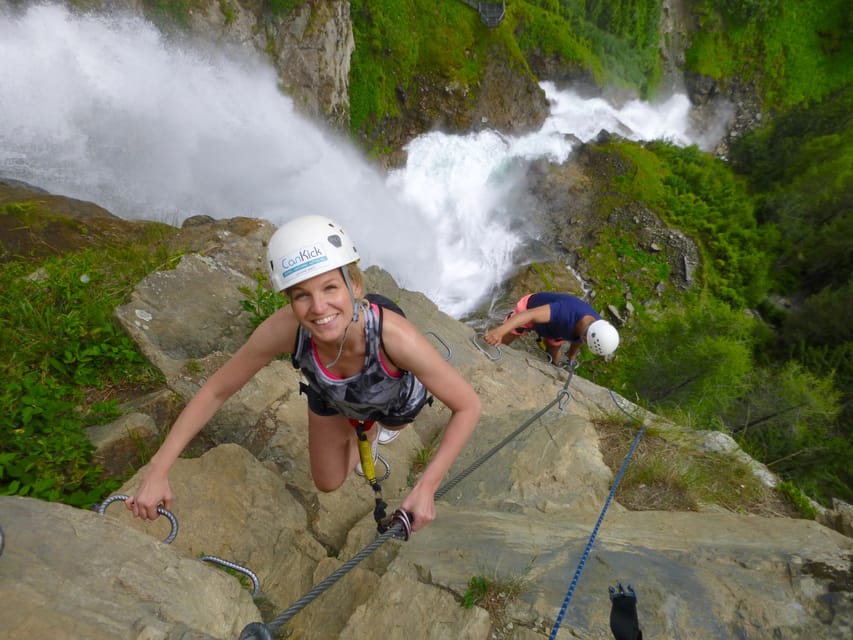
What makes this Ötztal via ferrata different is simple: you’re climbing where you can hear the Stuibenfall from the moment you arrive. Most via ferratas give you a view. This one gives you constant motion and sound, plus misty air at times, which turns the climb into something you remember longer than your photos.
The route is also set up for real enjoyment. You’re not out there guessing where to place your weight. You follow a line with lots of help points—brackets and fixed elements—so your brain can stay on balance and rhythm instead of map-reading. And because it’s a well-established setup, it tends to feel more like an adventure with guardrails than a DIY scramble.
Then comes the payoff. After climbing a 220-meter high rock face, you’re not left standing around. You’re guided back to base to clean up with a soothing shower, and the program includes an after-tour drink and time to swim. It’s the kind of ending that makes the whole day feel complete, not just “four hours of effort.”
You can also read our reviews of more tours and experiences in Tyrol.
Getting there and starting with a safety briefing that actually sets you up
The day starts at the base. You meet there, then hop on a minibus to the entry point. That small detail matters more than it sounds. It saves you the hassle of self-navigation around a mountain area and lets you focus on the experience right away.
Before anyone climbs, you get a detailed safety briefing. This is where you learn how the equipment works and how the route is handled. You’ll be using a certified harness and high-quality rope materials, so the safety piece isn’t an afterthought—it’s built into the activity.
One of the smartest parts of this setup is that the guide is also equipped with a camera. That changes the tone a bit. Instead of rushing for speed, you climb with a sense that you can enjoy the moment, because someone is capturing it. People have specifically highlighted feeling safe and secure on the route when instructions are clearly explained, including in groups guided by people like Alex and Tini.
The climb itself: steel rope bridges, waterfall crossing, and 220 meters of real exposure
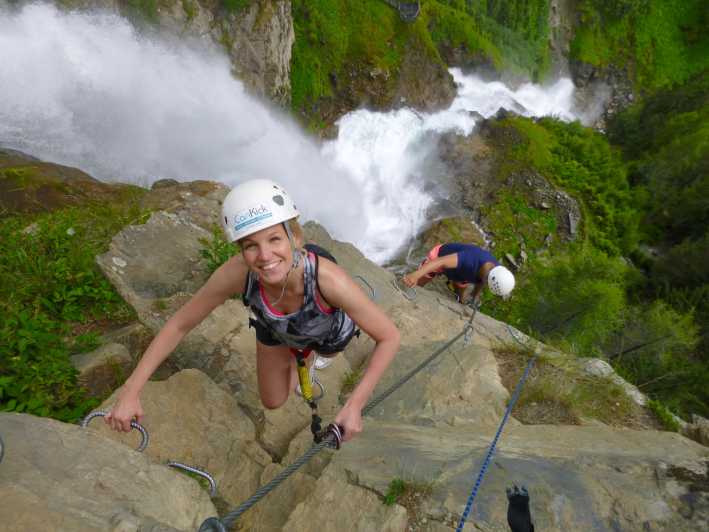
This is where the experience earns its name. The route takes you on a picturesque line under the imposing Stuibenfall, and the grade is described as not too difficult overall. But don’t mistake that for “easy.” You’ll still face exposure and the mental work of trusting your gear.
You can expect plenty of fixed help points as you move along—brackets to support your progress. That reduces decision fatigue. In practical terms, you’re spending more time feeling the adrenaline and enjoying the scenery, and less time wondering what comes next.
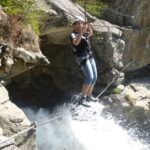
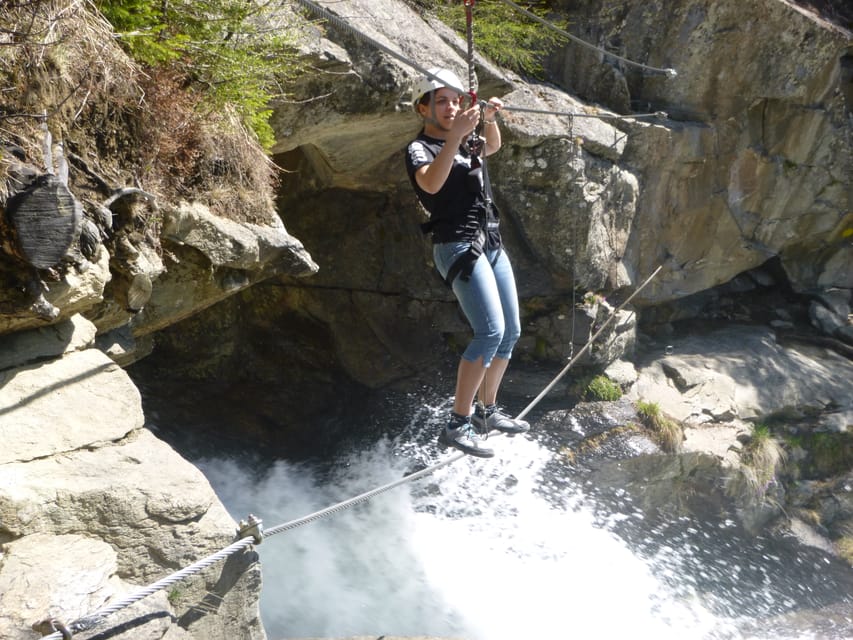
Steel rope bridges are a highlight. Crossing them is often the moment where people realize via ferrata is half technique and half confidence. The bridge sections force you to stay calm, step deliberately, and keep your body aligned. It’s not just dramatic—it’s also a good way to learn how the route flows.
Then there’s the waterfall crossing. That’s the kind of feature you can’t fully understand from a photo. The sound, the mist, and the sense of scale make it feel bigger than expected. You’re climbing a 220-meter high rock face, and the combination of height plus constant waterfall energy can make your heartbeat feel louder. That’s also why a safety briefing matters: you want your confidence to be earned before you’re in the thick of it.
Guide-led camera moments and the end-of-day schnapps, shower, and swim
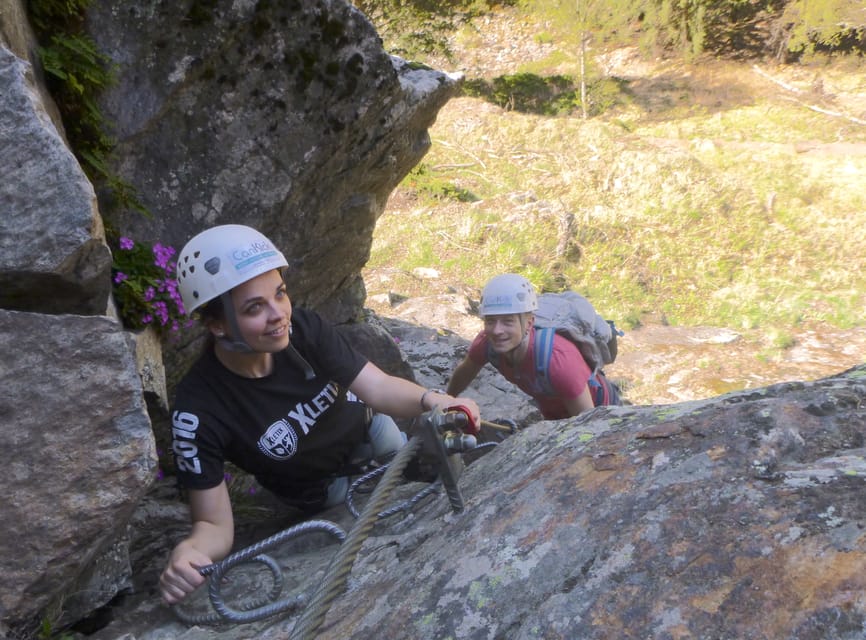
After you complete the route, you’ll pose for a photo taken by your guide. That’s a small step that makes a big difference. You’re not just leaving the mountain; you’re finishing with a snapshot that feels like a real milestone.
Back at base, the program gives you the kind of comfort most outdoor adventures skip. There’s an after-tour drink, described as schnapps-style, plus a hot shower to reset your body after climbing. If you’re the type who loves a “do something active, then actually relax” day, this part is a big selling point.
There’s also a swim at the end. Even if you don’t make it a full-on swim lap, the option helps the whole day feel seasonal and local. You’re not just wet from mist; you’re transitioning into a proper recovery.
One more practical note: the photo service includes a digital copy for free, but the pictures cost €10 per group. So if you’re the type who wants professional photos, it’s worth deciding ahead of time whether you’ll pay for the package.
Price and value for a 4-hour guided via ferrata at Stuibenfall
At about $106 per person for a 4-hour experience, you’re paying for three things: a certified guide, quality safety equipment, and the convenience of transfers plus a proper finish.
For this kind of activity, the biggest value is the guide. You’re not just buying access to a rope line—you’re buying the briefing, the route management, and that reassuring feeling that someone knows the system. The harness and rope material aren’t basic either; the setup is described as high quality, which matters when you’re moving across bridges and fixed sections.
You also get included support that makes the day smoother:
- Transfer to and from the entry point by minibus
- The after-tour drink
- An experience certificate
- Time to shower and swim after
The only real extra cost mentioned is photos (and the €10-per-group photo service). If you’re traveling with someone and want “one strong activity” that feels memorable and well organized, this is priced like an activity that tries to earn your money rather than just sell risk.
Gear and fitness: what to wear for steel ladders and grade C moments
You don’t need a mountain wardrobe, but you do need grip and comfort. Bring hiking shoes and sports shoes (that’s specifically what the activity asks for). The important thing is traction and stable footing. Via ferrata is repetitive body work—standing, stepping, clipping, shifting weight—so shoes that feel secure make the whole experience easier.
A lot of people also underestimate how quickly your arms and legs get tired. The route includes sections that are described as grade C in difficulty. That doesn’t mean “danger,” but it does mean you’ll feel the challenge. If you’re strong in general fitness and you’re willing to slow down, you’ll likely be fine. If you’re hoping for totally effortless climbing, you might find those tougher bits harder than expected.
The activity also isn’t ideal for everyone. It’s not suitable for pregnant women and it’s not recommended if you have mobility impairments. If any part of your mobility is limited, you should take the restrictions seriously rather than hoping the guide will “make it work.”
Who should book this via ferrata in Ötztal (and who shouldn’t)
I think this is a great choice if you want a hands-on thrill with structure. You’ll like it if you care about:
- A clearly set route with lots of help points
- Steel bridge moments that make you feel alive
- A guide-led day where safety is explained thoroughly
- A satisfying finish: schnapps, shower, and time in the water
It’s also a good “first via ferrata” option for people who are curious but cautious—especially because the route is described as not too difficult overall. Just keep your expectations grounded: the existence of grade C sections means you’ll need to treat it like skill-building, not a stroll.
You should skip this if you’re in the categories listed as not suitable, or if heights and exposure typically shut you down. Via ferrata involves real vertical terrain and controlled movement on fixed lines, so it’s best for travelers who are ready to participate fully.
And one more personal tip: if you’re traveling as a group, you’ll enjoy it more if everyone commits to listening in the briefing. The people who feel safest tend to be the ones who follow instructions closely and climb in a calm, steady way.
Should you book Ötztal: Via Ferrata Climbing at Stuibenfall?
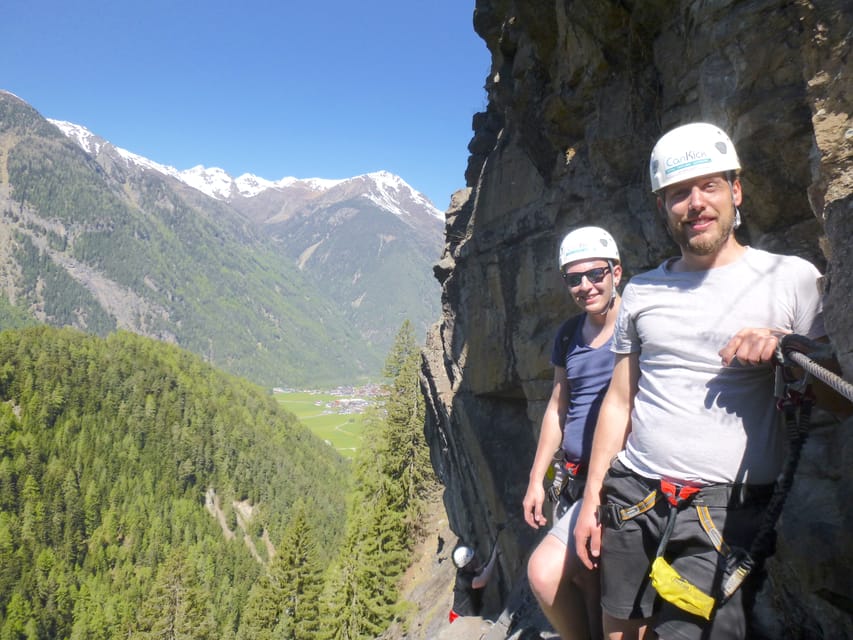
I’d book it if you want one of the more unforgettable Austrian active days: climbing a 220-meter rock face while the Stuibenfall roars beside you, then cooling down with a shower, a drink, and a swim. The combination of a well-laid-out route and experienced certified guidance is exactly what makes this feel like real value, not just a stunt.
I wouldn’t book it if you need step-by-step ease with no exposure, or if you fall into the stated “not suitable” categories. And if photos matter to you, plan for the €10 per group photo service so there are no surprises after the climb.
If you’re the kind of traveler who likes structured adventures—where the scenery is big, the effort is real, and the logistics are handled—you’ll likely love the Stuibenfall via ferrata.
FAQ
How long is the Stuibenfall via ferrata experience?
It lasts about 4 hours, including the time at the base and on the route. Starting times vary based on availability.
What do I need to bring?
Bring hiking shoes and sports shoes.
Is a guide included?
Yes. You’ll have a certified live tour guide.
Are photos included?
Your guide takes photos and you can receive a digital copy for free, but the photo service costs €10 per group.
What languages are the tours offered in?
The live guide speaks German and English.
Who is this activity not suitable for?
It is not suitable for pregnant women and it’s not suitable for people with mobility impairments.