REVIEW · VERONA
Solferino Ticket Valid for Visit to the Museum and the Rocca
Book on Viator →Operated by Torre di San Martino · Bookable on Viator
Solferino and the Rocca hit you fast. You’ll move through war relics and Red Cross memory in a way that feels focused, not rushed, with entry to both the Museo Risorgimentale di Solferino and the Rocca di Solferino. I especially like the contrast: one stop is small and packed with artifacts, and the other rises into a panoramic climb with big terrace views.
One thing to plan for: this is a self-guided visit. There’s no in-person guide included, so you’ll rely on the smartphone app and the signs inside.
In This Review
- Key highlights at a glance
- Why Solferino and the Rocca belong on your northern Italy route
- Ticket value: two paid entrances plus free Red Cross stops
- Self-guided visit with a smartphone app (and why that can be a plus)
- Museo Risorgimentale di Solferino: three rooms, weapons, uniforms, and prints
- What to do inside (so it feels worth your time)
- Possible drawback: you’ll want to read the labels
- Rocca di Solferino: the ramp climb, the Hall of the Sovereigns, and the terrace views
- What the viewpoint delivers
- Don’t skip the park setting
- Cappella-Ossario and the Red Cross Memorial: short, free, and powerful
- Practical pacing tip
- Hours, timing, and how to fit it into a real day
- A smart order that keeps energy stable
- How long you should plan
- Logistics that affect your comfort (and why the end point matters)
- What you’ll likely feel at the end
- Who should book this Solferino ticket (and who might not)
- Should you book this Solferino ticket?
- FAQ
- What’s included with the Solferino ticket?
- Is there an in-person guide included?
- How long does the experience take?
- What are the opening hours?
- How long is the ticket valid?
- Is the experience available in English?
- Are the ossuary and Red Cross memorial free?
- Are service animals allowed?
Key highlights at a glance
- Three-room Museo Risorgimentale di Solferino with weapons, uniforms, and period prints
- Outside Henry Dunant’s statue that ties the site to the Red Cross story
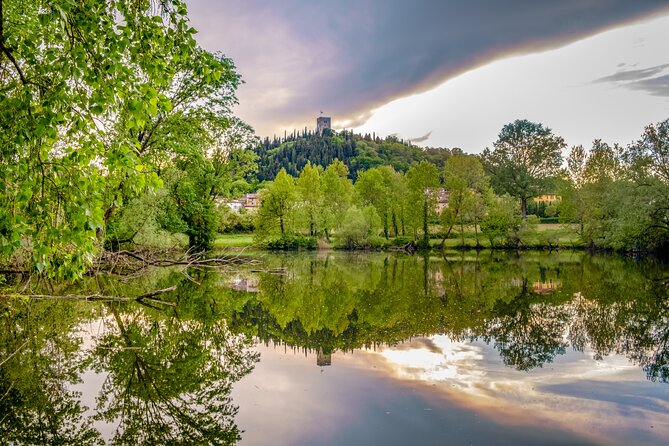
- Rocca di Solferino tower climb using a sloped ramp instead of hard steps
- Hall of the Sovereigns plus relics from June 24, 1859
- Cappella-Ossario di Solferino for a brief, moving stop (free entry)
- Memoriale della Croce Rossa for closure without adding time or cost (free entry)
Why Solferino and the Rocca belong on your northern Italy route
Solferino sits in the shadow of a very specific date: June 24, 1859. This area is linked to the events that helped shape the Red Cross story, and that context shows up immediately as you start moving around. Instead of treating history like a lecture, the sites give you artifacts, symbols, and spaces that make the meaning feel physical.
What I like about pairing the museum with the fortress is the rhythm. You start at ground level, sorting through objects tied to the Risorgimento and the battle era. Then you go up—literally—to the Rocca, which is often described like a spywatch point and is known as a millenary fortress. By the time you’re on the terrace, you’re not just looking at scenery. You understand why someone would want the high ground.
You can also read our reviews of more tours and experiences in Verona.

Ticket value: two paid entrances plus free Red Cross stops

This ticket is priced at $7.45 per person, and it covers the entry to both main pay sites: the Museo Risorgimentale di Solferino and the Rocca di Solferino. On top of that, the experience plan includes two free extras you can add without spending more: the Cappella-Ossario and the Memoriale della Croce Rossa.
Here’s why that matters for you. When a tour mixes paid and free elements, you’re not forced into a full-day schedule to justify the price. You can spend the core time where it counts—about 1 hour in each paid stop—and then add the short memorial moments near the end.
Also worth noting: the ticket is valid for 7 days. So if your day gets shuffled (weather, train times, or just plain fatigue), you’re not locked into one exact time slot.
Self-guided visit with a smartphone app (and why that can be a plus)
There’s no live guide included. You’re visiting independently, using the information on-site plus the downloadable At the Museum with the Smartphone app. The tour description says the experience is available in English, which is helpful if you want support without needing to hunt for a docent.
Self-guided has a real advantage: you control pace. If you like weaponry and uniform details, you can pause longer in the museum rooms. If you’d rather get straight to the view, you can speed through and get your best photo angle sooner.
The tradeoff is simple. If you love a human storyteller explaining connections between objects, you won’t get that here unless you add outside reading or rely heavily on the app.
Museo Risorgimentale di Solferino: three rooms, weapons, uniforms, and prints

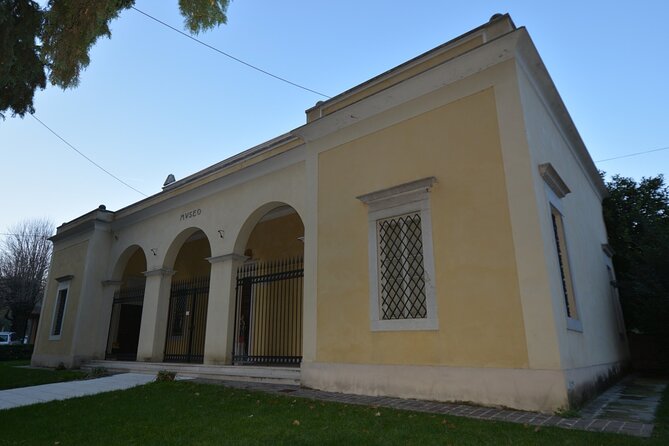
This first stop is small, focused, and easy to finish. You’re looking at three rooms, and the collections are built around the tools and visuals of the conflict era. Expect to see cannons, sidearms and firearms, uniforms, paintings, and Risorgimento prints—plus supporting displays that help you place the objects in context.
Outside the museum, there’s a statue dedicated to Henry Dunant, the founder of the Red Cross. That marker is more than decoration. It quietly reframes what you’re about to see inside, connecting the battle date to the humanitarian response.
What to do inside (so it feels worth your time)
Plan to take a slow lap through the rooms first. Then return for close reading on the items that pull you in. The museum is not trying to exhaust you with information. It’s trying to give you a clear set of artifacts so you can actually recognize details later when you’re at the fortress.



Possible drawback: you’ll want to read the labels
Because there’s no guided tour included, your experience depends more on what you pick up from signage and the smartphone app. If you tend to breeze past text, you might feel like the museum is just “stuff in rooms.” If you’ll actually stop and look, it clicks fast.
Expect about 1 hour here, which feels right for a calm visit without rushing.
Rocca di Solferino: the ramp climb, the Hall of the Sovereigns, and the terrace views
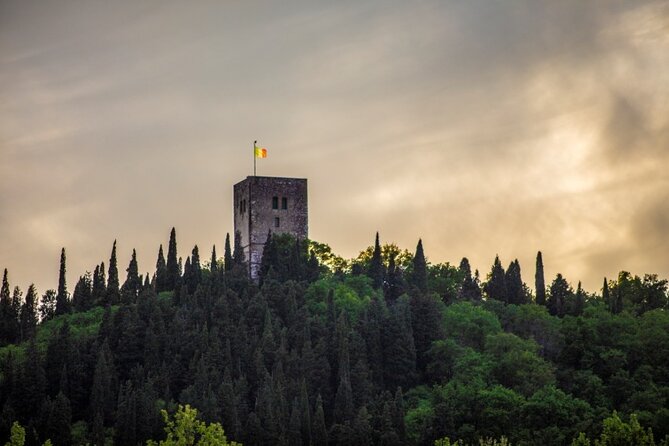
After the museum, the Rocca feels like a different kind of education. The fortress is described as a millenary stronghold, and the site leans hard into its connection to the Battle of June 24, 1859. Inside you’ll find numerous relics tied to the conflict, plus the solemn Hall of the Sovereigns.
Then comes the best part for your legs and your camera: the climb. One review noted that you can reach the top without fatiguing stairs, thanks to a ramp with a gentle incline instead of hard steps. For many people, that’s a huge quality-of-life improvement. You still get the effort, but it doesn’t feel like a punishment.
What the viewpoint delivers
From the terrace, the experience turns scenic. You’re at a high point in the area—described as the highest point in the Province of Mantua—and the view can stretch toward the Lake Garda area. One visitor specifically mentioned seeing Sirmione and Lake Garda from the top, and even if you don’t name-check that view when you’re looking, you’ll feel the advantage of being above the ground level.
Don’t skip the park setting
The tower is surrounded by a green park. That matters because it gives you a buffer zone between intensity. You’re not straight from weapons to another building. You have a stretch of space to reset, look around, and catch your breath before you head back down.
Plan about 1 hour for the Rocca entrance. The guided tour isn’t included, so again, you’ll rely on signage and the pacing you choose.
Cappella-Ossario and the Red Cross Memorial: short, free, and powerful
Right near the Solferino museum is the Cappella-Ossario di Solferino. It’s an ossuary, and it houses remains of the fallen from the Battle of June 24, 1859. This is a short stop by design—about 15 minutes—but it often lands differently than a museum room.
For many visits, this is the moment where your understanding changes from information to empathy. The site doesn’t ask you to linger for hours. It gives you enough time to acknowledge what happened and then move on.
Near the Rocca di Solferino, you’ll also find the Memoriale della Croce Rossa. It’s another 15-minute stop and listed as free entry. If you want closure after the ossuary, this is the place to take it. It keeps you close to the Red Cross theme that begins with Henry Dunant’s presence at the museum.
Practical pacing tip
Don’t treat these as filler. They’re free, but they’re not trivial. If you’re short on time, prioritize the museum and the fortress first, then use these two short stops to finish your loop with meaning.
Hours, timing, and how to fit it into a real day
The operating window runs from 05/08/2026 to 10/15/2026. During that period, it’s open Tuesday through Sunday with hours:
- 9:00 AM–12:30 PM
- 2:30 PM–7:00 PM
This matters because you’re dealing with two paid sites plus two short free stops. If you arrive late in the day, you might feel rushed in the museum or miss part of the Rocca experience.
A smart order that keeps energy stable
The itinerary order is museum first, then Rocca, then the ossuary and memorial. That flow makes sense. The museum gives you historical context before you face the fortress relics. And the fortress is the bigger physical push, so you do it before the short closing stops.
How long you should plan
The overall duration is listed as about 2 hours. In practice, your time will depend on how much you linger for photos and label reading. A realistic pace is:
- Museum: ~1 hour
- Rocca: ~1 hour
- Ossuary + Red Cross memorial: ~30 minutes total
That’s close to the stated total if you keep your museum and Rocca pace steady.
Logistics that affect your comfort (and why the end point matters)
The activity ends in a different location, but the details aren’t specified in the information you provided. So before you plan your next transport step, do yourself a favor: check the end location on your confirmation or in the booking details. It can matter if you’re arranging a ride or connecting to another stop right after.
Also, the visit has a maximum of 25 travelers. Since it’s self-guided, that cap mainly helps keep things from feeling chaotic at entry points.
And yes—service animals are allowed, and the experience says most travelers can participate. Still, be realistic about walking and the climb to the Rocca viewpoint. The ramp helps, but it’s still upward movement.
What you’ll likely feel at the end
You’ll finish with three distinct impressions working together:
- Objects and images in the museum that make the era concrete
- The fortress spaces and battle relics that shift the story from classroom to place
- The ossuary and Red Cross memorial, which give the ending a human weight
That combination is the real value. Many historic sites are either artifact-heavy or scenic-heavy. This one gives you both, and it keeps the emotional thread linked to humanitarian history.
One small note from firsthand accounts: you might see a few cobwebs in corners of the Rocca tower area. It’s not a dealbreaker, but it’s the kind of thing that can surprise you if you’re expecting museum-clean perfection.
Who should book this Solferino ticket (and who might not)
This ticket is a strong fit if you:
- like history that you can see and touch through displays
- want a self-paced visit without scheduling a guide
- care about the Red Cross connection to the events of June 24, 1859
- enjoy viewpoints, especially with a climb that uses a ramp instead of punishing steps
You might skip it (or adjust your expectations) if you:
- want a spoken guided narrative from a person
- prefer very long, interpretive museum time (this is built to be efficient, not exhaustive)
- hate any uphill movement, even when it’s eased by a gentle ramp
Should you book this Solferino ticket?
Yes, if you want a compact route that mixes museum artifacts with a real fortress viewpoint and then finishes with the ossuary and Red Cross memorial. For $7.45, you’re getting entry to the two main paid sites, plus free additions that add meaning without adding cost.
Book it especially if you like to travel at your own pace. You’ll get the structure—museum, Rocca, then the two short memorial stops—without being trapped in a fixed group schedule. And if the idea of climbing a tower for big views appeals to you, the ramp approach makes that much easier on your body than you might expect.
If you’re the type who needs a guide to connect the dots, plan to lean on the on-site info and the English smartphone app so the time feels satisfying. With that small adjustment, this ticket is excellent value for northern Italy history lovers.
FAQ
What’s included with the Solferino ticket?
The ticket includes entrance to the Museo Risorgimentale di Solferino and the Rocca di Solferino, plus access to the smartphone app At the Museum with the Smartphone.
Is there an in-person guide included?
No. The visit is autonomous. Guided tours are not included, and you enter on your own.
How long does the experience take?
It’s listed at about 2 hours total. The museum is about 1 hour, the Rocca is about 1 hour, and the ossuary and Red Cross memorial stops are about 15 minutes each.
What are the opening hours?
From 05/08/2026 to 10/15/2026, it’s open Tuesday–Sunday from 9:00 AM–12:30 PM and 2:30 PM–7:00 PM.
How long is the ticket valid?
The ticket is valid for 7 days.
Is the experience available in English?
Yes, the experience is offered in English.
Are the ossuary and Red Cross memorial free?
Yes. The Cappella-Ossario di Solferino and the Memoriale della Croce Rossa are listed as free admission.
Are service animals allowed?
Yes, service animals are allowed.