REVIEW · VERONA
Tour to discover the Unique History of Verona, the City of Art
Book on Viator →Operated by Guide in Verona · Bookable on Viator
Verona has layers, and this walk shows them. I love how the route strings Roman Verona to medieval power and then lands in the Juliet area, with stories that make the stones feel alive. I also like the guide-led feel: Eugenio talks with energy, answers questions, and keeps you moving at a good pace. One heads-up: some church interiors can be closed for weddings or events, so you may see the buildings from the outside or get a plan B.
This is a small-group tour (up to 15 people), which helps you actually hear the details instead of just watching from behind sunglasses. Still, it’s a lot of highlights in a few hours, so comfortable shoes and water matter if you’re visiting in warm weather.
In This Review
- Key Highlights You’ll Feel on the Walk
- Verona’s City of Art, Told in the Order You Actually Walk It
- Timing, Meeting Point, and Where You Finish Near Juliet
- Stop 1: Arena di Verona—More Than a Famous Roman Name
- Stop 2: Scaligero Bridge—A Medieval Photo Landmark With a Story
- Stop 3: Arco dei Gavi—Roman Triumph, Not Just a Pretty Arch
- Stop 4: Chiesa di San Lorenzo (Verona)—A Romanesque Church From the XII Century
- Stop 5: Porta Borsari—Entering Roman Verona
- Stop 6: Basilica di Santa Anastasia—Big Church Energy, With Ticket Not Included
- Stop 7: Arche Scaligere—Where Middle Ages Feel Personal
- Stop 8: Romeo’s House (Casa di Romeo)—Start the Famous Story
- Stops 9 and 10: Piazza dei Signori and Piazza delle Erbe—Politics and People
- Piazza dei Signori
- Piazza delle Erbe
- Stop 11: Casa di Giulietta—A Famous Ending With Reality Check
- Price and Value: What You’re Paying For at $70.14
- The Guide Factor: Eugenio’s Style and How It Shows Up
- Who This Tour Suits Best (And Who Might Want Something Different)
- Should You Book This Verona History Walk?
- FAQ
- FAQ
- How long is the Verona history walking tour?
- Where does the tour start and where does it end?
- Is pickup offered?
- How big is the group?
- What language is the tour offered in?
- Which stops include admission, and where might you pay extra?
- What are the tour times available?
- Do I need a printed ticket?
- What is the cancellation policy?
- Can I bring a service animal?
Key Highlights You’ll Feel on the Walk
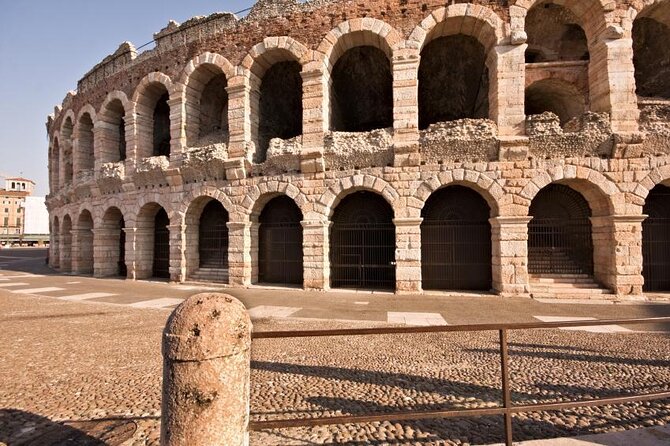
- Arena di Verona focus: you’ll hear the monument’s secret history without treating it like a photo stop.
- Medieval-to-Roman contrast: Scaligero Bridge and Arco dei Gavi sit next to churches and Roman gateways for real perspective.
- Church-and-memorial stops that matter: San Lorenzo, Santa Anastasia, and the Arche Scaligere are chosen for their stories, not their fame.
- You end in the Verona you came for: Casa di Romeo to Piazza delle Erbe and finally Casa di Giulietta, in a smart flow.
- Small group format: up to 15 people means room for questions and a livelier pace.
Verona’s City of Art, Told in the Order You Actually Walk It
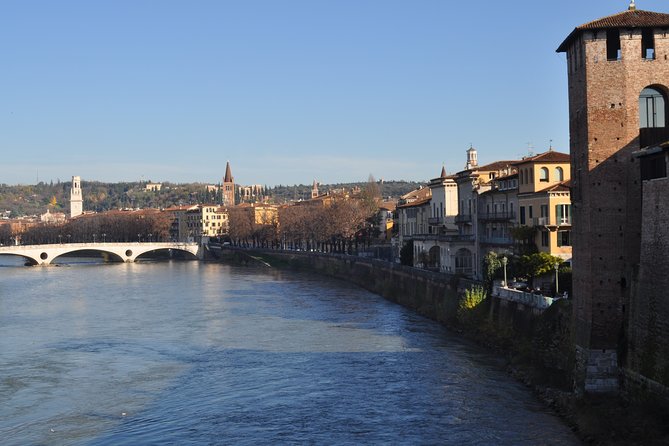
Verona can look like a postcard from one angle. But change the street, and suddenly you’re in another century. That’s why I like this tour format so much: it doesn’t just list sights. It moves you through the city’s timeline—Roman public life, medieval authority, and the later mythology of Romeo and Juliet—so the places start to explain each other.
The vibe is practical. You get story at each stop, plus just enough time to look around, take photos, and re-orient your bearings before the next turn. If you’re short on time (most people are), this is a strong way to get your mental map in place fast.
You can also read our reviews of more tours and experiences in Verona.

Timing, Meeting Point, and Where You Finish Near Juliet
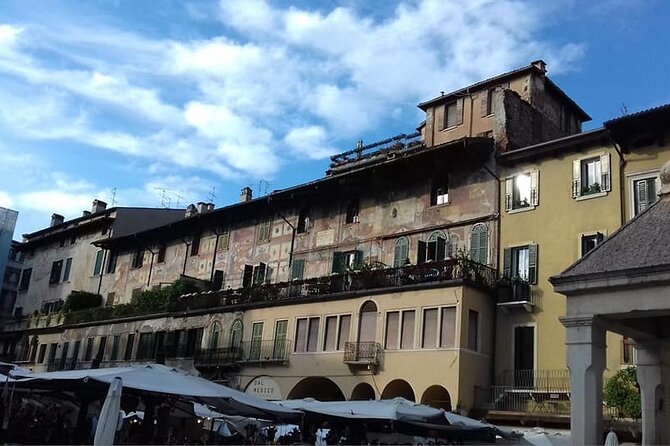
The tour meets at I Portoni della Bra on Corso Porta Nuova 2 (start point). You finish at Casa di Giulietta on Via Cappello 23 (end point). That ending location is convenient because you’re dropped right where most visitors want to go next anyway—so you don’t have to backtrack through the old center.
Start times run in blocks during the listed open period: morning slots and afternoon slots are available (for example, 9:30–11:30, then 12:00–2:00, then 2:30–4:30). If you’re deciding between them, go earlier if you can. Verona gets warm, and you’ll be grateful when you hit piazzas and bridges in better light and cooler air.
A small logistics tip: the meeting point is a specific landmark. If you’re not using your phone much, arrive early and give yourself time to orient yourself—some feedback points out it can be tricky to find at first, especially with changing street details. Once you’re there, the route is straightforward and you’ll follow the group.
Stop 1: Arena di Verona—More Than a Famous Roman Name
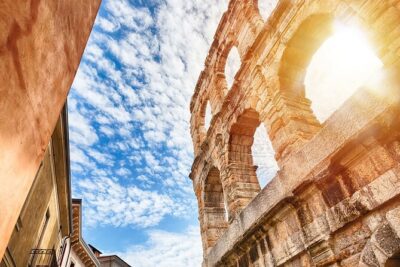
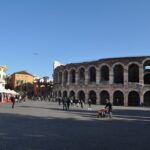
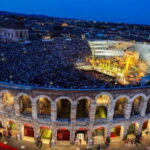
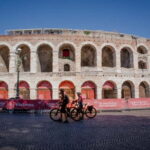
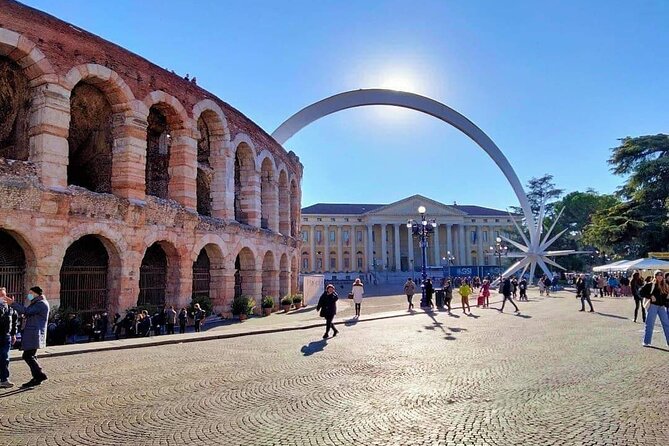
The walk begins at Arena di Verona, one of the most recognized monuments in the world. But the best part here is the angle: you’re not just looking at an iconic oval. You’re hearing the “secret history” of how this place fit into power, entertainment, and survival through time.
Admission at this stop is listed as free for the tour. That’s a real value add, because arena tickets can be expensive at other times or through different channels. Even if you’ve already seen photos online, being there in person changes the scale. You also get a cleaner understanding of why this arena became a symbol in the first place.
Practical note: arenas are open-air and can be hot in sun. If you’re visiting in summer, plan for shade breaks during the walk and drink water when the group pauses.
Stop 2: Scaligero Bridge—A Medieval Photo Landmark With a Story
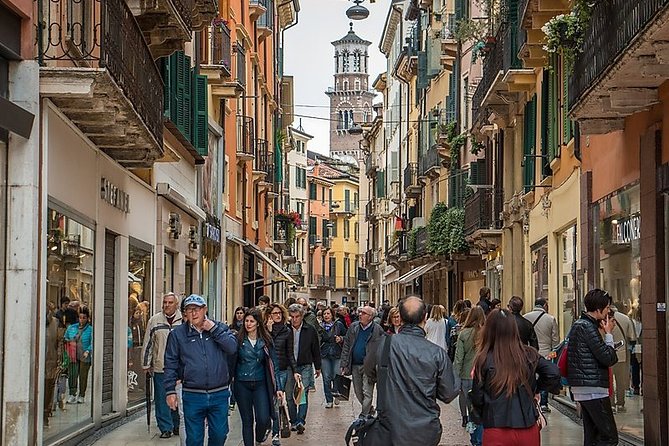
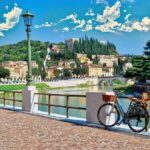
From the arena area, you move toward Scaligero Bridge, one of Verona’s best-known medieval views. Yes, it’s a “get your camera ready” stop, but the storytelling gives the architecture a reason to exist beyond Instagram.
This stop is listed at about 8 minutes, and the admission ticket is included. That matters because it’s easy to waste time hunting for the right entrance or trying to figure out which parts require tickets. Here, you’re guided to the right vantage.
One consideration: this is a short stop. If you’re the type who likes to read every inscription and take ten photos from ten angles, you may want to linger briefly at the edge after the group moves on—or plan a longer standalone visit later.
Stop 3: Arco dei Gavi—Roman Triumph, Not Just a Pretty Arch
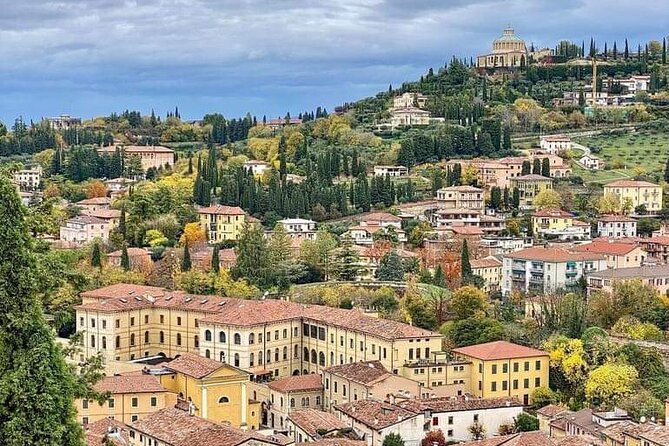
Next is Arco dei Gavi, a Roman-era triumphal arch. You’re given 10 minutes, and admission is free here.
The value in this stop is context. A triumphal arch can look like “just another Roman arch” if you’re scanning quickly. With a guide, the arch becomes a snapshot of what Rome chose to celebrate, how it wanted people to remember it, and how those old signals survive centuries later.
If you like tracing how Rome left its marks all over Northern Italy, this is the kind of stop that makes the rest of the city click.


Stop 4: Chiesa di San Lorenzo (Verona)—A Romanesque Church From the XII Century
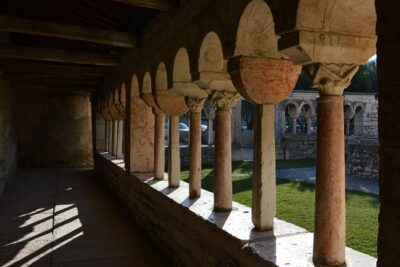
At Chiesa di San Lorenzo – Verona, you get about 15 minutes and admission is included.
This church is described as a one-of-a-kind Romanesque church from the XII century. Romanesque details often reward slow looking: proportions, stone rhythm, and those older forms that feel sturdier than later styles. With a guided stop, you don’t just stare—you learn what you’re seeing and why it was built that way.
One drawback to keep in mind: churches can sometimes be closed during a tour due to weddings or events. If that happens, you may spend more time outside or adjust the visit. Either way, you’ll still get the main story beats, but your exact indoor view can vary.
Stop 5: Porta Borsari—Entering Roman Verona
Then comes Porta Borsari, a World Heritage Site and the entrance to Roman Verona. You’ll spend around 10 minutes, and admission is listed as free.
This is one of those moments that feels like stepping through a time portal—because a “gate” is both physical and symbolic. It’s a boundary where movement, trade, and control all meet. Even if you don’t read every plaque, the guide’s explanation helps you understand why a doorway matters in a living city.
If you like street-level history—the kind that’s built into normal daily paths—this stop is a highlight.
Stop 6: Basilica di Santa Anastasia—Big Church Energy, With Ticket Not Included
Next is Basilica di Santa Anastasia, noted as the biggest church of the city. You’ll get about 10 minutes here.
Admission is listed as not included. That’s the one “cost-on-top” moment in the walk. Still, it’s a good stop to keep in your itinerary because it gives you a sense of the city’s religious center—scale, tradition, and how power expresses itself in architecture.
If you want to plan smoothly, check your expectations: you might need to pay separately if you want full entry access beyond what the tour guide covers during the stop.
Stop 7: Arche Scaligere—Where Middle Ages Feel Personal
Arche Scaligere is next, with about 15 minutes and free admission listed.
This area is presented as the most representative place of the Middle Ages in Verona. In plain terms: it’s where the city remembers its rulers and their legacy in stone. Tombs and memorials are always intense, but they work best when a guide ties them to the political story of who held power and why it mattered.
If you like political history, this stop will satisfy you. If you just want atmosphere, it still delivers, because the setting is dramatic and easy to imagine in a different time.
Stop 8: Romeo’s House (Casa di Romeo)—Start the Famous Story
At Casa di Romeo, the stop is only about 5 minutes, and admission is listed as free.
This isn’t about going deep into theater history. It’s about setting the stage. You’re taught how Verona’s Romeo-and-Juliet story got tied to real streets and buildings, so when you reach the Juliet area later, it feels more grounded instead of purely theatrical.
This short stop works well because it keeps the walk flowing. If you want a longer look, you can always return later on your own—but the guide helps you get the “why” first.
Stops 9 and 10: Piazza dei Signori and Piazza delle Erbe—Politics and People
The tour then reaches two of Verona’s most important squares.
Piazza dei Signori
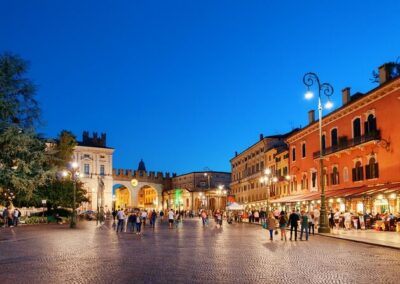
You’ll spend about 20 minutes here, and admission is free. This piazza is described as the political center of Verona. That’s a useful label because it tells you what to watch: where authority sat, where decisions happened, and how public space becomes a stage for power.
Piazza delle Erbe
Right after, Piazza delle Erbe gets another about 20 minutes, also free. This is the city center where you’re spoiled for choice. It’s a place that feels permanently alive, so expect a lively mix of sounds, people, and small activity.
A practical tip: these squares are great for photos, but they’re also prime spots for snack and people-watching. If your route timing brings you here during peak activity, just take it in. It’s part of Verona’s charm.
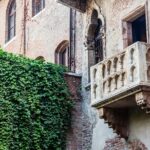
Stop 11: Casa di Giulietta—A Famous Ending With Reality Check
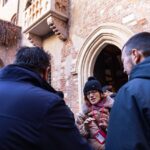
The tour ends at Casa di Giulietta, with about 20 minutes and admission listed as free.
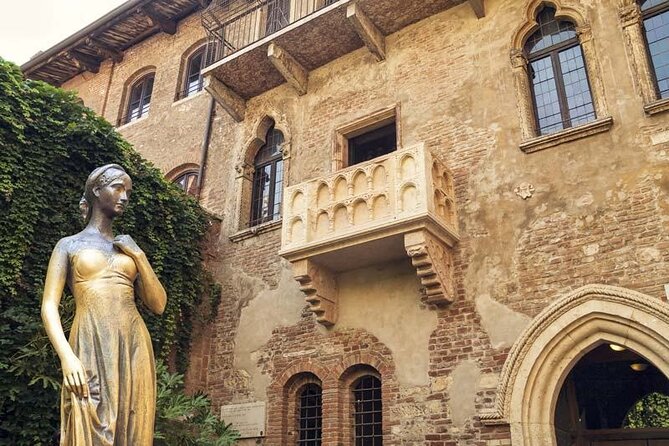
This is the best possible ending for most people because you finish at the exact place everyone wants to see. It also gives you a natural transition: after the tour, you can wander the area more slowly, grab a gelato, or continue exploring nearby streets.
One helpful way to think about this stop: the story is bigger than the building. A good guide helps you separate the popular myth from what the site actually offers today. That gives you more satisfaction than simply collecting photos.
Also, expect crowds. You’ll want to pace yourself and not rush your look. You’re finishing a 2.5–3 hour walk, so keep your energy for a proper final loop inside and around the courtyard areas.
Price and Value: What You’re Paying For at $70.14
At $70.14 per person for about 2.5 to 3 hours, this tour is priced in the “small-group history walk” zone. The value comes from three places:
First, the route is packed with major Roman and medieval anchors, plus the Juliet area. You’re not just paying for walking; you’re paying for interpretation.
Second, many stops list free admission or admission included. That reduces the “I have to figure out tickets” headache.
Third, the group size max (15 people) makes the difference between hearing details and just walking behind someone. If you’re paying to learn, not just to move, that matters.
The one line item to watch is Santa Anastasia, where admission is not included. If you want full access here, factor that into your budget.
The Guide Factor: Eugenio’s Style and How It Shows Up
This tour’s quality hinges on the guide. In the feedback, Eugenio shows up again and again as warm, attentive, and engaging. The common thread: he brings the city’s history down to street-level, and he answers questions instead of brushing them off.
People also mention that he can be flexible with timing when needed and that he provides useful recommendations for food and drinks. Even if you already planned your meals, having someone point out where locals actually go is helpful—especially in a city where the most famous spots can be the least interesting.
One practical caution, based on real-world concerns: if weather or schedules shift, don’t assume everything will always be perfectly communicated. The safest move is to double-check your meeting point right before you leave and confirm key details the day of the tour.
Who This Tour Suits Best (And Who Might Want Something Different)
This walk is a great fit if you want:
- A clear, guided orientation to Verona’s Roman-to-medieval timeline
- A manageable time commitment (2.5–3 hours) that won’t swallow your whole day
- A route that ends at Casa di Giulietta so your afternoon plans stay easy
It may feel less ideal if you prefer:
- Long museum-style time inside churches and monuments
- A tour where every stop is guaranteed fully interior access (church closures can happen)
- A slow, detailed pace where you stop and read everything at length
Should You Book This Verona History Walk?
If you’re planning a short trip and you want Verona to make sense fast, I’d book it. The route is well-chosen: Arena di Verona, Roman gateways and arches, medieval memorials, then the Juliet area. And because many stops have free or included admissions, you get solid value without constant ticket math.
If you’re coming on a day you strongly care about interior church visits, keep expectations flexible and be ready for occasional closures. Bring comfy shoes, a little patience for crowding near the end, and you’ll get a Verona that feels like more than a photo list.
FAQ
FAQ
How long is the Verona history walking tour?
It runs about 2 hours 30 minutes to 3 hours (approx.).
Where does the tour start and where does it end?
It starts at I Portoni della Bra on Corso Porta Nuova, 2, 37122 Verona VR, Italy, and ends near Casa di Giulietta at Via Cappello, 23, 37121 Verona VR, Italy.
Is pickup offered?
Pickup is offered. The tour is also near public transportation, so you may not need a car or taxi.
How big is the group?
This experience has a maximum of 15 travelers.
What language is the tour offered in?
The tour is offered in English.
Which stops include admission, and where might you pay extra?
Many stops are listed as free or admission included, but Basilica di Santa Anastasia is listed as admission ticket not included.
What are the tour times available?
Tours run during the listed opening hours: Monday to Sunday, with time blocks including 9:30 AM–11:30 AM, 12:00 PM–2:00 PM, and 2:30 PM–4:30 PM.
Do I need a printed ticket?
No. It uses a mobile ticket.
What is the cancellation policy?
You can cancel for a full refund up to 24 hours in advance of the experience start time. Free cancellation applies, and changes within 24 hours aren’t accepted.
Can I bring a service animal?
Yes. Service animals are allowed.