REVIEW · VERONA
Verona Small Group Guided Walking Tour: Romeo & Juliet and More
Book on Viator →Operated by LivTours · Bookable on Viator
Verona moves fast when you only have a couple hours. This small-group guided walk threads Shakespeare to Roman stone, all starting and ending near Piazza Bra. You’ll hit major hits like Juliet’s balcony, the Arena di Verona, and Ponte Pietra while a local guide puts the whole story into focus.
Two things I really like: the group stays tiny (max 6), so you can ask questions without shouting, and the route packs big landmarks into a short time. One consideration: because it’s a walking tour, you’ll want to be comfortable on your feet for the full 2 hours, even if the pace feels manageable.
In This Review
- Why this Verona walk works (even on a tight schedule)
- Piazza Bra: the launch pad for Verona’s biggest sights
- Juliet’s balcony and the City of Love story you’ll actually remember
- Arena di Verona: Roman stone and the scale you feel in person
- Ponte Pietra and the Adige River: a quieter scenic payoff
- Ancient streets, UNESCO context, and why the route feels coherent
- Group size, pace, and what “small group” really buys you
- Price and value: is $188.09 worth a 2-hour walk?
- What to bring and how to plan your two hours
- Should you book this Verona Small Group Guided Walking Tour?
- FAQ
- How long is the Verona small group guided walking tour?
- Where does the tour start and end?
- What time does the tour start?
- Is the tour offered in English?
- How many people are in the group?
- What sights are included on the walk?
- Is the admission ticket included?
- Are service animals allowed?
- Is there a cancellation window?
Why this Verona walk works (even on a tight schedule)
- Max 6 people means a more personal pace and real back-and-forth with your guide
- UNESCO World Heritage setting so the streets feel like part of the lesson, not just scenery
- Juliet’s balcony + Roman landmarks in one route, so you don’t have to pick one theme
- Ponte Pietra and the Adige River add a calmer, photo-friendly break from the main sights
- English tour with a professional local expert guide who connects places to the “City of Love” story
- Free admission ticket included, which makes the $188.09 price easier to justify
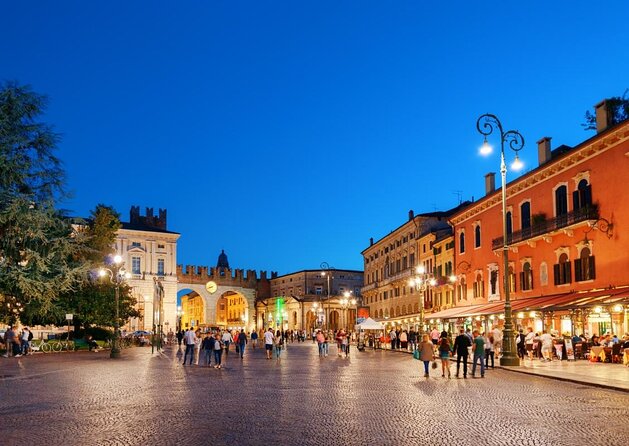
Piazza Bra: the launch pad for Verona’s biggest sights
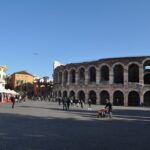
You start at Piazza Bra, one of Verona’s largest piazzas, right in the heart of the action. It’s a smart meeting spot because it’s open, easy to orient yourself in, and it’s clearly Verona’s “main stage.” From here, the guide helps you sort out what you’re seeing so it lands instead of feeling like random stops.
The tour is built around a simple idea: Verona is a layered city. Roman Verona sits next to medieval romance, and you’ll feel both within the same walking loop. As you move from the square into the historic core, you’ll also catch those romantic winding roads that make people slow down and look up.
If you like tours that get you oriented fast, this one fits. The route stays focused on the essentials—no long detours—so you leave with a clear mental map of where everything sits relative to each other.
You can also read our reviews of more tours and experiences in Verona.
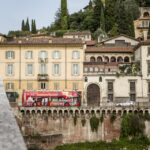


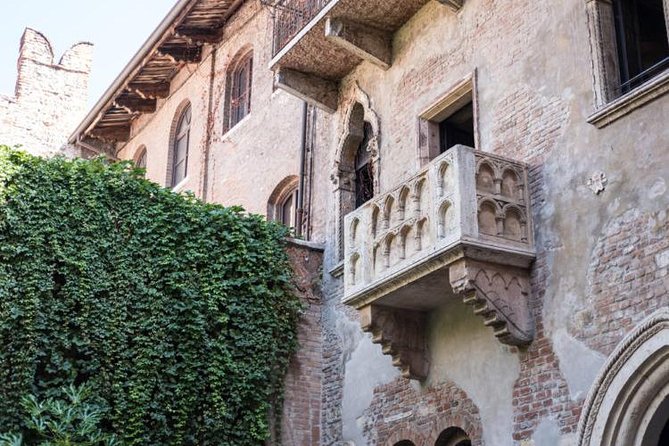
Juliet’s balcony and the City of Love story you’ll actually remember
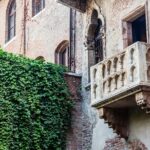
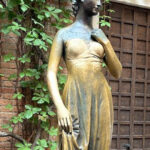
One highlight is seeing Juliet’s balcony as part of the walking tour. It’s tied directly to Shakespeare’s well-known tragedy, but the useful part is how your guide frames it in Verona’s larger love-story reputation—why the city earned the label City of Love and how that theme shows up in real streets.
Here’s the practical value: if you’ve only read the play (or only know the balcony as an Instagram stop), you’ll get more meaning from it. The guide helps you connect the literature to the physical city—so the balcony stops being a single photo and turns into a point on a bigger story.
A small caution: the balcony area can attract crowds outside a guided experience. Going as part of a group with a guide can help you stay oriented and keep moving. Just remember the tour is about the walk and context; it’s not a long sit-down visit focused only on Juliet.
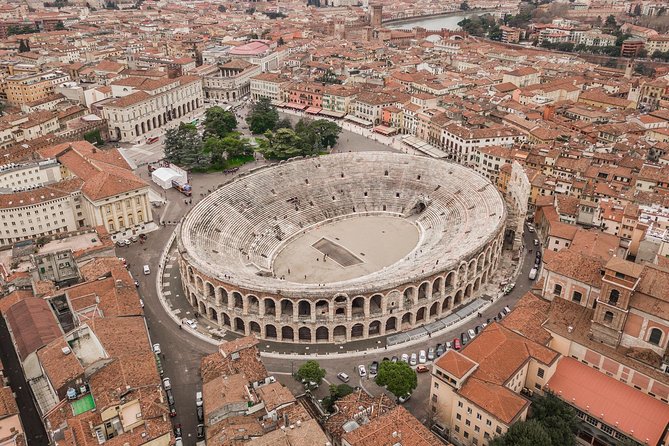
Arena di Verona: Roman stone and the scale you feel in person
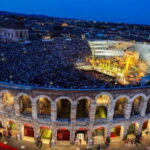
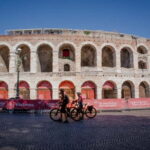
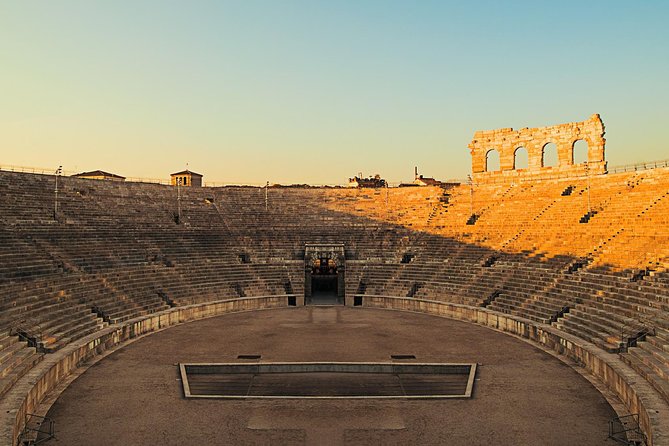
Next, you’ll see the Arena di Verona and an Ancient Roman Theatre along the way. Even without getting technical, you can’t help but react to the scale. Roman architecture has that effect—it makes you understand how serious people were about public life.
What I like about how this tour handles the Roman side is that it doesn’t treat it like a separate “history block.” You’ll experience Roman Verona while still moving through the same UNESCO setting that shapes the modern love-story vibe. That matters because it’s the contrast that makes Verona feel like Verona.
The Arena di Verona is described as an “incredible” landmark in the tour details, and I agree with the general idea: it’s the kind of sight that makes you look twice at the street layout around it. If you’re the type who enjoys architecture more than lectures, you’ll still come away satisfied, since the guide’s job is to connect what you see to what it meant.
Potential drawback: Roman sites often mean lots of direct sun. Bring water and plan for outdoor time, especially if you’re sensitive to heat. The good news is the full tour runs about 2 hours, so you’re not stuck out there for half a day.
Ponte Pietra and the Adige River: a quieter scenic payoff
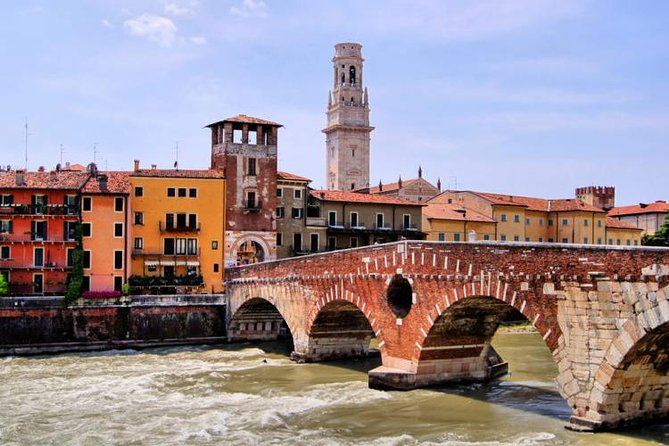
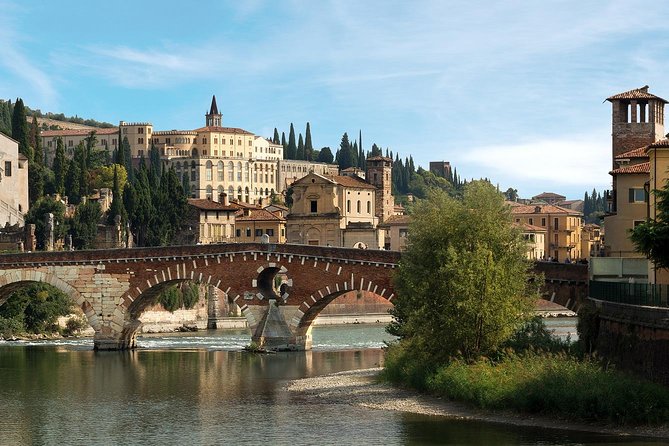
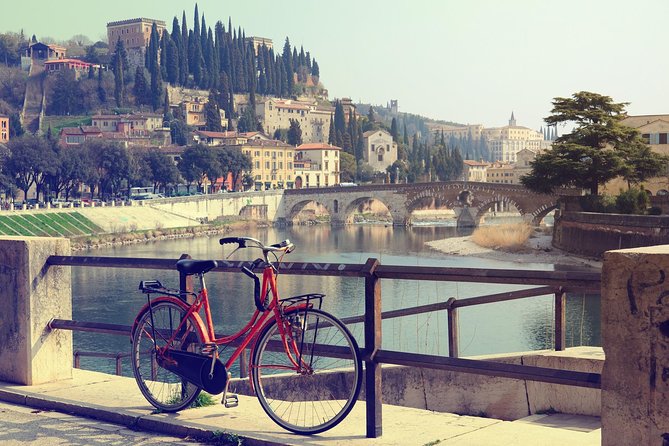
Between the big-picture landmarks, you’ll also see Ponte Pietra, listed as Verona’s oldest bridge. That’s a great choice for a walking tour because it gives you a change of rhythm. You shift from statues-and-stones energy to something more fluid: river views and a sense of how people moved through the city over time.
The tour also includes the Adige River, which helps explain why Verona developed where it did. Rivers shape routes, trade, and daily life. Even if you don’t want a detailed lecture, you’ll feel the logic of the city layout more clearly once you’ve seen the bridge and the river in the same loop.
Photo-wise, this segment is usually where you catch your breath. It’s also a good spot to ask your guide one of those questions you’ll keep thinking about—like how the romantic reputation and the Roman infrastructure overlap in a city plan that evolved across centuries.
Ancient streets, UNESCO context, and why the route feels coherent
A big selling point here is that Verona is a UNESCO World Heritage Site, and the tour is set up so you experience that designation as you walk. Instead of bouncing between disconnected major attractions, you move through a compact historic area where the streets themselves make sense.
The guide’s role is key. You’re not just ticking off stops. You’re learning a storyline: how the city became a place people associate with love and tragedy, and how the Roman-era structure still dominates the way the city feels today. That’s what makes the tour useful even if you’ve “already seen” some of the sights in photos.
Also, the route includes both major landmarks and the more winding, romantic street scenes. That blend is why the tour doesn’t feel like a checklist. It feels like Verona as a lived-in place.


Group size, pace, and what “small group” really buys you
This is limited to six travelers, which changes the experience more than you might expect. In a crowd, you lose the thread. With a small group, the guide can slow down when needed and you can actually hear what matters.
The tour runs about 2 hours, starting at 11:00 am and ending back at the meeting point in Piazza Bra. That timing is helpful if you want to keep the rest of your day open for lunch, a second museum stop, or just wandering without a schedule.
Language is another practical win: it’s offered in English, and the format is a guided walk, not a long bus tour. If you prefer your sightseeing active—walking, looking, asking questions—this fits nicely.
Two more details to keep in mind:
- You’ll use a mobile ticket, so make sure your phone battery is happy.
- Service animals are allowed, and the tour notes that most travelers can participate. If you’re on the fence, focus on your walking comfort for a full 2 hours.
Price and value: is $188.09 worth a 2-hour walk?
At $188.09 per person for roughly 2 hours, the price isn’t cheap on paper. Here’s how I’d judge value, using what’s included:
You get:
- A professional local expert guide
- A tiny group (max 6)
- Access to major sights on foot, including Juliet’s balcony and stops centered on the Arena di Verona
- Ponte Pietra (oldest bridge in the city, per the tour info)
- A free admission ticket included for the experience
So you’re paying for three things that reduce hassle:
1) Someone local helping you make sense of what you’re seeing
2) Less waiting and less crowd pressure that comes with bigger groups
3) Built-in focus on the “big Verona” highlights without requiring you to plan each connection
If your Verona time is short, this kind of tour can be a smart use of money. If you’re staying longer and you love free-form exploring, you might feel $188.09 is better reserved for a day you truly want structure. For first-time visitors, fans of the play, or anyone who wants a map of the city’s stories in one go, it’s easier to justify.
What to bring and how to plan your two hours
Here are practical things that make the tour smoother, based on the nature of the route and the stops involved:
- Wear comfortable walking shoes. You’re moving through historic streets and around major landmarks for the whole session.
- Bring water. You’ll spend time outdoors near large Roman structures and open squares.
- Use your phone for the mobile ticket, but also save storage for photos of the Arena area and the river/bridge views.
- Arrive with enough buffer to find Piazza Bra and be ready for the 11:00 am start.
One more tip: if you’re a Romeo and Juliet fan, go in with one question in mind—something like how Verona’s love-story reputation connects to what you’re seeing in the city. A good guide can turn that into a memorable explanation rather than a script.
And yes, gratuities are optional. If you feel your guide earned extra thanks, plan on that, but it’s not required by the tour details.
Should you book this Verona Small Group Guided Walking Tour?
Book it if you:
- Want major Verona highlights in about 2 hours
- Care about both Shakespeare romance and Roman-era sights
- Like the idea of a max-6 group, where your questions aren’t swallowed by noise
- Prefer a guided walk that helps you understand what you’re seeing, not just where to take photos
Skip or reconsider if you:
- Want a long, slow deep exploration of only one theme (pure Roman history or pure Juliet-world)
- Struggle with steady walking time for about two hours
- Are hoping for a tour that goes far off the main historic loop—this one stays focused on key landmarks
If your goal is to get a strong Verona foundation fast—Roman stone, Juliet legend, and the river-and-bridge viewpoint—this is a solid choice. You’ll finish with a clearer sense of the city’s story and where those famous places sit in real space, not just in your memory.
FAQ
How long is the Verona small group guided walking tour?
It lasts about 2 hours.
Where does the tour start and end?
It starts at Piazza Bra, Verona (P.za Bra, Verona VR, Italy) and ends back at the same meeting point.
What time does the tour start?
The listed start time is 11:00 am.
Is the tour offered in English?
Yes, the tour is offered in English.
How many people are in the group?
The tour is limited to a maximum of six travelers.
What sights are included on the walk?
You’ll see Juliet’s balcony, the Arena di Verona, the Ancient Roman Theatre, Ponte Pietra (the oldest bridge in the city), and the Adige River, along with the surrounding UNESCO site streets.
Is the admission ticket included?
Yes. The details list admission ticket free for the experience.
Are service animals allowed?
Yes, service animals are allowed.
Is there a cancellation window?
The experience offers free cancellation if you cancel at least 24 hours in advance for a full refund.