REVIEW · VERONA
Verona Classic Walking tour
Book on Viator →Operated by Citywalkers · Bookable on Viator
Verona in two hours, minus the guesswork. This Verona Classic Walking tour hits the city’s biggest landmarks with a tight route and clear, on-foot guidance, so you leave with a mental map that actually sticks. I especially like the chance to see the Arena di Verona and the Scaliger tombs in one smooth loop, and I like that the narration is in English. One drawback: admission tickets for the major sights aren’t included, so you’ll need to budget extra.
I also like the practical format: it runs about 2 hours, starts at 10:00 am, uses a mobile ticket, and caps group size at 16 people. You’ll move at a walking-tour pace with short stops, and the final drop-off is at Piazza delle Erbe, right where you may want to keep exploring on your own.
The pace is fast enough that it’s great for first-time planning, but it means you won’t get hours to wander every corner. If you want to linger for photos, read inscriptions slowly, or shop at length, plan to add extra time after the tour.
In This Review
- Key things I’d plan around before you go
- The route: five Verona stops in about two hours
- Price and value: $58.88, plus whatever entry you choose
- Practical money tip
- Meeting point at Via Teatro Ristori: start on time, stay relaxed
- Arena di Verona: Roman engineering you can still feel
- What to watch for at the Arena
- Possible drawback
- Piazza dei Signori: Renaissance palazzi and a crowd with rhythm
- Why this stop works on a walking tour
- Arche Scaligere: Gothic tombs tied to the name of the stairs
- How to get more from just 10 minutes
- Possible drawback
- Casa di Giulietta: the Shakespeare stop, explained without the fluff
- The honest expectation
- Piazza delle Erbe: Roman forum to market square
- Why ending here is smart
- Group size and pace: good for orientation, not for slow travel
- Tickets not included: plan your entry choices like a grown-up
- Service animals and public transit access
- When things don’t go as planned: a simple backup plan
- Who should book this Verona Classic Walking tour?
- Should you book it?
- FAQ
- What sights does the Verona Classic Walking tour include?
- How long is the tour?
- What time does the tour start?
- How much does it cost?
- Is the tour in English?
- Are admission tickets included for the sights?
- Where does the tour start and end?
- Is there a limit on group size?
- Is service animals allowed and is it near public transportation?
Key things I’d plan around before you go
- A 10-minute-per-stop route keeps you moving, not stuck in lines.
- Arena di Verona plus Scaliger tombs give you both Roman and medieval Verona.
- Piazza dei Signori and Piazza delle Erbe are social hubs, not just scenery.
- Casa di Giulietta is the quick-hit stop for the Shakespeare connection.
- Tickets aren’t included, so bring extra time and money for entry if needed.
- Max 16 people usually keeps the group from turning into a human stampede.
The route: five Verona stops in about two hours
This is a classic highlights walk, designed to cover a lot without turning into a full-day marathon. The tour strings together five high-recognition sights: the Arena di Verona, Piazza dei Signori, Arche Scaligere, Casa di Giulietta, and Piazza delle Erbe. Each stop is about 10 minutes, which tells you the goal right away: help you get oriented fast.
For me, the value is that it connects Verona’s layers. You start with Roman spectacle, move into Renaissance civic life, then step into medieval power, then land in the Shakespeare-sized romantic myth, and finish in the market-and-cafes heart of the city. Even if you only stay in Verona a short time, you get a usable overview.
You can also read our reviews of more tours and experiences in Verona.


Price and value: $58.88, plus whatever entry you choose
The price is $58.88 per person for a tour that runs about 2 hours and includes a guide in English. That’s a fair chunk of change for what is essentially guided walking time, so here’s the key value question: are you paying for direction and context, or for admission?
Admission tickets for each stop are not included, so you should assume you’ll pay extra if you want to go inside any of the sites that require ticketed entry. The tour still helps a lot even if you choose not to enter every location, because you’ll understand what you’re looking at from the outside—especially at the Arena and the tombs.
Practical money tip
If you’re trying to keep total costs down, decide ahead of time which sights you actually want to enter. With 10 minutes per stop, the guide can point you where it matters most, but you’ll have to make the inside/outside call yourself.
Meeting point at Via Teatro Ristori: start on time, stay relaxed
The tour starts at Via Teatro Ristori, 7, 37122 Verona VR and begins at 10:00 am. It ends at Piazza delle Erbe (Piazza Erbe), 37121 Verona VR.
This matters because a walking tour lives or dies on timing. Ten minutes can disappear fast when you’re looking for the meeting spot, crossing streets, or sorting out your ticket on your phone. My advice is simple:
- Arrive a few minutes early.
- Have your mobile ticket ready on your screen.
- Use the meeting pin in your map app if you’re not 100% confident.
Since the tour is capped at 16 people and is offered in English, you likely won’t have trouble finding your guide once you’re in the right area—still, being early keeps your brain from doing extra work.
Arena di Verona: Roman engineering you can still feel
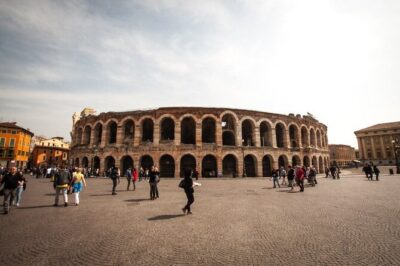
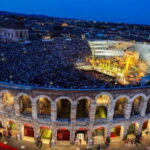
Your first stop is Arena di Verona, a Roman amphitheater built in the first century. It’s still in active use today and holds seating for about 30,000 people. That size is hard to fully absorb until you stand in the right place and imagine sound and crowd energy filling it.
What I like about this stop is the mix of “ancient” and “alive.” The Arena isn’t a dead ruin behind a fence. Music lovers come to Verona to catch operas and even pop music concerts there. Even if you’re not seeing a performance, the setting helps you understand why Verona became a magnet for big stages.



What to watch for at the Arena
You’ll get a quick orientation and context, but you’ll also want to notice how the space feels open-air. If you’re visiting in bright sun, consider sunglasses and water—outdoor Roman structures can be deceptively hot in midday.
Possible drawback
Because the stop is around 10 minutes, you won’t have time for a long, slow museum-style approach if you want deeper detail. Think of it as a launch pad: a fast “this is why it matters” stop, not a full exploration.
Piazza dei Signori: Renaissance palazzi and a crowd with rhythm
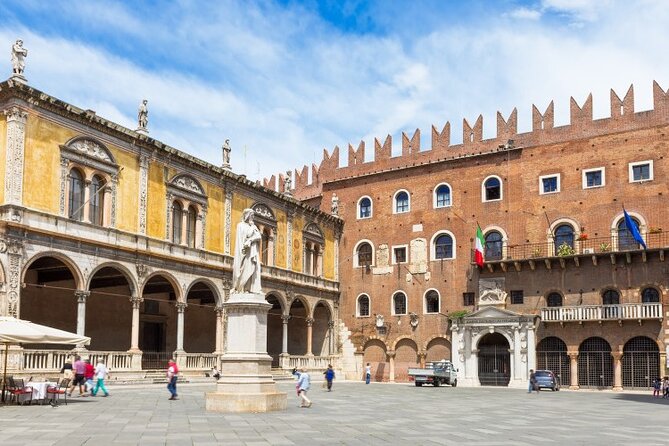
Next up is Piazza dei Signori, known for its elegant Renaissance palazzi lining the square. This is not just a postcard background. During the day, the piazza still assumes political and administrative functions, which gives it a day-to-day sense of purpose.
Then there’s the human side. The square also draws a student crowd for happy hour, so the vibe can change in a way you won’t see at quieter historic corners. Even on a simple walking tour, this stop helps you understand Verona as a lived-in city, not a museum.
Why this stop works on a walking tour
Piazzas are where stories become real. Standing in Piazza dei Signori, you can connect the buildings around you to the idea of power and public life. You also get a break from heavier sites—more open-air viewing, less “line up and enter.”
Arche Scaligere: Gothic tombs tied to the name of the stairs
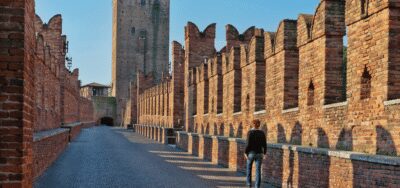
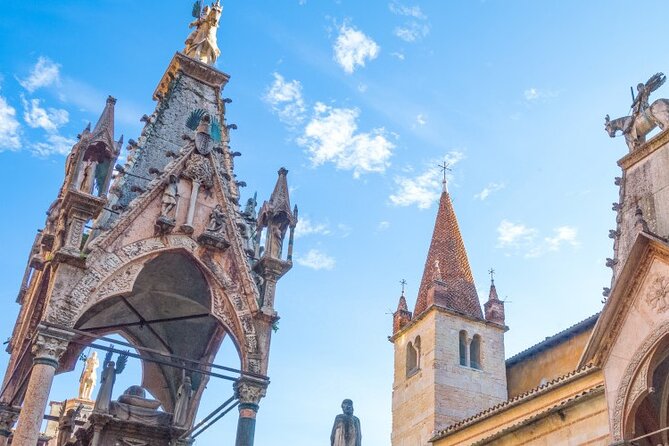
The tour then heads to Arche Scaligere, the funerary tombs of the Scaliger family, who ruled Verona in the 13th and 14th centuries. These tombs are described as a representative monument of Gothic art, but what really grabs your attention is the layout: they sit within an enclosure of wrought iron grilles.
The grilles are decorated with a stair motif, directly referring to the name della Scala, meaning of the stairs. It’s one of those small details that makes the whole site more understandable. You aren’t just looking at ornate stone—you’re seeing symbolism built into the design.
How to get more from just 10 minutes
If you like architecture and symbolism, take 20 seconds to look for the stair motif in the ironwork. That small “aha” moment can make the whole stop feel richer, even in a short time.
Possible drawback
This is one of the stops where photos can be tricky depending on where the group stands. To get your best angle, don’t be afraid to step slightly to the side while the guide explains the significance.
Casa di Giulietta: the Shakespeare stop, explained without the fluff
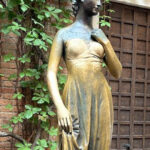
Then you reach Casa di Giulietta, a stop that many people make in Verona for one reason: the Shakespeare connection. You’ll hear about the romantic and tragic love story tied to Juliet and how it connects to real events in Verona during the 1300s, including family rivalry, forbidden love, and feuding.
What I like about including this stop on a walking tour is that it gives you context. Without context, Casa di Giulietta can feel like a box to check. With context, it becomes a lens into how stories stick to places—even when the story grows beyond the original facts.
The honest expectation
This is still a quick stop. If you want a long, slow read-and-look experience, you’ll need extra time before or after the tour. But as a guided introduction, it’s effective because it connects literature to local identity.
Piazza delle Erbe: Roman forum to market square
The final highlight is Piazza delle Erbe, originally a Roman forum and surrounded by cafes and some of Verona’s most notable buildings. This is the kind of square where you can feel the city’s daily rhythm fast.
There’s also a practical, timing-based perk: if you’re there on Monday to Friday, the morning market (fruit and vegetables) can add an extra layer of energy. Even if you’re not shopping, it’s one of the best ways to see how locals use the space.
Why ending here is smart
The tour ends at Piazza delle Erbe, which means you’re dropped right where you can keep going—food, people-watching, and more wandering in the same historic zone. It’s a good finishing point because it doesn’t just end with “and that’s it.” It ends with options.
Group size and pace: good for orientation, not for slow travel
This tour is limited to 16 travelers, which matters more than it sounds. In tight historic areas, big groups can kill the experience: you can’t hear the guide, you can’t move freely, and stops turn into crowd management.
The 10-minute stop structure also tells you the pacing. You’ll get context, photos, and a quick sense of where you are in Verona—but you won’t have long to linger at one specific site.
If you enjoy slow travel, treat this as your “get your bearings fast” tour. Then return later to the one or two places that really grabbed you.
Tickets not included: plan your entry choices like a grown-up
A key detail you need to plan around: admission tickets for the sites are not included. That means you should think in terms of two layers:
1) What you see from the outside during the guided portion.
2) What you decide to enter on your own.
Because the tour is only about 2 hours, you may want to avoid adding inside time unless you’re confident you can do it without cutting the tour short. The guide can help you prioritize, but your total time in Verona is still yours to manage.
Service animals and public transit access
The tour allows service animals, and it’s near public transportation. That’s useful if you’re balancing different parts of your day in Verona and don’t want to rely solely on taxis or long walks.
I’d still wear shoes that handle uneven historic streets. Most “walking tours” in old European centers are a lot more foot-friendly than you expect—until you hit one cobblestone stretch.
When things don’t go as planned: a simple backup plan
There is one obvious risk with any meeting-point tour: the person running it may not appear on time. If that happens, don’t panic. Do two things quickly:
- Confirm you’re at the correct meeting spot at the correct start time.
- Contact the provider or the booking channel and wait a reasonable amount of time while they sort it out.
In general, walking tours are easy when everyone shows up. When someone doesn’t, your best tool is having your confirmation details handy and being proactive right away.
Who should book this Verona Classic Walking tour?
I think this tour is a solid fit if you:
- Want a fast overview of Verona’s main sights without planning every stop yourself.
- Are visiting for a short time and want an efficient route in English.
- Prefer a small group size (max 16) over a massive crowd.
- Like story-driven stops, especially with the Shakespeare tie-in at Casa di Giulietta.
You might skip or add extra time if you:
- Want long, museum-style exploration at any one site.
- Need a very flexible schedule for lingering, shopping, or extra photos.
- Don’t want to deal with additional ticket costs for entry.
Should you book it?
Yes—if you want a guided highlights route that helps you understand Verona in two hours, this is the kind of tour that gives your next hours a purpose. The route makes sense: Roman Arena energy, civic Renaissance life in Piazza dei Signori, Scaliger power at the Gothic tombs, the Juliet/Shakespeare story, and then a natural landing at Piazza delle Erbe.
Just go in with two expectations: plan for ticket costs since admissions aren’t included, and treat it as an orientation tour, not a slow wander marathon. If you can do that, you’ll likely feel like you got your money’s worth in context, not just in photos.
FAQ
What sights does the Verona Classic Walking tour include?
It covers Arena di Verona, Piazza dei Signori, Arche Scaligere, Casa di Giulietta, and Piazza delle Erbe.
How long is the tour?
The duration is about 2 hours.
What time does the tour start?
The start time is 10:00 am.
How much does it cost?
The price is $58.88 per person.
Is the tour in English?
Yes, it is offered in English.
Are admission tickets included for the sights?
No. Admission tickets are not included.
Where does the tour start and end?
It starts at Via Teatro Ristori, 7, 37122 Verona VR, Italy and ends at Piazza delle Erbe (Piazza Erbe), 37121 Verona VR, Italy.
Is there a limit on group size?
Yes. The maximum is 16 travelers.
Is service animals allowed and is it near public transportation?
Yes, service animals are allowed, and the tour is near public transportation.