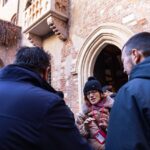
Sunset changes Verona’s quieter stories. This evening walk pairs the big-name sights with a special focus on the old Jewish Ghetto—so you don’t just pass through, you understand why the streets matter. I really like the Jewish Ghetto focus and how guide Silvia is ready to adjust to your questions and interests, even when you want to switch gears on the spot. One thing to consider: it’s a lot to cover in about two hours, so you’ll want to be ready for a brisk, stop-and-go pace.
You meet in the Piazza Bra area and end back where you started, which makes it easy to stitch this into dinner plans. The tour runs daily in the evening window (5:00 PM to 8:00 PM), and it’s a true private setup for your group (up to 15 people), led in English with a mobile ticket.
In This Review
- Key highlights worth caring about
- Starting at Piazza Bra at golden-hour pace
- The Jewish Ghetto focus: how Verona tells the story in plain sight
- Piazza delle Erbe: your Verona orientation point
- Piazza dei Signori and the architecture of power
- The Arena di Verona square: symbols, timing, and what to expect
- Castelvecchio: medieval scale after Roman weight
- Ponte Pietra: the oldest bridge in Verona
- Guide Silvia: why this tour feels personal, not like a script
- Pace and expectations: fitting a lot into two hours
- Price in real terms: what $360.88 per group buys you
- Where this tour fits best (and where it doesn’t)
- Should you book Hidden Verona at Sunset?
- FAQ
- Where does the tour start and end?
- What time does the evening tour run?
- How long is the walking tour?
- Is this a private tour, and how many people are included?
- What language is the tour offered in?
- How much does the tour cost?
- Is Arena di Verona admission included?
- Which stops are free to visit during the tour?
- When will I get confirmation after booking?
- Can I cancel for a full refund?
Key highlights worth caring about
- Jewish Ghetto storytelling in real street-level spots you can actually see
- Silvia’s flexible answering style that keeps the tour from feeling scripted
- A route that hits Verona icons like the Arena, Castelvecchio, and Ponte Pietra
- Mostly free stops (with Arena sightseeing that does not include admission)
- An evening schedule that’s often more comfortable than midday sightseeing
Starting at Piazza Bra at golden-hour pace
This tour kicks off near Piazza Bra, Verona’s wide-open gateway square. The evening hours (5:00 PM to 8:00 PM) are perfect for getting your bearings while the city’s center cools down and lights up. It’s also close to public transportation, so you’re not stuck planning a complicated taxi route just to begin.
The whole experience is about two hours, and it’s designed like a walking circuit. Each stop is short—think “look, listen, understand, move on”—so you’ll get a broad overview of Verona while still keeping the Jewish history theme front and center.
You can also read our reviews of more tours and experiences in Verona.
The Jewish Ghetto focus: how Verona tells the story in plain sight
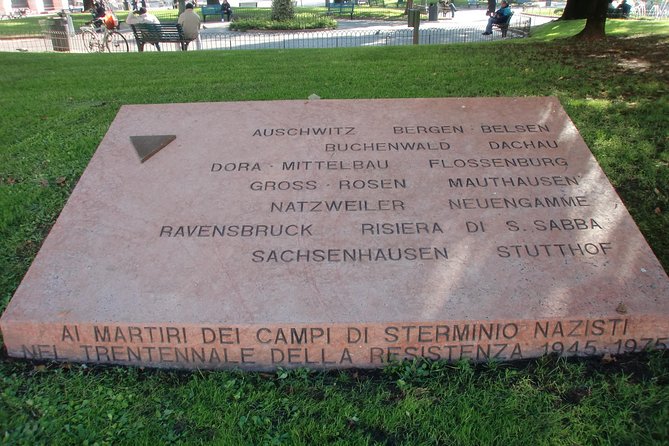
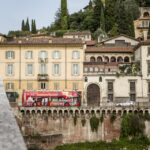
What makes Hidden Verona at Sunset different is that the walking route treats the Jewish community as part of the city’s everyday map, not just a side note. As you move through the center, you’re guided to specific visual clues and place-based context—so the story clicks as geography, not as facts you skim and forget.
You’ll also notice how the tour connects past and present. The goal is to show how the Jewish presence shaped Verona, and how the city remembers—or sometimes hides—those layers. If you’re interested in the Jewish Quarter of Verona, this is the kind of tour where you’ll keep noticing details you would normally walk right past.
Piazza delle Erbe: your Verona orientation point
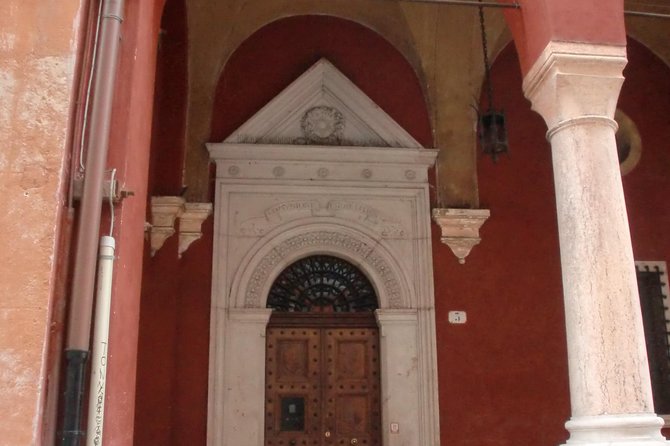
You begin at Piazza delle Erbe, the market square that works like an open-air introduction to the city center. You get about ten minutes here, which is enough time for setting the stage: where you are, why this square matters, and how it connects to the rest of your route.
This stop is free, and that’s a nice early win because it helps you start the tour without thinking about admissions right away. Even if you’re not a market person, this square gives you the right visual anchors for the rest of the evening.
Piazza dei Signori and the architecture of power
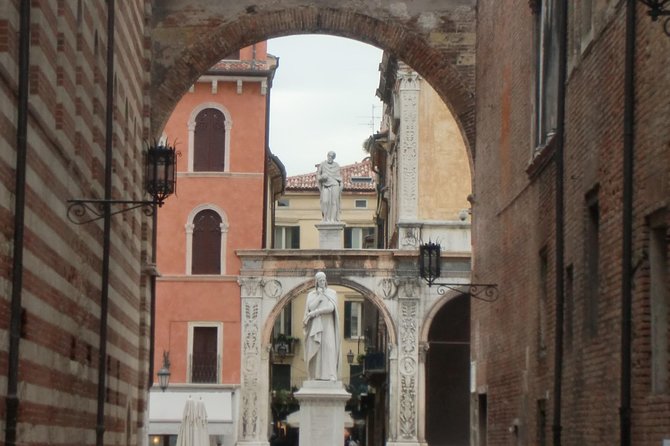
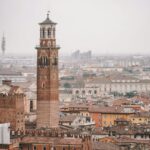
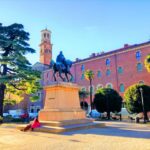
Next comes Piazza dei Signori, where the ruling-family architecture frames the square like a lesson in civic power. You’ll spend roughly ten minutes here, and the focus is less on browsing and more on reading the space—who built it, what it signaled, and how the city’s layout ties into the bigger story you’re following.
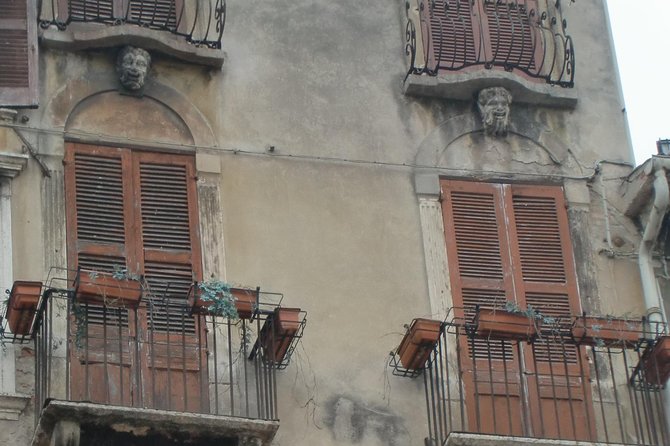
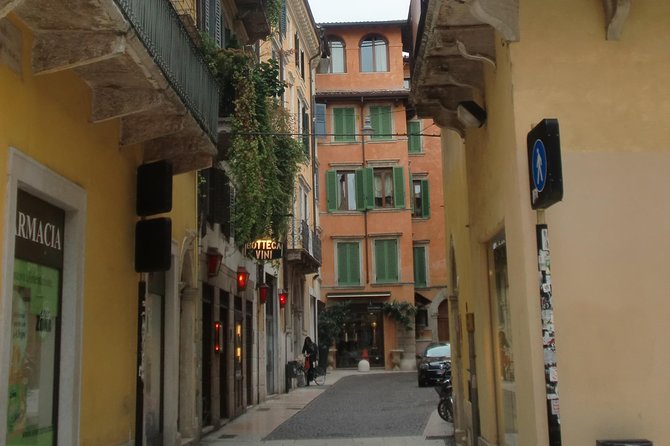
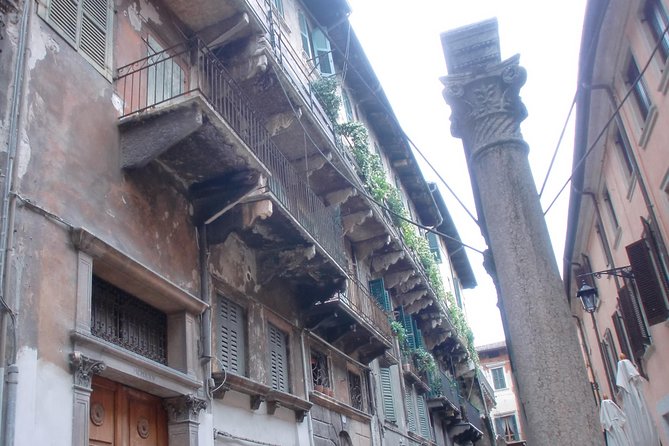
It’s also free to visit, so you can put your attention into the explanation. The tour then points out street-level marks associated with the Jewish district, which is where the walk shifts from general Verona sightseeing to targeted historical understanding.
The Arena di Verona square: symbols, timing, and what to expect
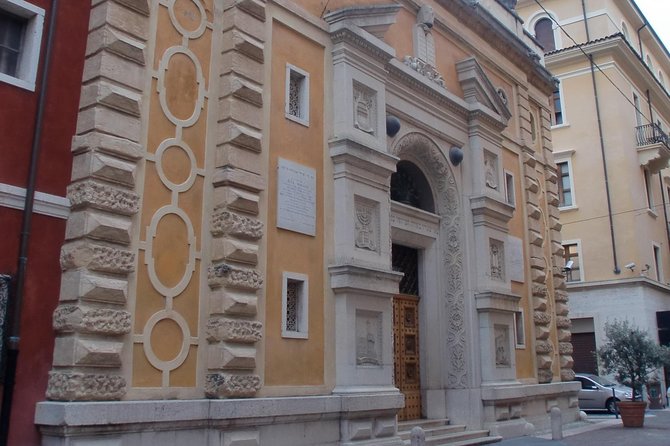
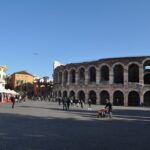
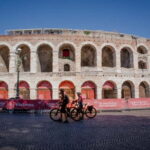
Your route brings you toward the area of the Arena di Verona, Verona’s iconic Roman amphitheater. The Arena itself is listed as a stop where admission is not included, so plan on seeing it as a sightseeing point during the walk rather than treating it like a timed-entry inside visit.
The guide includes context about the Arena’s significance and its place in Roman architectural history. The timing here matters, too: in the late-day light, the amphitheater feels less like a photo prop and more like a central piece of Verona’s identity.
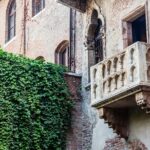
You’ll also be guided to the site tied to the city’s most famous love tragedy. Even if you already know the basic legend, the value is in the local framing—how Verona uses that story as a lens for understanding its own culture and landmarks.

Castelvecchio: medieval scale after Roman weight
After the Arena area, the tour heads to Castelvecchio, a medieval castle that adds contrast to all that Roman emphasis. You get about ten minutes here, and it’s long enough to understand the castle’s role without getting bogged down in a museum-style timeline.
This stop is free, which makes it a good place to slow down for a moment, look back at the surrounding streets, and connect how different eras shaped Verona’s defenses, power, and public identity. If you like architecture and city planning, Castelvecchio is one of the more satisfying stops because you can feel the scale.
Ponte Pietra: the oldest bridge in Verona
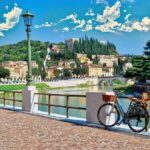
The walk finishes with Ponte Pietra, described as Verona’s oldest bridge. Like Castelvecchio, it’s a free stop and perfect for a “wrap-up look” because you can take in how the river shapes movement through the city.
At sunset, bridges become natural viewing platforms. Even without spending time on a formal viewpoint, you’ll get a sense of where pedestrians naturally flow and how Verona’s historic core connects across the water.
Guide Silvia: why this tour feels personal, not like a script
The name that keeps showing up for a reason is Silvia. Across the experience, the common thread is clear: she’s engaging, explains with patience, and stays flexible if your group wants to slow down or shift directions. You’ll likely ask questions—and you won’t feel rushed out of them.
English is reported as excellent, which matters a lot on history-focused tours. When you’re learning about Verona’s Jewish community, the details are the point, and good language support helps you actually follow the nuance instead of catching only the highlights.
Silvia is also described as open to change. That shows up in real-life behavior: if the heat or pace becomes an issue, she can adapt. One group even ended a bit early due to warmth, which tells you the tour isn’t rigid.
There’s also a bonus side to this guided approach. One stop described in the experience is a small cheese shop where you can get a view back toward an old Roman bridge. If you enjoy food breaks that also connect to the city, that kind of detour makes the walk feel more local than strictly “tour-bus sightseeing.”
And because this tour touches synagogue-related context, you might run into a Rabbi during the visit, depending on timing. That kind of human moment is exactly what makes history feel alive, not distant.
Pace and expectations: fitting a lot into two hours
The stops are short—usually around ten minutes each—and the route is designed to keep moving. That’s great when you want both the major landmarks and the Jewish history thread without spending your whole day in one area.
Still, because the tour covers a lot of well-known sights, you should treat it like a guided circuit, not a slow wandering tour. If you’re the type who wants to linger, take extra photos, or sit with a view, be ready to ask Silvia to prioritize what matters most to you.
Evening walking has practical trade-offs. The upside is comfort compared to midday. The risk is heat lingering in warm months and uneven cobblestones everywhere in central Verona, so comfortable shoes are a real part of getting the experience you want.
Price in real terms: what $360.88 per group buys you
The price is $360.88 per group with a cap up to 15 people, and that changes the value picture depending on your group size. If you’re a small group, the cost per person rises; if you’re a larger group (within that limit), it becomes much easier to justify.
Here’s the useful way to think about it: you’re paying for private guidance that ties together a focused theme (Verona’s Jewish Ghetto) and several major landmarks (Arena area, Castelvecchio, Ponte Pietra). Since most stops are free and Arena admission is not included, your guide time and interpretive storytelling are the main “paid” component.
It can also be a smart value for history-minded travelers because you get a coherent route instead of bouncing between locations on your own. When you’re learning a topic like a local Jewish Quarter history, context is what you can’t easily recreate from a phone map.
Where this tour fits best (and where it doesn’t)
This is a strong match if you want:
- A sunset-paced way to learn Verona beyond the usual postcard loop
- A private guide who can respond to your questions in English
- A Jewish Quarter focus that connects history to what you can see on the ground
- A tour that mixes big landmarks with meaningful thematic stops
It may not be the best fit if you want long museum time, since the route is set up as quick sight stops. If your top priority is entering the Arena or spending extended time at one monument, you may need to add extra time before or after this walk.
Should you book Hidden Verona at Sunset?
Book it if you care about meaning, not just motion. This tour’s biggest advantage is the way it links Verona’s iconic center with the story of the Jewish community in a way that feels grounded and understandable.
I’d especially consider it if you like guides who are conversational, flexible, and good at answering follow-up questions. With Silvia leading, the experience has a personal, respectful tone aimed at understanding—and that’s the kind of context that makes a city feel bigger than its landmarks.
If you prefer strictly independent travel with no guided narrative, or if you dislike walking circuits with short stops, you might want a different format. But if you’re open to a paced evening walk that turns history into street-level insight, this is a very good bet.
FAQ
Where does the tour start and end?
The tour starts at Piazza Bra (in the Piazza Bra area, Verona VR, Italy) and ends back at the same meeting point.
What time does the evening tour run?
It runs every day within the listed hours of 5:00 PM to 8:00 PM.
How long is the walking tour?
The duration is listed as about 2 hours.
Is this a private tour, and how many people are included?
Yes, it’s private, and only your group participates. The group size is up to 15.
What language is the tour offered in?
The tour is offered in English.
How much does the tour cost?
The price is $360.88 per group (up to 15 people).
Is Arena di Verona admission included?
No. Arena di Verona is listed as admission ticket not included, so you should plan on seeing it as part of the route without that admission being covered.
Which stops are free to visit during the tour?
Piazza delle Erbe, Piazza dei Signori, Castelvecchio, and Ponte Pietra are listed with admission ticket free.
When will I get confirmation after booking?
You should receive confirmation within 48 hours of booking, subject to availability.
Can I cancel for a full refund?
Yes. You can cancel for free and receive a full refund if you cancel at least 24 hours before the experience’s start time.