REVIEW · VERONA
Walking Tour in Verona: 9+ Landmarks with Live Guide
Book on Viator →Operated by Slow Travel Italia · Bookable on Viator
Verona can feel like a movie set. This 90-minute walk helps you place the landmarks fast, with a live guide and a small group so you can actually ask questions. I like that the route is tight and practical, with stories that connect the city’s squares, Roman layers, and love-and-conflict legends. The one thing to plan for: a few major sights list admission as not included, so if you want to go inside (not just look from outside), budget extra time and money.
You’ll start at Piazza Erbe and end near Verona Cathedral, with a steady pace and plenty of photo breaks built in. Based on what I learned from past guests, guides like Carlos, Leonardo, and Alessandra tend to keep it relaxed, clear, and fun—so even if you only have a short time in Verona, you leave with a working mental map. If you’re hoping for a museum-level deep dive at each stop, this may feel a bit short.
In This Review
- Key things to know before you go
- Verona in 90 minutes: the smart way to get your bearings
- Start at Piazza delle Erbe, where the city’s rhythm never stops
- Torre dei Lamberti: the medieval skyline check-in
- The Middle Ages staircase: power built into stone
- Piazza dei Signori: where civic style meets real authority
- Casa di Giulietta: love legend, plus a reality check
- Arche Scaligere: when funerary art shows political clout
- Ponte Pietra: Roman engineering you can still feel
- Duomo di Verona (Cattedrale di Santa Maria Matricolare): the Romanesque centerpiece
- Teatro Romano: Verona’s ancient stage, still in use
- Guides make the difference: what to expect from Carlos, Leonardo, and Alessandra
- The value question: is $42.17 a fair deal for 9+ landmarks?
- How to plan your day around this walk
- Who should book this Verona walking tour?
- FAQ
- How long is the Verona walking tour?
- What is the price per person?
- What language is the live guide?
- How many landmarks does the tour cover?
- Is admission included for the sights?
- What is the group size?
- Where does the tour start?
- Where does the tour end?
- Is there a mobile ticket?
- Can I cancel for a full refund?
- Should you book this Verona walking tour?
Key things to know before you go
- Small group cap of 12 keeps the walk from turning into a herd
- Live English guide means you get context, not just names on a map
- Focused 1.5-hour route works well on tight schedules
- Most stops are exterior viewing since admission isn’t required for the walk itself
- Final drop-off near the Duomo makes it easy to continue with lunch and a drink
Verona in 90 minutes: the smart way to get your bearings
If you only have a slice of time in Verona, this kind of tour is a lifesaver. You’ll cover 9+ landmarks without wasting half the day crossing town or second-guessing which street leads where. The guiding style matters here: the best part isn’t just seeing the big names like Piazza Erbe or Casa di Giulietta—it’s understanding why those places matter.
I especially like how the stories tie together different eras, from Roman Verona to medieval power centers. That’s what turns a quick stroll into something you can build on later while you wander independently.
The drawback? You’re moving. It’s an express format at about 1 hour 30 minutes, so you won’t sit for long at any one spot. And because a few stops list admission as not included, you’re basically choosing between a smooth walk or extra time to go inside on your own.
You can also read our reviews of more tours and experiences in Verona.

Start at Piazza delle Erbe, where the city’s rhythm never stops
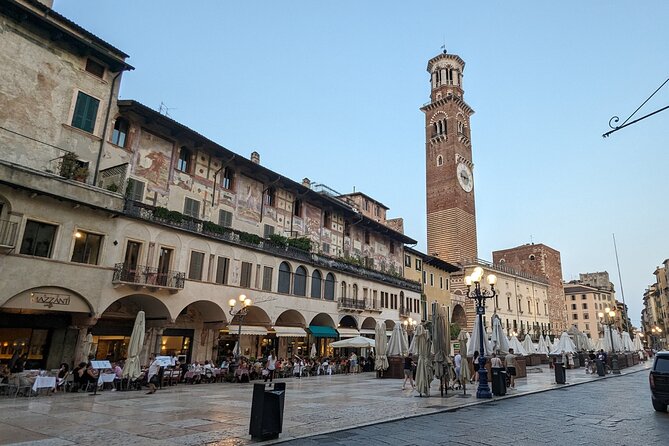
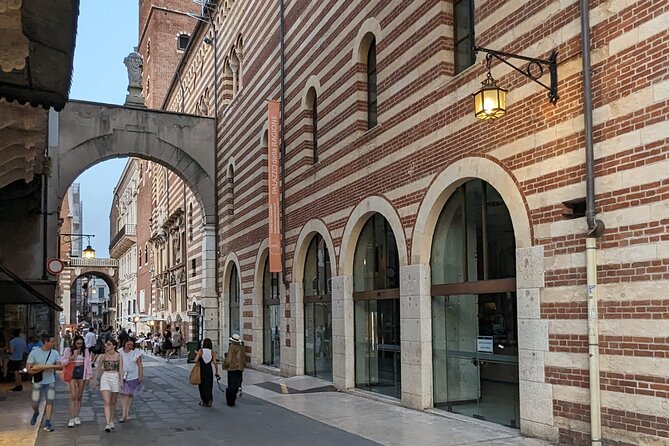
You begin at Piazza Erbe, address 38a, 37121 Verona. This is one of the reasons Verona feels instantly recognizable: it’s a public square doing public-square things—shopping, conversation, and street life—set inside historic architecture.
Why it’s worth your time: Piazza Erbe is the kind of place where you can spot layers of Verona’s identity all at once. You’ll see colorful building facades around you, plus details that hint at the city’s trading and civic past. Your guide also points out landmarks like the Palazzo Maffei and the Madonna Verona fountain, which helps you move from sightseeing mode into “I get it” mode.
Practical note: this square is lively. Wear shoes you can walk in comfortably, because even a 10-minute stop can turn into a longer pause if you want photos or to read the surroundings closely.
Torre dei Lamberti: the medieval skyline check-in
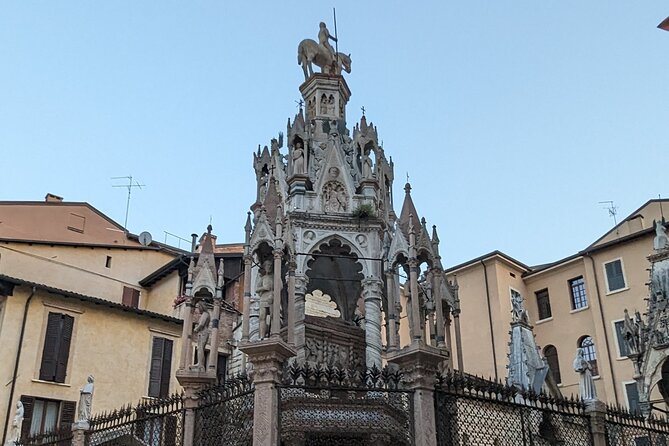
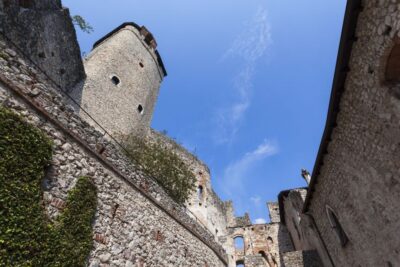
Next comes Torre dei Lamberti. This medieval tower is one of the best “anchor points” in Verona, because once you understand where it sits, you can mentally connect the rest of the historic center.
From the outside, the value is huge: you get that classic tower-over-city feeling, and the guide’s explanations make the tower feel less random. The tower dates back to the 12th century, and it’s a key visual reference for the old core of town.
A key consideration: admission is listed as not included for the tower. If you’re the type who wants to climb for views, plan for the extra cost and time. If you’re happy with the exterior experience and using the tower as a viewpoint you can imagine from the street, you’ll be fine inside the tour pacing.
The Middle Ages staircase: power built into stone
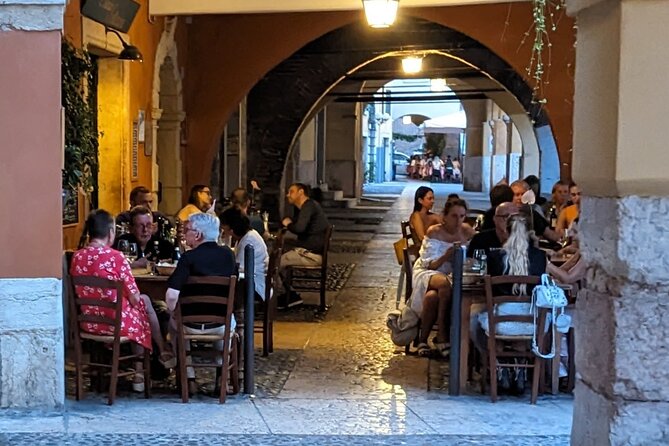
After the tower area, you’ll pass by a historic staircase near Piazza Erbe that dates back to the Middle Ages. This is the kind of stop that makes a guided walk feel smarter than DIY.
The “why” is the point. This stone staircase functioned as a link between lower parts of the city and the upper areas where the ruling class lived. In other words, it’s not just old steps—it’s a physical reminder that social stratification was part of everyday geography.
If you tend to speed through minor streets on your own, you’ll love this stop. It’s small, but it gives you context for how Verona worked—and once you know that, you’ll notice similar patterns elsewhere.
Piazza dei Signori: where civic style meets real authority
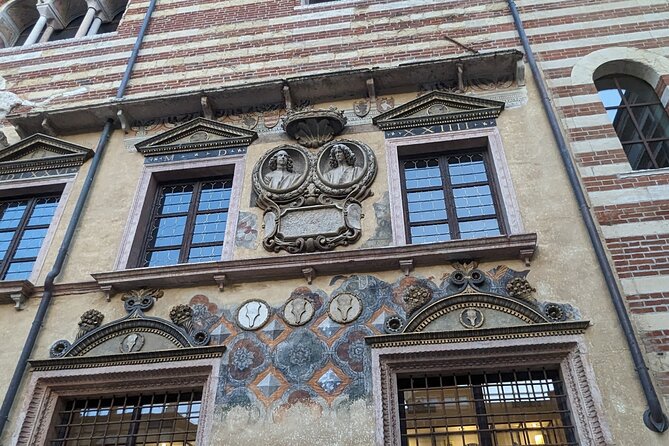
Then you move into Piazza dei Signori, a historic square known for elegant architecture and civic importance. This is one of those spaces where the buildings don’t just decorate the square—they explain how the city governed itself.
The guide typically points out major structures here, including the Loggia del Consiglio and the Palazzo del Capitano. Standing in the middle of the square, it starts to make sense: this is where public life and power language meet.
Time-wise, it’s short (about 5 minutes), but that’s another strength of the tour format. You get the highlights of the square without losing momentum for the rest of the walk. If you’re the type who always wants to sit and absorb details, take a slower pace here on your own after the tour ends.


Casa di Giulietta: love legend, plus a reality check
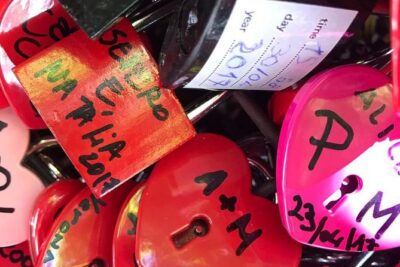
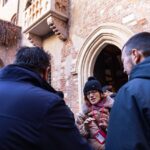
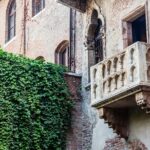
You’ll then head to Casa di Giulietta. Whether you’re a Shakespeare fan or not, this is one of Verona’s best-known stops, and the tour makes it easier to treat it like more than a photo spot.
I like that the guide doesn’t just point at a famous name. The walking format also makes it simpler to place Juliet’s House into Verona’s broader story—so the romance sits next to the power, not on a separate stage.
It’s also marked as free to view on this walk, which fits the “express tour” goal. If you want to spend longer around the Juliet area—reading, exploring side lanes, or lingering for photos—this is a good spot to do it after the tour, since you’re already oriented in the neighborhood.
Arche Scaligere: when funerary art shows political clout
Next up is Arche Scaligere, the Gothic funerary monuments linked to the Scaligeri family. This is where Verona’s medieval power stops being abstract.
These monuments are a reminder that rulers weren’t only remembered in documents—they were remembered in stone. The guide’s storytelling is key here, because it helps you connect the monuments to the influence and image the Scaligeri family projected during the medieval era.
This is a quick stop, too. But for me, it’s one of the most “meaningful in a short time” spots on the route. If you care about who held power and how cities signaled status, you’ll probably want to linger here longer than the scheduled minutes.
Ponte Pietra: Roman engineering you can still feel
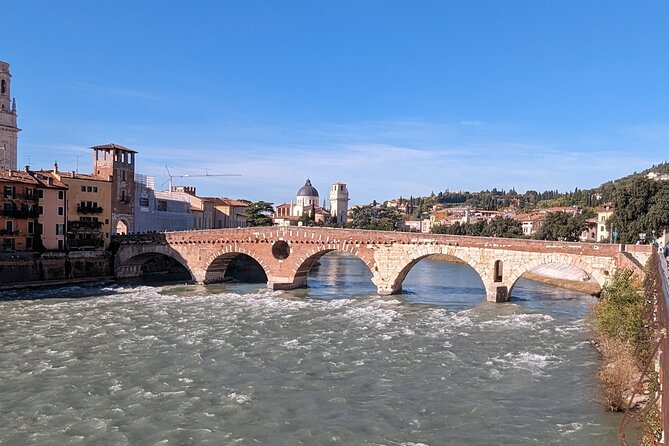
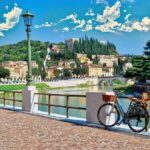
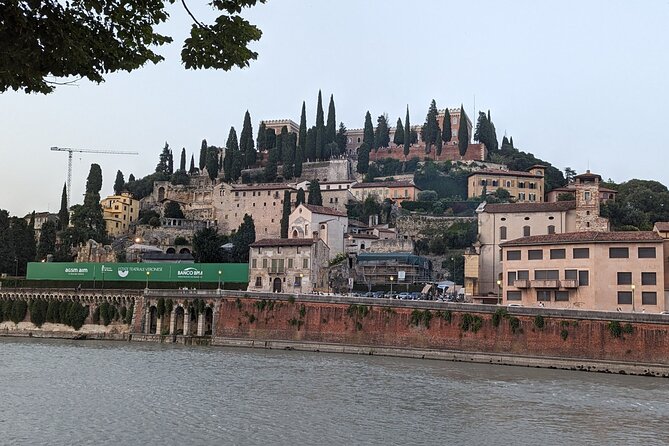
Then you reach Ponte Pietra, the ancient Roman bridge spanning the Adige River. This bridge’s origins go back to the 1st century BC, and it’s one of Verona’s best examples of infrastructure that survived long enough to become scenery.
Why this stop works even in an express tour: it gives you a physical sense of continuity. You’re standing where Roman-era engineering and later urban life overlap. The arches and the river backdrop make it a classic “pause and look” moment.
No admission is listed for this stop, and it’s easy to enjoy from the outside. If you want one solid photo with context—bridge plus skyline plus river—this is a good candidate. The trick is not to rush: even a 5-minute viewpoint can turn into a better memory when you take in the whole scene.
Duomo di Verona (Cattedrale di Santa Maria Matricolare): the Romanesque centerpiece
After Ponte Pietra, the walk brings you to Duomo di Verona, also called Cattedrale di Santa Maria Matricolare. This Romanesque church is known for its facade carvings and sculptures, and it’s a major religious and architectural landmark in the city center.
This stop lists admission as not included, which matters if your plan includes entering the church. Since the tour is built for outdoor viewing, you can usually enjoy the exterior details and learn from the guide’s explanation without extra tickets. But if you want to go inside, plan for that decision separately.
One reason I like this part of the tour: it acts like a transition from “ancient and medieval street story” to “here’s the continuing heart of Verona.” And since the tour ends nearby, you can easily decide after the guided portion whether you want more time inside.
Teatro Romano: Verona’s ancient stage, still in use
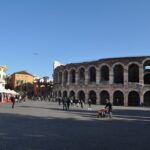
Finally, you’ll see Teatro Romano, the ancient Roman theater dating to the 1st century AD. Even from an outdoor viewpoint, it’s striking because you can sense the scale of the place.
The guide explains that it hosts cultural events and performances in the modern era. That makes the site feel alive instead of purely archaeological. If you’ve ever wished an ancient landmark came with a “what it means now” answer, this is exactly that.
Admission is listed as not included for the theater as part of the tour. So again, treat it as a sightseeing stop during the guided walk. If you want to go deeper later—perhaps at another time when events line up—that’s a good way to turn an express tour into a multi-day plan.
Guides make the difference: what to expect from Carlos, Leonardo, and Alessandra
The biggest praise shows up again and again: the guide quality. Guests mention Carlos as friendly and strong on history, and they highlight Leonardo (often called Leo) as relaxed, patient, and able to explain a lot without losing people. Alessandra is also praised for smooth explanations and adding extra details, including small surprise moments during the walk.
That matters because a 90-minute tour can’t cover everything. Great guiding turns a short list of stops into a coherent story: love and legend next to power, Roman structures next to medieval identity, and civic squares next to religious landmarks.
If you want a tour that feels like a thoughtful walk with a local storyteller rather than a sprint through postcards, this format tends to deliver.
The value question: is $42.17 a fair deal for 9+ landmarks?
At $42.17 per person for about 1 hour 30 minutes, you’re paying for two things: access to a live English guide and a tight route that hits many major landmarks. You’re not paying for museum tickets during the walk itself, since the tour is built for exterior viewing.
Where the value really lands is in your time savings. Doing these stops on your own is doable, but it’s easy to wander too far, miss key connections, or spend extra time trying to understand what you’re looking at. With a guide, you get meaning faster—especially around the squares and the medieval layers.
The main reason it might not feel worth it for everyone is your style. If you love unstructured wandering and don’t care about historical context, a guided tour may feel like you’re paying for explanations you’d rather skip. But if you want to leave Verona with a mental map and story threads you can follow on your own later, the price-to-time ratio makes sense.
How to plan your day around this walk
This tour works best when you treat it like your Verona “orientation” pass. Start it earlier in your trip to get bearings, then return on your own for any places you want to see longer.
It also makes a nice buffer before lunch or after arrival, because the tour doesn’t last all day. And since the walk ends near the Duomo area, you’re positioned in one of the most convenient parts of town for food, wandering, and a final look back at the cathedral zone.
There’s even a practical nudge at the end: you can grab a wine glass nearby at an old-fashioned bar called Osteria.
Who should book this Verona walking tour?
Book it if you want:
- A fast, structured route that still feels human
- Live explanations in English tying landmarks together
- A small group (12 max) where questions and pauses for photos make sense
- Verona highlights that are easy to revisit after you learn the basics
Skip it or consider adding extra time if:
- You want to spend long hours inside churches or pay for multiple internal admissions
- You prefer slow, wide-ranging exploring with no scheduled stops
- You’re traveling at an aggressive pace and don’t want to commit to the 1 hour 30 minute window
FAQ
How long is the Verona walking tour?
It lasts about 1 hour 30 minutes.
What is the price per person?
The price is $42.17 per person.
What language is the live guide?
The tour is offered in English.
How many landmarks does the tour cover?
The tour covers 9+ landmarks.
Is admission included for the sights?
Admission fees are not needed for the walk itself since it focuses on viewing outside. Some listed stops note admission is not included, which may matter if you choose to go inside.
What is the group size?
The maximum group size is 12 travelers.
Where does the tour start?
It starts at Piazza Erbe, 38a, 37121 Verona VR, Italy.
Where does the tour end?
It ends near Verona Cathedral at Piazza Vescovado, 37121 Verona VR, Italy.
Is there a mobile ticket?
Yes, it includes a mobile ticket.
Can I cancel for a full refund?
Yes, free cancellation is available, and you can cancel up to 24 hours in advance for a full refund.
Should you book this Verona walking tour?
If you’re trying to get real value out of limited time, yes. This is the kind of Verona experience that gives you a quick map of the city’s big landmarks plus the stories that make them click. The small group size, the live English guide, and the route that keeps you moving without rushing too hard are the winning combo.
If you’re planning to return to Verona for days and you’re okay wandering on your own, you still might love the tour as an orientation day. You’ll finish with enough context to explore independently—and that’s where the trip starts to feel personal.