REVIEW · VERONA
3-Hour Walking Tour with Guide Discovering Verona
Book on Viator →Operated by Guide in Verona · Bookable on Viator
Verona turns into a timeline you can walk. You get a tight, 3-hour route that jumps from Roman power to medieval romance to Renaissance-era Verona, with stops like the Arena di Verona and Piazza delle Erbe. I especially like how the guide makes connections between what you’re seeing and the bigger story behind it, and I like the pace: long enough to feel the places, short enough to keep moving.
One thing to plan for: this is an outdoors-heavy walk and it depends on good weather, so pack for sun or rain and have some flexibility.
In This Review
- Key things I’d highlight before you go
- Why this Verona walk feels like a real introduction
- What $68.67 gets you in 3 hours
- Route basics: from Piazza Bra to Porta Leoni
- How the guide helps you read Verona (not just see it)
- Arena di Verona: the Roman monument behind the headlines
- Scaligero Bridge: medieval architecture that earns its photo
- Piazza dei Signori: where politics shows up in stone
- San Lorenzo (Verona): a church stop that isn’t just a detour
- Piazza delle Erbe: the city’s live stage
- Casa di Giulietta: the Shakespeare spot, explained in context
- Sant’Anastasia: the large church with standout art
- I Portoni della Bra: a Verona symbol you’ll remember
- Arche Scaligere: tombs of medieval princes
- Casa di Romeo: another layer of the legend
- Arco dei Gavi and the Roman piece inside the Renaissance city
- Chiesa delle Sante Teuteria e Tosca: the oldest worship spot in the Veneto
- Piazzale Castel San Pietro: the story-linked viewpoint
- Practical advice so the tour stays fun, not stressful
- Who this tour suits best
- A fair heads-up before you book
- Should you book this Verona walking tour?
- FAQ
- How long is the 3-Hour Walking Tour with Guide Discovering Verona?
- What is the price per person?
- What languages is the tour offered in?
- How big is the group?
- Is pickup offered?
- Where does the tour start and end?
- Do I need a printed ticket?
- Are admission tickets included for the main stops?
- Is the tour dependent on weather?
- What is the cancellation policy?
- Is the tour suitable for everyone?
Key things I’d highlight before you go
- Arena di Verona: a quick look that still leads to the monument’s backstory
- Scaligero Bridge photo stop: medieval design with an easy, built-in moment for pictures
- Piazza delle Erbe: the market square energy you can’t fake, even for a short stop
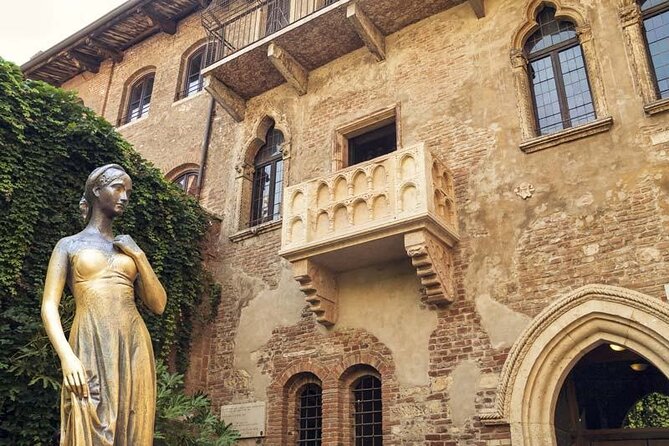
- Juliet and Romeo locations: Shakespeare lore paired with the real city around it
- Sant’Anastasia and Scaligero tombs: churches and monuments that connect art to politics
- Small group size (max 20): more back-and-forth, fewer people getting lost in the crowd
Why this Verona walk feels like a real introduction
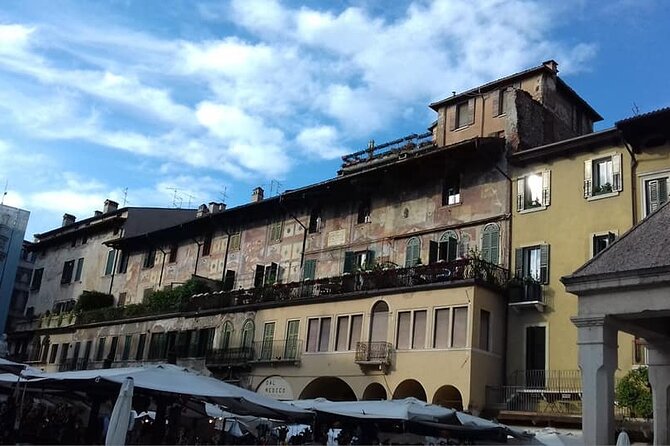
This isn’t a slow museum day. It’s a guided walk built for first-time Verona, where you see the highlights and also learn what to look for once the crowds move on.
I like tours like this because Verona rewards attention. One street corner can explain a whole period, and your guide can point out why the stone, the layout, and even the placement of monuments matters.
You can also read our reviews of more tours and experiences in Verona.
What $68.67 gets you in 3 hours
At about $68.67 per person for a roughly 3-hour experience, you’re paying for three things: a guide, a compact route, and time efficiency. In a city like Verona, that matters because walking between major stops on your own can turn into a half-day if you’re also trying to figure out what you’re looking at.
Also, the scheduled visits include stops marked with free admission (and at least one stop where entry is included). That helps the value, since you’re not paying for every single stop individually while you’re trying to stay on track.
Route basics: from Piazza Bra to Porta Leoni
The tour starts at Piazza Bra and ends at Porta Leoni. That’s a smart setup because Piazza Bra drops you near Verona’s most famous Roman monument, and Porta Leoni puts you back into the inner-city flow where it’s easy to keep exploring afterward.
If you’re coming from another part of town, it helps that it’s noted as being near public transportation. And if you prefer not to navigate the meeting area yourself, pickup is offered.
You’ll also use a mobile ticket. So plan to have your phone charged, and make sure you can show the ticket quickly when you meet your guide.
How the guide helps you read Verona (not just see it)
The strongest praise here is about storytelling that stays clear and fun. People call out guides such as Evgeniy/Eugenio for explaining in a simple, natural way, keeping the pace comfortable, and adding factual details without turning it into a lecture.
A small group cap (up to 20) tends to make a difference. You can ask questions, and the guide can slow down when someone needs a moment to catch up or take photos.
And yes, there’s a practical bonus: the tour is built around short stops. That means you’re not stuck for ages at one place while everyone else waits.
Arena di Verona: the Roman monument behind the headlines
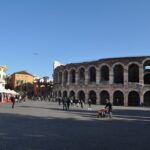
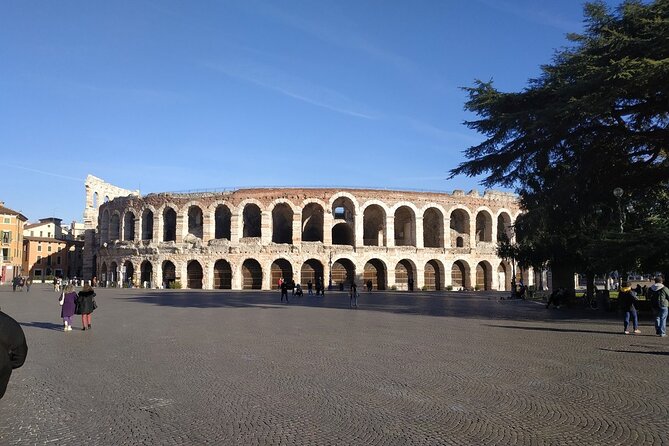
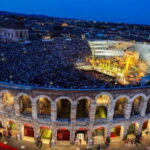
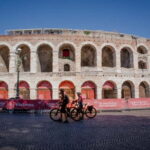
The walk opens at the Arena di Verona, with time set aside to understand why this monument became so famous. Even if you’ve heard the name before, the guide’s angle is what makes it click—how Verona’s Roman period shaped what you see today.
What I’d do at this stop: stand back for a minute and take in the scale, then shift your position to see how the structure fits into the modern street layout. That’s often where the story becomes physical, not just historical.
The main tradeoff is that this is a busy spot in peak hours. Your best bet is to listen first, then take photos after you know what you’re looking at.

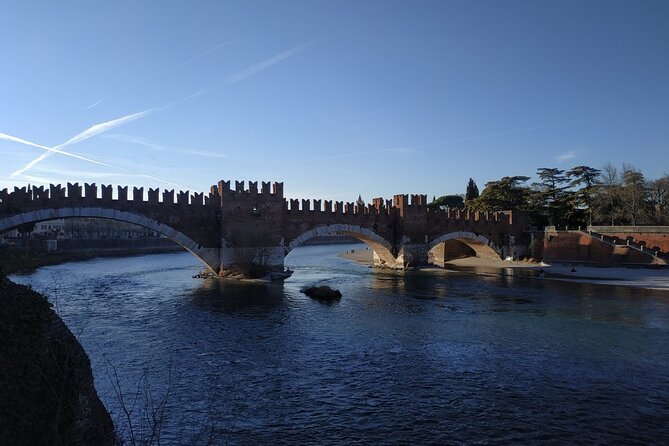
Scaligero Bridge: medieval architecture that earns its photo
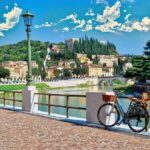
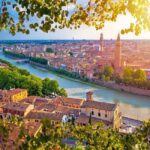
Next comes the Scaligero Bridge, described as a medieval architectural masterpiece. This is one of those places that looks like a postcard fast, but the guide can help you notice the design choices that make it special.
Spend your time here efficiently: grab your photo, then focus on the bridge details the guide points out. If you’re traveling with someone who just wants the highlight shots, this stop still gives them what they came for.
Piazza dei Signori: where politics shows up in stone
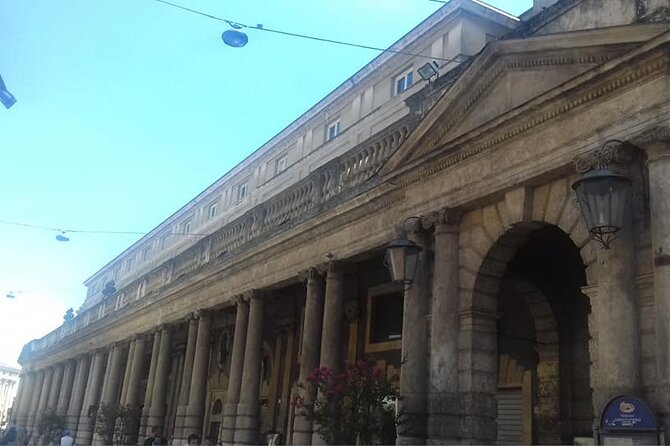
Then you step into Piazza dei Signori, the center tied to Verona’s political life. This is a good moment to learn how public spaces in old cities weren’t neutral. They were built to signal power, status, and control.
Even if you only have around twenty minutes, this stop works because the square’s layout makes the story easy to follow. Look around like you’re mapping a timeline: who would stand where, who would speak from where, and how the city organized attention.
San Lorenzo (Verona): a church stop that isn’t just a detour
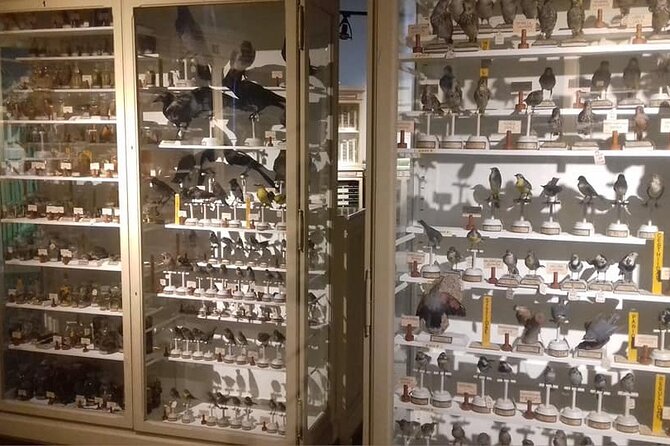
You’ll get a short visit at the chiesa di San Lorenzo – Verona, described as especially beautiful. Church stops can feel like time fillers on some tours, but here the idea is to balance the big outdoor moments with something quieter and more detailed.
At a fast stop like this, don’t try to take in everything. Choose one thing—an interior feature or an architectural detail the guide calls out—and let that be your focus.
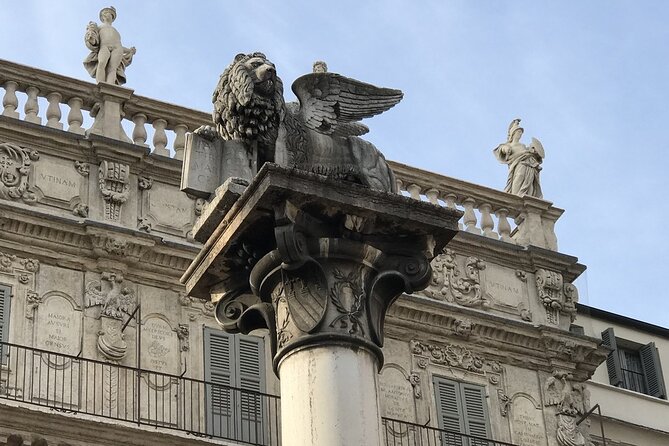
Piazza delle Erbe: the city’s live stage
If Verona had a living room, Piazza delle Erbe would be it. This is one of the stops built around atmosphere: a place where the setting almost feels like the main character.
This is also where you’ll notice how old Verona functions like a modern city at the same time. It’s not an empty monument square. It’s active, social, and full of corners that encourage quick detours on your own afterward.
Tip: use the guide’s timing to your advantage. Listen while you’re there, then decide if you want to come back later for food or a slower wander.
Casa di Giulietta: the Shakespeare spot, explained in context
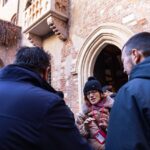
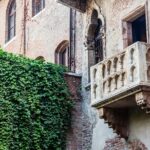
Then you reach Casa di Giulietta, the big name most people connect to Verona. The tour frames it as a place to discover the true story behind Shakespeare’s tragedy, rather than just a photo wall.
You’ll likely be tempted to rush to the most famous parts. Don’t. Take a second to listen to the background, because it changes how you read the site once you understand what it represents in Verona’s storytelling.
If you’re traveling in a group, this is also a good checkpoint. Everyone regroups, resets their expectations, and refocuses for the next cluster of monuments.
Sant’Anastasia: the large church with standout art
Next is the Cattedrale di Sant’Anastasia, described as the largest church in Verona, with notable fresco work by Pisanello. This stop is built for people who enjoy art details but don’t want a long, tiring “stand and stare” session.
How to make the most of it: stand where the guide tells you to stand, then let your eyes move in the order they suggest. Frescoes and church interiors can feel overwhelming if you don’t have a path.
I Portoni della Bra: a Verona symbol you’ll remember
The route continues with I Portoni della Bra, one of Verona’s symbols. This kind of stop matters because it connects the city’s medieval identity to the way the urban fabric still holds on to its past.
Even in ten minutes, you can learn a lot if you treat it like a visual clue. Look for the design elements the guide points out, and then notice how the surrounding streets reflect the old city’s logic.
Arche Scaligere: tombs of medieval princes
Then you reach the Arche Scaligere, described as one of the most beautiful places in Verona, where the princes of the Middle Ages are buried. This is a stop where you’ll likely feel the emotional weight of power: this isn’t just decoration, it’s legacy.
Don’t worry about trying to memorize everything. Instead, focus on how the place communicates authority. Once you see what the guide highlights—style, symbolism, placement—you’ll feel like you understand it rather than just passing by it.
Casa di Romeo: another layer of the legend
You’ll also visit Romeo’s House (Casa di Romeo). Since it’s listed again later on the route, the experience seems designed to give you a chance to re-approach the story from a slightly different angle or tie it into the surrounding context.
If you’re a Shakespeare fan, this stop gives you the connection you want. If you’re not, it still works because it’s another entry point into how Verona markets itself and remembers its myths.
Arco dei Gavi and the Roman piece inside the Renaissance city
Then comes Arco dei Gavi, described as a piece of ancient Rome inside the Veronese Renaissance. That phrasing is key: you’re not only walking through one era. You’re walking through a city that built over itself and kept bits of the earlier world visible.
At an arch like this, your job is simple: look at the structure first, then listen for what the guide says about its meaning in Verona’s later identity. It’s a small stop, but it helps your overall mental map.
Chiesa delle Sante Teuteria e Tosca: the oldest worship spot in the Veneto
Next is the Chiesa delle Sante Teuteria e Tosca, described as the oldest place of worship in the Veneto. This is the kind of stop that gives Verona depth, especially if you like tracing continuity—how belief, architecture, and community evolve over centuries.
Since it’s a short visit, treat it as a listening stop. Pick up the main idea your guide shares, then let the visual details reinforce it.
Piazzale Castel San Pietro: the story-linked viewpoint
Finally, the tour reaches Piazzale Castel San Pietro, where the experience notes it as the place tied to where the person at the center of the story was born. Even if you’re not a die-hard literature fan, a viewpoint stop is a smart end cap because it lets you see the city beyond the street-level details.
At a terrace or elevated point, your best move is to slow down. Look around and connect what you saw earlier—Roman structures, church massing, medieval urban design—to the bigger picture.
And if the weather is good, this is where the walk finishes feeling like more than just “check the box.”
Practical advice so the tour stays fun, not stressful
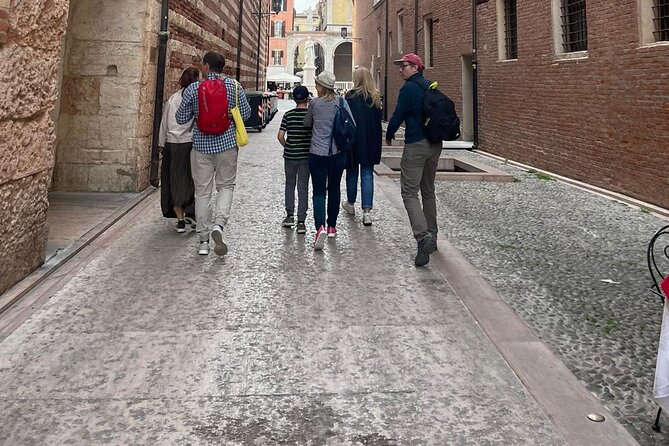
The biggest “make it work” factor is footwear. You’re walking through old streets and around major squares, so bring comfortable shoes and plan for cobblestones.
Bring a light layer even in mild weather. This experience depends on good weather, and Verona can shift quickly, especially if you’re out near open squares.
If you care about photos, decide what your priorities are before you arrive. With multiple major sights in a short window, you’ll enjoy it more if you’re intentional about which shots you want.
Also, if you’re traveling in a mixed-language group, you may get a guide who can switch between languages. That flexibility is part of why some people specifically praise the experience for being friendly and easy for different audiences.
Who this tour suits best
This fits best if you want:
- a strong first look at Verona’s most important landmarks without planning every turn
- storytelling that connects Roman, medieval, and romance-related sites
- a small group pace that feels human, not crowded
It also makes sense for couples and small groups who want a shared experience they can later talk about while they eat. And if you’re traveling with kids, the tour style is described as engaging enough that it doesn’t feel like adults-only history.
A fair heads-up before you book
Most of the experience seems to hinge on guide quality, and the praise for guide communication is strong. Still, it’s worth being realistic: like many guided activities, there can be cancellations or last-minute changes. If your Verona day is already fully packed, keep a backup option in mind.
Also note that, while it’s billed for most travelers, it’s still a walking tour through multiple stops. If you’re sensitive to long standing times or uneven surfaces, you may want to consider whether you can comfortably handle a 3-hour walk.
Should you book this Verona walking tour?
Yes, if you want a guided route that helps you understand Verona in a short time, not just take pictures. I’d book it for a first visit because it covers the Roman anchor, the medieval power points, and the romance landmarks in a way that’s easy to follow.
I’d think twice only if you can’t handle weather changes or you’re operating on a tight schedule with no flexibility. With good planning, this kind of tour is one of the simplest ways to get your bearings fast.
FAQ
How long is the 3-Hour Walking Tour with Guide Discovering Verona?
It lasts about 3 hours.
What is the price per person?
The price is $68.67 per person.
What languages is the tour offered in?
The tour is offered in English.
How big is the group?
The tour has a maximum of 20 travelers.
Is pickup offered?
Yes, pickup is offered.
Where does the tour start and end?
It starts at Piazza Bra (P.za Bra, Verona VR, Italy) and ends at Porta Leoni (Via Leoni, 37100 Verona VR, Italy).
Do I need a printed ticket?
No. It uses a mobile ticket.
Are admission tickets included for the main stops?
The experience includes stops marked as free admission, and it also lists Scaligero Bridge as admission ticket included.
Is the tour dependent on weather?
Yes. The experience requires good weather. If it’s canceled due to poor weather, you’ll be offered a different date or a full refund.
What is the cancellation policy?
You can cancel for free up to 24 hours in advance for a full refund.
Is the tour suitable for everyone?
Most travelers can participate, and service animals are allowed.